Introduction: Regular physical activity is a cornerstone of cardiovascular prevention, offering a wide range of benefits, including the modulation of immune responses and reduction of systemic low-grade inflammation. However, the effects of exercise intensity on acute immune responses in older adults remain not fully understood.
Methods: In this study, we explored how moderate and intense exercise impact immune cell activation, cytokine production, and large extracellular vesicle (lEV) release in healthy elderly individuals. Fourteen participants (median age: 68 years, 57% female) completed a moderate exercise intervention (60% VO2max for 30 minutes), while nineteen (median age: 67 years, 47% female) engaged in an intense exercise session until exhaustion. Blood samples were collected at baseline and at 30 minutes and 24 hours post intervention.
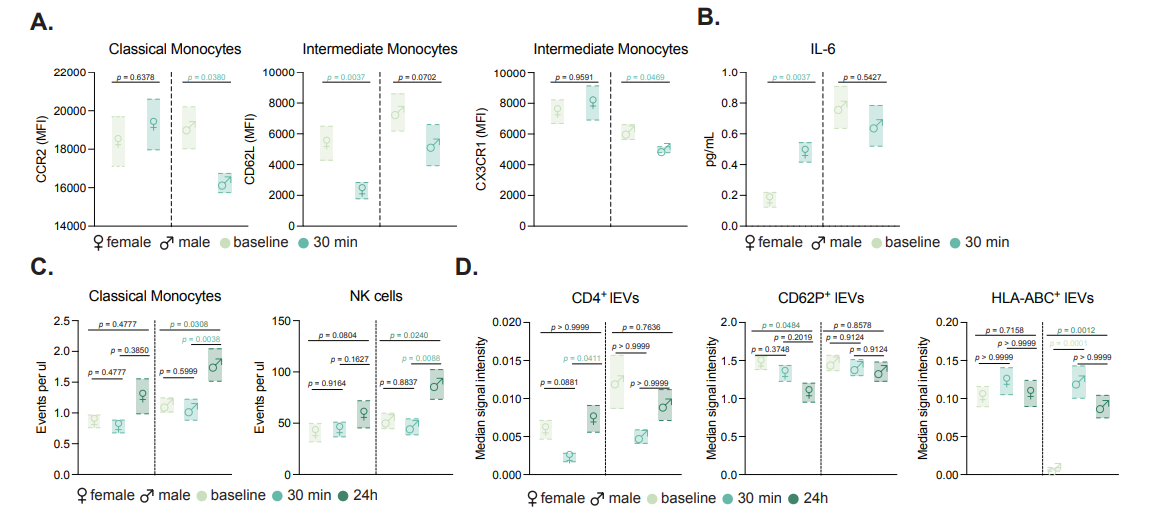
Results: Immune cell characterization by flow cytometry revealed distinct changes in monocyte subsets and NK cells activation across both exercise intensities. Intense exercise was associated with elevated proinflammatory TNFα levels and a significant increase in circulating plasma-derived lEV concentration at 24 hours, accompanied by alterations in surface marker expression. Additionally, we identified sex-specific differences. Distinct activation profiles of innate immunity, variations in EV release from CD4+ and HLA+ cells, and an exercise-induced increase in IL-6 was observed exclusively in females (Fig.1).
Discussion: These findings suggest that moderate exercise enhances immune cell activation without altering cell counts, while intense exercise triggers acute immunity and inflammation. Further research should clarify long-term implications of exercise-induced immune modulation in cardiovascular prevention.
Fig. 1 Fig.1: Sex-specific immune and EV responses to exercise in older adults.