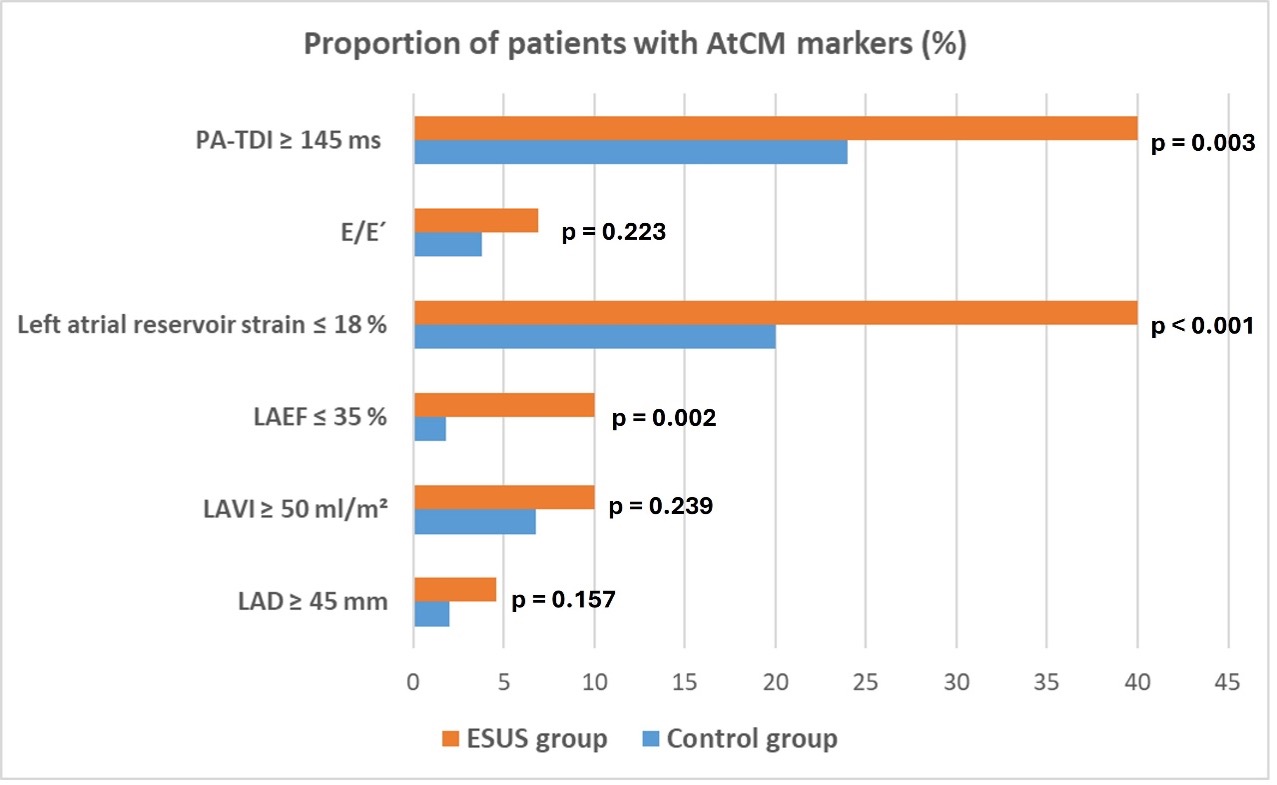
Background: In recent years, atrial cardiomyopathy (AtCM) has been identified as a possible cause of stroke. The diagnosis of AtCM would be particularly important in patients with embolic stroke of undetermined source (ESUS) in order to identify a possible cause of the stroke. The present study investigated the hemodynamic changes in patients with ESUS.
Methods: In this prospective study, patients with ESUS and age- and sex-matched individuals with healthy hearts were examined using laboratory tests and echocardiography. Inclusion criterion was sinus rhythm at the time of the study. Exclusion criteria included: severe valve stenosis or regurgitation, recent atrial fibrillation or cardiac surgery.
Results: A total of 312 patients (ESUS, n = 151; Controls, n = 161) were included. The groups differed significantly in terms of the frequency of cardiovascular risk factors, NT-pro-BNP levels (Table 1) and left atrial hemodynamics (Table 2). However, among the established echocardiographic markers of AtCM, only the frequency of LAEF ≤ 35% showed a significant difference. Other potential, but not yet established, markers of AtCM that revealed differences were left atrial reservoir strain (LASr) ≤ 18% and a PA-TDI interval of ≥ 145 ms.
Conclusion: Our study demonstrates that a group of patients with ESUS exhibits significantly altered left atrial hemodynamics compared to an age- and sex-matched control group. In addition to LAEF, LASr and the PA-TDI interval may play a role in the diagnosis of AtCM. Further studies are needed to confirm their prognostic significance.
Tables
Table 1: Clinical characteristics of the study cohort (n = 312)
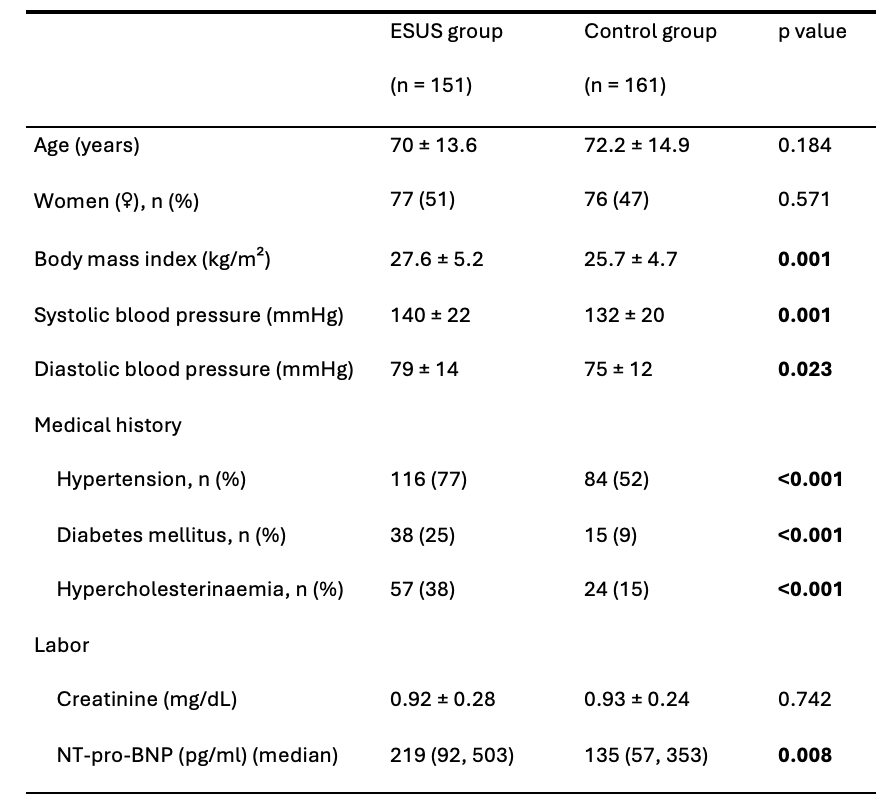
Values are mean ± SD, %, or median (first quartile, third quartile).
ESUS, Embolic stroke of undetermined source; NT-pro-BNP, N-terminal prohormone of B-natriuretic peptide
Table 2: Echocardiographic parameters of the study cohort (n = 312)
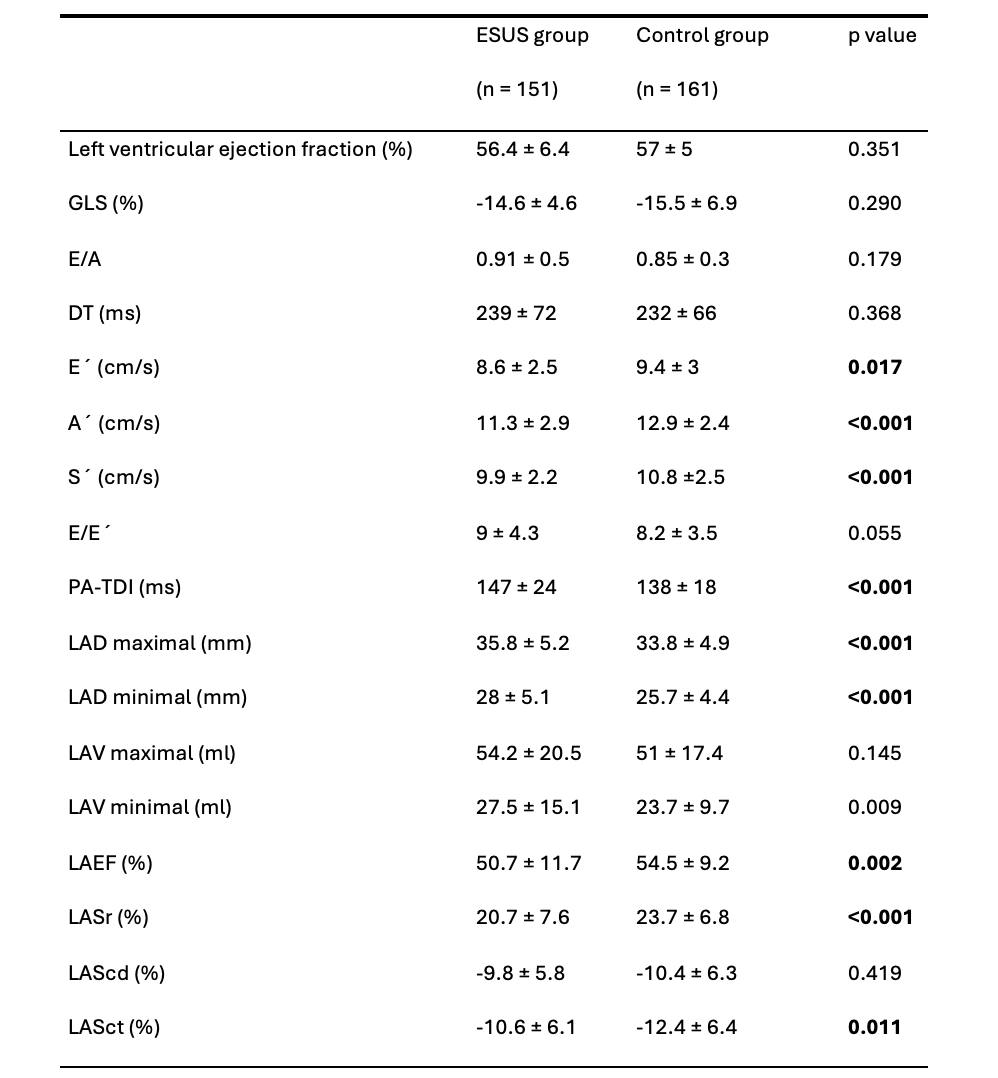
Values are mean ± SD, %, or median (first quartile, third quartile).
ESUS, Embolic stroke of undetermined source; AtCM, Atrial cardiomyopathy; GLS, ventricular global longitudinal strain; LASr, left atrial reservoir strain; LAScd, left atrial conduit strain; LASct, left atrial contractile strain; LAV, left atrial volume; LAVI, left atrial volume index; LAEF, left atrial ejection fraction