Background: Atrioventricular nodal re-entrant tachycardia (AVNRT) is the most common paroxysmal supraventricular tachycardia in adults. Catheter ablation (CA) targeting slow pathway (SP) modulation or ablation is an established and highly effective therapy, but robust long-term outcome data remain limited.
Aim: To evaluate long-term clinical outcomes after SP modulation or ablation for AVNRT in a large single-center cohort.
Methods: This study retrospectively analyzed all patients who underwent CA for AVNRT between 2011 and 2013. Baseline characteristics, procedural parameters, and acute outcomes were collected. Long-term follow-up (FU) was performed via outpatient visits, telephone interviews, and device interrogations when available. The primary endpoint was freedom from documented AVNRT recurrence at 10 years. Secondary endpoints included the incidence of atrial fibrillation (AF) and pacemaker implantation. Univariable Cox regression was used to identify predictors of AF and pacemaker requirement.
Results: A total of 218 patients were included (66.5% female; median age 52.7 years [IQR 41.5–65]). Comorbidities included arterial hypertension (28%), diabetes (5.5%), coronary artery disease (3.2%), heart failure (0.9%), channelopathy (0.9%), and chronic kidney disease (0.5%). All procedures were acutely successful. Complications occurred in 7/218 (3.2%): groin complications (1.4%) and transient atrioventricular block (1.8%). After a mean FU of 10.8 ± 3.8 years in 156/218 (72%) patients, the Kaplan–Meier estimate for AVNRT-free survival was 97.3% (95% CI 94.8–99.9%,
Figure 1). AVNRT recurrence occurred in 4/156 (1.6%) patients; all underwent successful repeat CA. The cumulative 10-year incidence of AF was 8.8% (95% CI 4.2–14.9%), and pacemaker implantation 3.8% (95% CI 1.0–7.5%). In univariable Cox models, higher age predicted both AF (OR 2.7, p = 0.006) and pacemaker implantation (OR 3.2, p = 0.001). Male sex predicted AF development (OR 2.0, p = 0.04), while coronary artery disease predicted pacemaker implantation (OR 2.0, p = 0.05).
Conclusion: Slow pathway modulation or ablation for AVNRT provides excellent long-term efficacy, with a 10-year AVNRT-free survival of over 97% and very low recurrence rates. Higher age was consistently associated with both AF and pacemaker implantation during FU, whereas male sex and coronary artery disease emerged as additional specific predictors. These findings confirm the long-term safety and durability of AVNRT ablation in routine clinical practice.
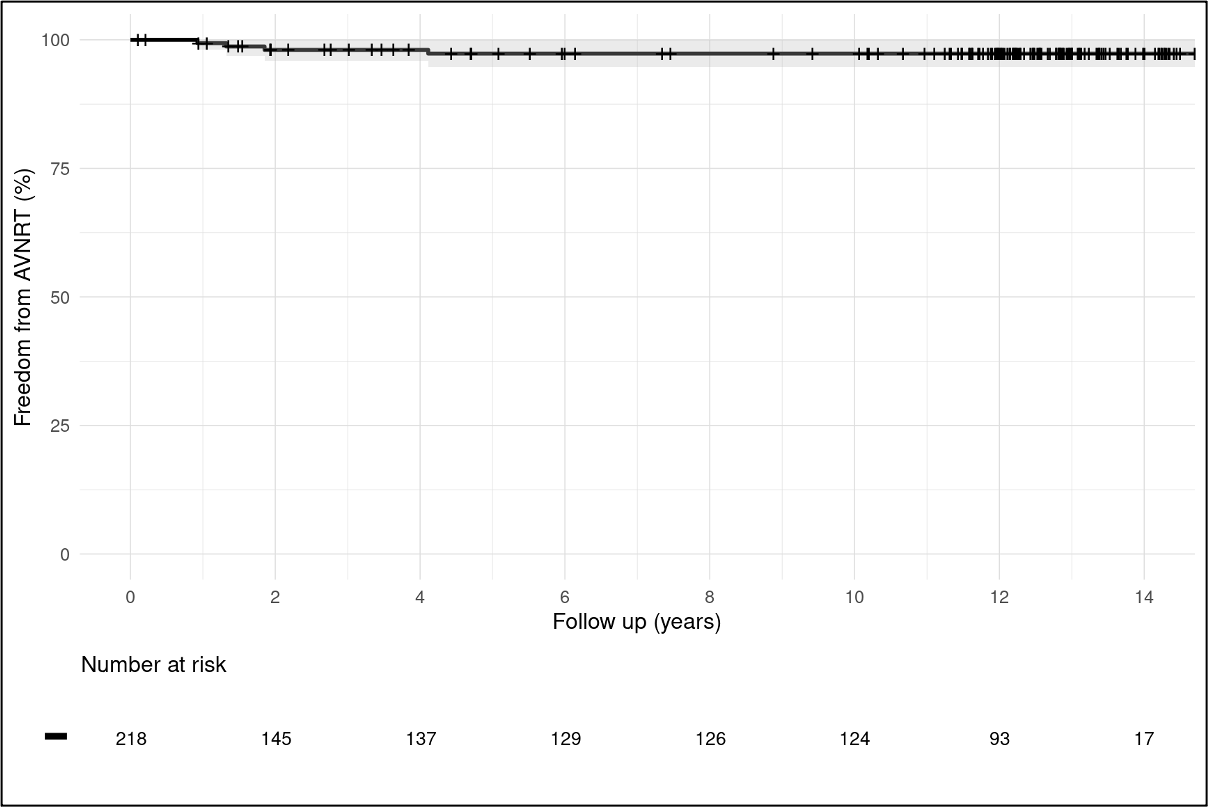
Figure 1 Kaplan-Meier curve for the primary outcome of freedom from AVNRT



