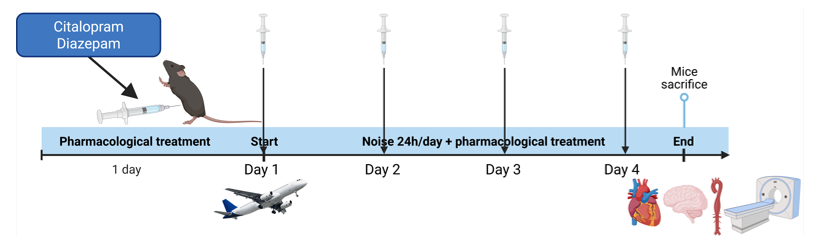
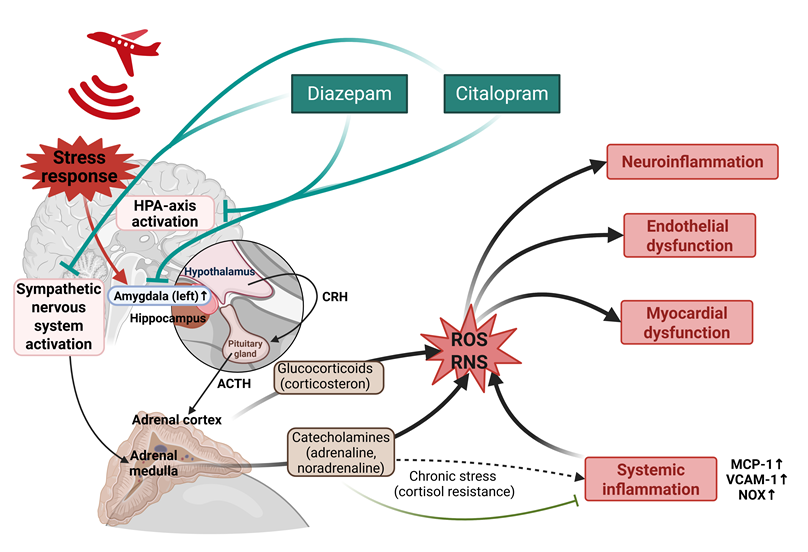
Noise pollution, particularly by aircraft, is a significant risk factor for cardiovascular disease. It activates the stress response in the brain, leading to the release of stress hormones like glucocorticoids and catecholamines. This involves structures like the amygdala, the sympathetic nervous system and the hypothalamic-pituitary- adrenal axis. Here, we tested whether pharmacological intervention with neuro-active drugs, diazepam (benzodiazepine receptor agonist) and citalopram (selective serotonin-reuptake inhibitor), could improve the negative cardiovascular effects of noise exposure. Mice exposed to aircraft noise were treated with either drug and exposed to four days of noise. Results showed that noise exposure increased blood pressure and induced endothelial dysfunction in both large (aorta) and small vessels (cerebral arteriole). Both drugs significantly improved endothelial function and partially reduced blood pressure. Endothelial dysfunction was accompanied by vascular oxidative stress in the noise exposed group, which was successfully mitigated by both drug treatments. Noise exposure also increased markers of oxidative stress and inflammation in the cortex and hippocampus, which were reduced by both treatments. In support of the stress response concept, noise exposure caused an increase in the amygdala activity, envisaged by [18F]fluorodeoxyglucose PET scan. In conclusion, the study highlights the importance of modulating the stress response pathway to mitigate the negative effects of noise exposure. More research is still needed to fully elucidate the mechanisms by which noise causes cardiovascular disease.