Background:
The PQ interval on electrocardiograms (ECGs) lengthens with age, which increases the risk of arrhythmias and atrioventricular conduction abnormalities. However, the molecular and cellular mechanisms underlying these pre-pathological changes are largely unknown. Mutations in the Transient Receptor Potential Melastatin 4 (TRPM4) cation channel have been linked with atrioventricular conduction disorders, highlighting its essential role in cardiac conduction. TRPM4 activity is post-translationally regulated by SUMOylation, and age-dependent increases in protein SUMOylation have been observed in multiple tissues. These findings raise the possibility that changes in TRPM4 expression and its SUMOylation regulation could contribute to age-associated PQ interval prolongation.
Methods:
ECG data were available for a cohort of 98 individuals (aged 50–80 years, both sexes) undergoing open-heart surgery. This cohort was analyzed to evaluate the association between PQ interval duration and age. From this larger cohort, cardiac tissue samples were collected from a subset of 57 patients. These tissue samples consisted of right atrial appendage specimens obtained during surgical valve replacement procedures. Relative protein expression levels of TRPM4 as well as of the SUMO pathway–associated proteins Ubc9 and PIAS3 were quantified using standardized immunoblotting. Correlations between protein expression, PQ interval duration, and clinical parameters were analyzed within this subset. In addition, RNA expression data were analyzed from human right atrial appendage samples.
Results:
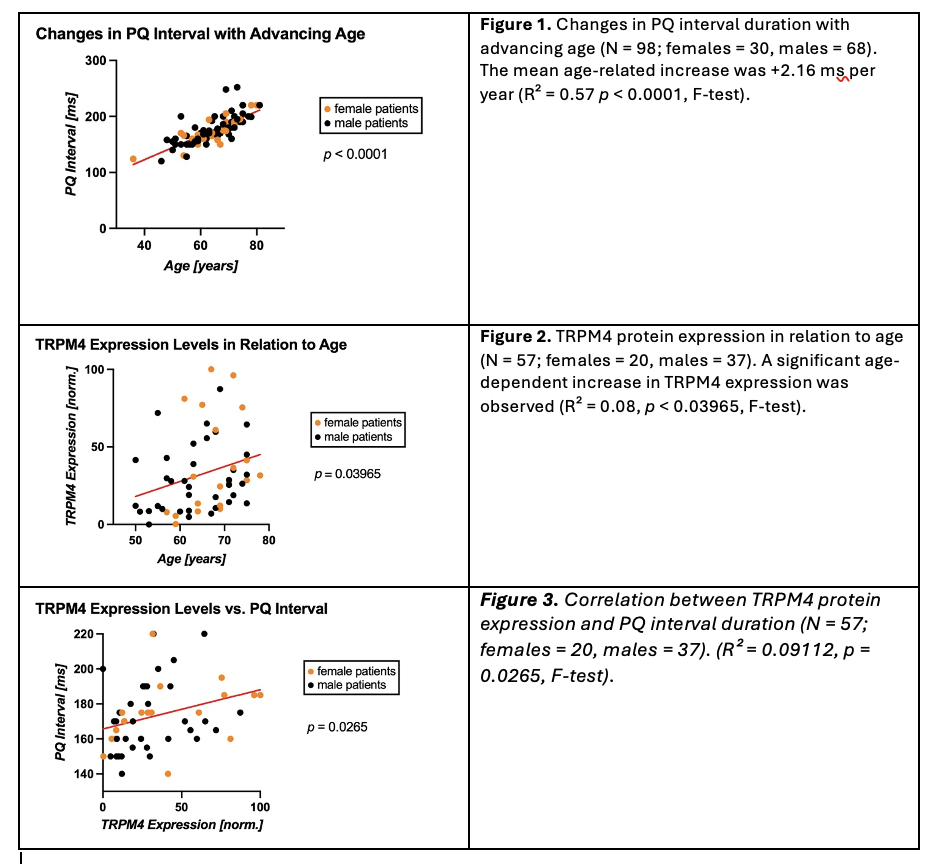
PQ interval duration increased significantly with advancing age (p < 0.0001), in line with previous reports. In the experimental subset (n = 57), TRPM4 expression showed a significant age-dependent increase on the protein level (p = 0.0397), whereas TRPM4 RNA levels stayed the same with age. Moreover, higher TRPM4 protein expression correlated significantly with longer PQ intervals (p = 0.027). The expression of the TRPM4-regulating SUMOylation pathway enzymes UBC9 and PIAS3 showed no significant associations with either age or PQ interval duration, and no sex-related differences were observed for any of the analyzed parameters.
Conclusion:
PQ interval prolongation, which increases with age, is associated with elevated TRPM4 expression. The correlation between higher TRPM4 levels and longer PQ intervals, independent of SUMOylation regulatory enzymes, suggests a potential role for TRPM4 in modulating atrioventricular conduction. These findings identify TRPM4 as a candidate molecular mediator of age-associated conduction slowing and support further mechanistic and preclinical investigation into its role in human cardiac electrophysiology.