Background: Frailty is defined as an increased vulnerability to stressors and is associated with higher mortality, longer hospital stays, and functional decline in patients with cardiovascular disease. However, there is a lack of evidence on frailty in transthyretin cardiac amyloidosis (ATTR). We evaluated the Essential Frailty Toolset (EFT) for risk stratification in these patients.
Methods: We conducted a prospective, single-centre, observational study of consecutive patients presenting to our specialised cardiac amyloidosis outpatient clinic between 02/2023 and 06/2024. The EFT score was calculated based on 4 categories: (1) the time taken to perform five chair rises, (2) cognitive impairment, (3) haemoglobin and (4) serum albumin (Table 1). Patients were classified as non-frail (0 points), pre-frail (1–2 points) or frail (3–5 points) according to their individual EFT score.
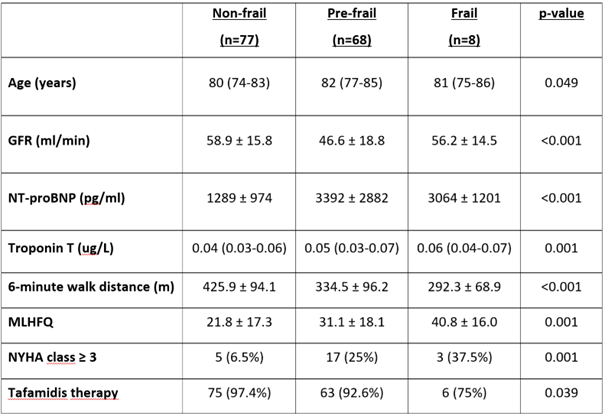
Results: Data of 153 patients were analysed. Median age was 81 (76-85) and 160 (93%) were male. According to the EFT, 77 patients (50%) were non-frail, 68 patients (44%) were pre-frail and 8 patients (5%) were frail. Patients with a higher EFT score were significantly older and had significantly worse renal function, higher NT-proBNP and higher troponin T levels, and were more likely to suffer from atrial fibrillation. In terms of functional parameters, patients with higher EFT had a significantly lower 6-minute walk distance, a worse quality of life according to the Minnesota Living with Heart Failure Questionnaire and a worse NYHA class. A higher EFT score was significantly associated with fewer patients receiving tafamidis (p=0.039)
(Table 2).
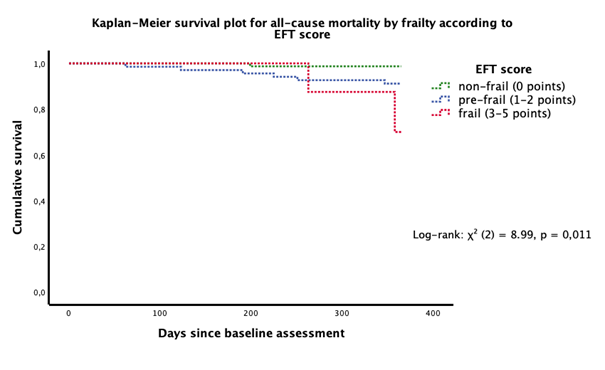
During follow-up 9 patients (6%) died. Mortality was higher in patients with higher EFT scores. Estimated survival at one year was 99±1% for non-frail patients, 91±4% for pre-frail patients and 70±18% for frail patients (Figure). Each incremental standard deviation of EFT was associated with an all-cause mortality hazard ratio of 2.48 (1.34–4.40; p = 0.002).
Conclusion: This is the first study to show that frailty according to the EFT is common in ATTR cardiac amyloidosis and that it is associated with cardiac and non-cardiac morbidity, as well as worse functional parameters. The EFT also provides strong prognostic information. As it is pragmatic and easier to assess than other multidimensional frailty scores, it could be used in daily routine to improve risk assessment, inform treatment decisions and improve patient outcomes.
Table 1: Essential Frailty Toolset (EFT)
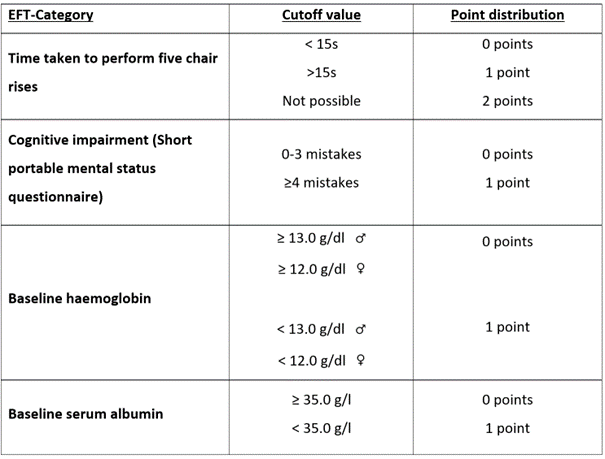 Table 2: Baseline parameters by frailty-status