Background
In addition to established clinical and electroanatomic predictors, electrolyte balance—particularly potassium—has been discussed as a potential determinant of arrhythmia recurrence following catheter ablation for atrial fibrillation (AF). Both hypo- and hyperkalemia can alter atrial conduction and promote re-entry activity. While potassium has been linked to AF onset and recurrence after first ablation, this study aimed to evaluate the association between periinterventional potassium levels and recurrence at different time points after re-do ablation procedures.
Methods
This single-center analysis included consecutive patients from the prospective Bernau Ablation Registry who underwent repeat left atrial ablation for AF or atrial tachycardia recurrence between 2016 and 2023.
All patients with available pre- and post-interventional potassium levels and complete recurrence data were analyzed.
Endpoints included: 1.) Early recurrence during index hospitalization, 2.)Recurrence during the blanking period (3 months), 3.) Late recurrence during follow-up (time to first recurrence in months).
Statistical analysis comprised t-tests, logistic regression, and tertile-based group comparisons.
Results
A total of 136 patients (mean age 66 ± 9 years; 68 % male) were analyzed.
The mean pre-interventional potassium was 4.4 ± 0.4 mmol/L, and the post-interventional level 4.1 ± 0.3 mmol/L.
The mean follow-up duration was 15 months.
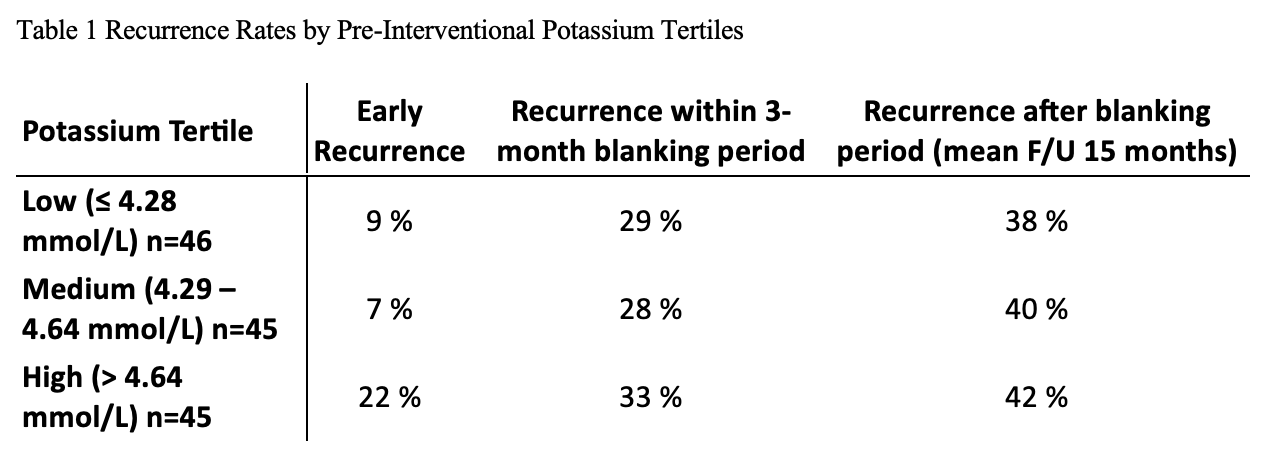
Early recurrence occurred in 13 % of patients.
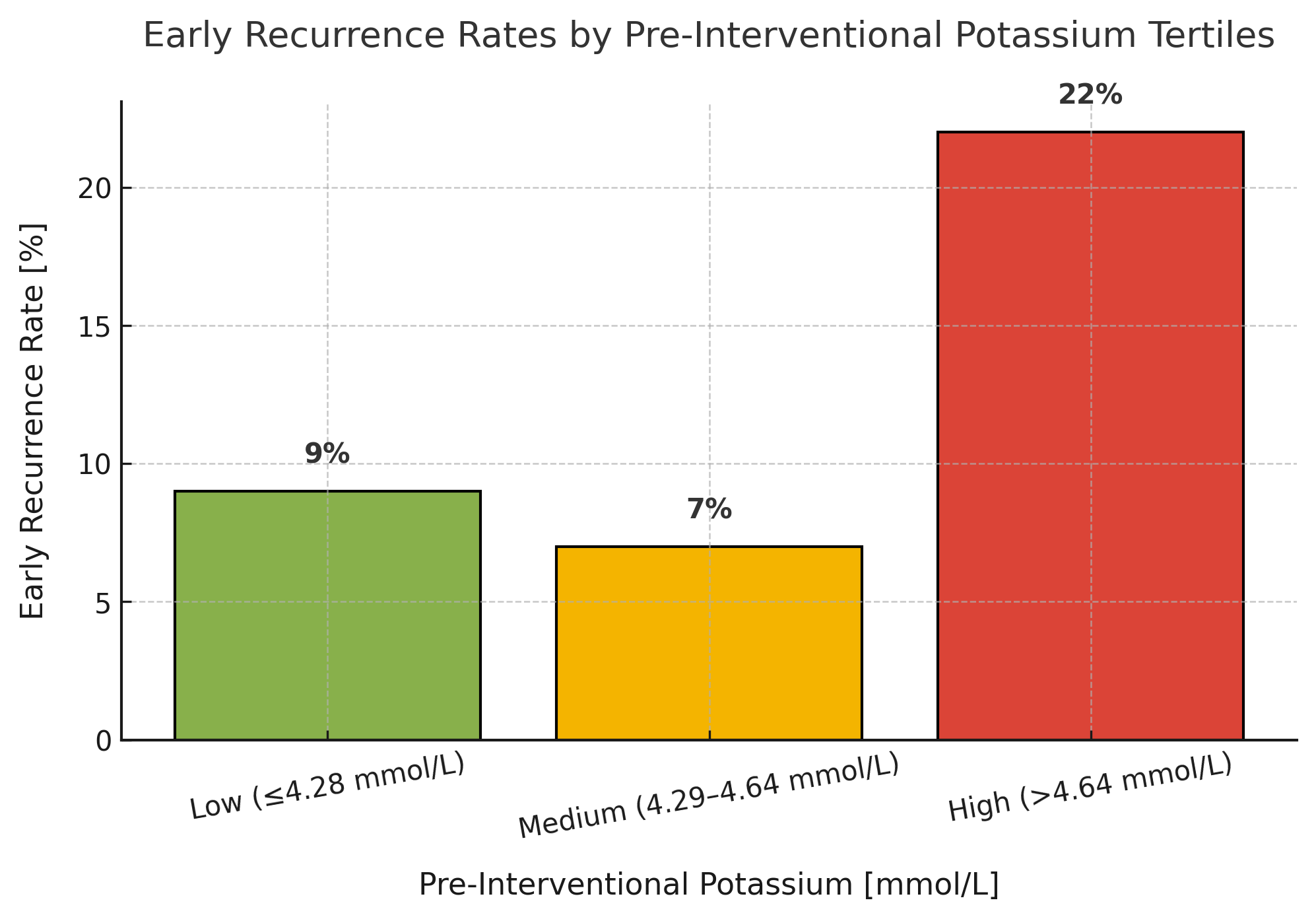
Higher pre-interventional potassium remained an independent predictor of early recurrence (adjusted OR 3.23; 95% CI 1.04–10.03; p = 0.042) after adjustment for LAD, BMI, AF type, and age. Patients in the upper tertile of pre-procedural potassium (> 4.64 mmol/L) exhibited the highest early-recurrence rate (22 %) compared to the low (≤ 4.28 mmol/L, 9 %) and middle (4.29–4.64 mmol/L, 7 %) tertiles.
No significant associations were found between potassium levels and recurrence during the 3-month blanking period or later recurrence during long-term follow-up (all p > 0.25).
Conclusion
Elevated pre-interventional potassium levels were independently associated with a higher risk of early recurrence after re-do ablation, whereas post-interventional values and short-term changes showed no predictive value for later recurrences.
These findings support a U-shaped relationship between potassium concentration and atrial arrhythmogenicity, with near-hyperkalemic levels (> 4.6 mmol/L) increasing acute post-procedural vulnerability.
Targeted periinterventional potassium optimization may therefore help reduce early recurrence rates after repeat ablation procedures.