Background and objectives
Emerging evidence suggests that systemic vascular function plays an important role in the pathophysiology of heart failure (HF). While cross-sectional studies have consistently demonstrated an association between impaired vascular function with early vascular ageing and prevalent HF, the longitudinal prognostic value of endothelial-dependent vasodilation for incident HF in the general population has been characterized only in a few studies, mostly using highly selected patient populations. We aimed to analyze the longitudinal association between vascular function measured via a non-invasive ultrasound technique and the future development of symptomatic heart failure in the general population.
Study design and methods
We analyzed data from the Study of Health in Pomerania (SHIP) with participants of the SHIP-START-2 cohort (n=2,332). After exclusion of individuals without follow-up assessment in SHIP-START-3 (n=615), with prevalent HF (n=226), as well as missing covariables (n=558), in total n=933 participants were included in the final analysis sample (mean age 55 ±13 years, 51% female). Vascular function was quantified by flow-mediated dilation of the brachial artery (baFMD). Incident HF cases were identified during follow-up at SHIP-START-3 based on clinical diagnosis of symptomatic HF with both preserved and reduced ejection fraction. Associations between baFMD at SHIP-START-2 and HF incidence in SHIP-START-3 were evaluated using multivariable logistic regression models, adjusting for confounders: age, sex, treated/untreated arterial hypertension, metabolic syndrome, and baseline brachial artery diameter at SHIP-START-2.
Results
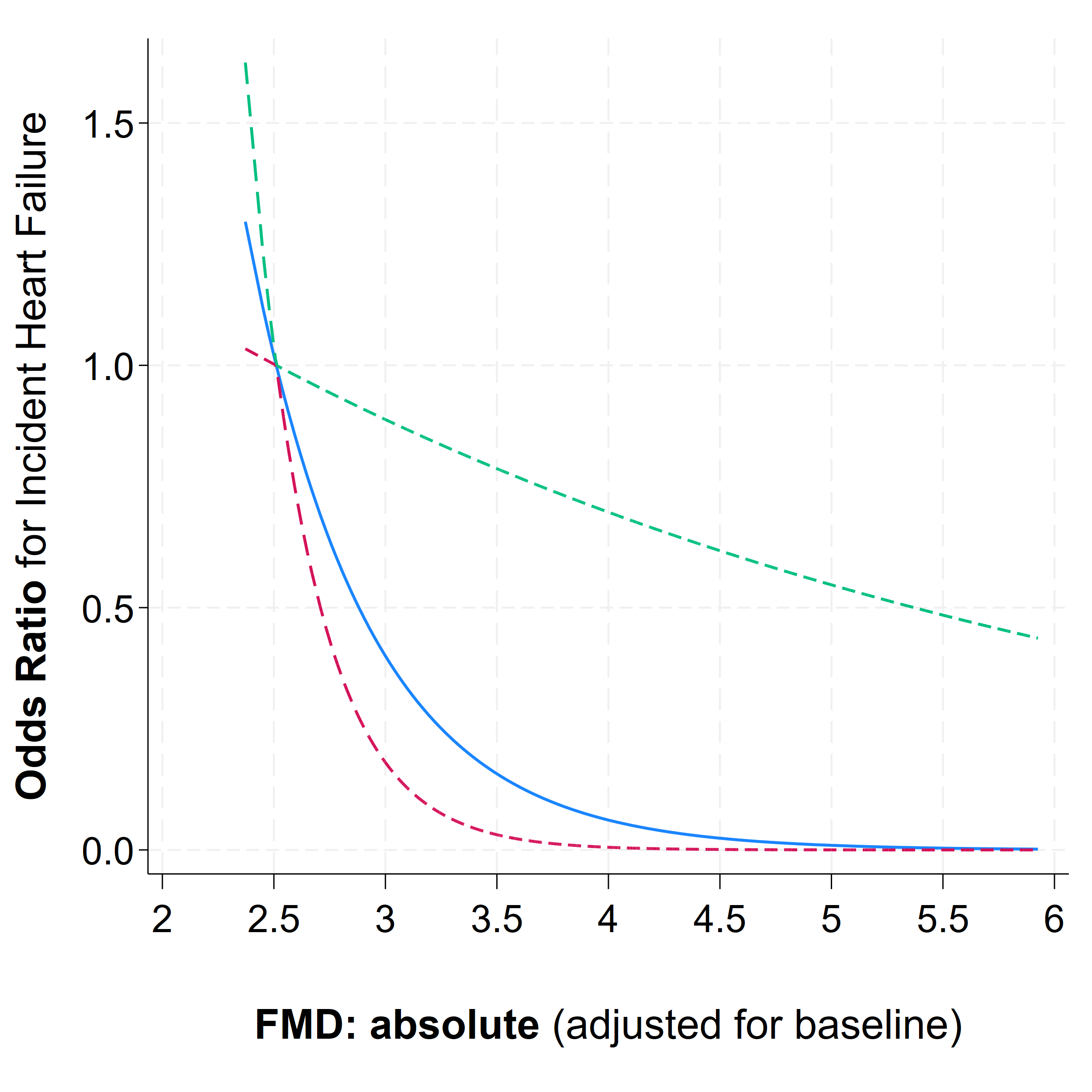
During a median follow-up of 4.9 (4.1-5.5) years, 127 participants of the SHIP-START-2 cohort developed heart failure. The mean baFMD values at baseline were 5.83 ± 3.84% in participants who remained free of HF (n=806), compared to 4.87 ± 4.08% in those who subsequently developed HF (n=127) (p<0.01). Multivariable logistic regression analysis demonstrated an inverse association between absolute baFMD test results at baseline and incident heart failure. Each 1 mm increase in baFMD diameter corresponded to an 85% lower likelihood of incident HF (adjusted odds ratio = 0.15; 95% confidence interval: 0.03-0.78; p = 0.02, Figure 1).
Conclusion
The present study detected an inverse association between baseline baFMD, a marker of impaired vascular function, and the risk of incident symptomatic heart failure over five years of follow-up in a population-based cohort. This finding supports the concept that vascular aging and endothelial dysfunction may precede and contribute to the clinical manifestation of HF. Further studies might clarify the causal pathways of early vascular aging in heart failure to determine whether improvement of vascular function could serve as a preventive strategy against heart failure in the general population.