Aims:
Takotsubo syndrome (TTS) is an acute cardiac condition marked by transient left ventricular dysfunction. Pharmacological management is largely empirical. SGLT2 inhibitors (SGLT2i) offer cardioprotective effects in other cardiovascular diseases, but their impact in TTS is unclear. We thus aim to evaluate whether SGLT2i improve long-term survival after TTS.
Methods and Results
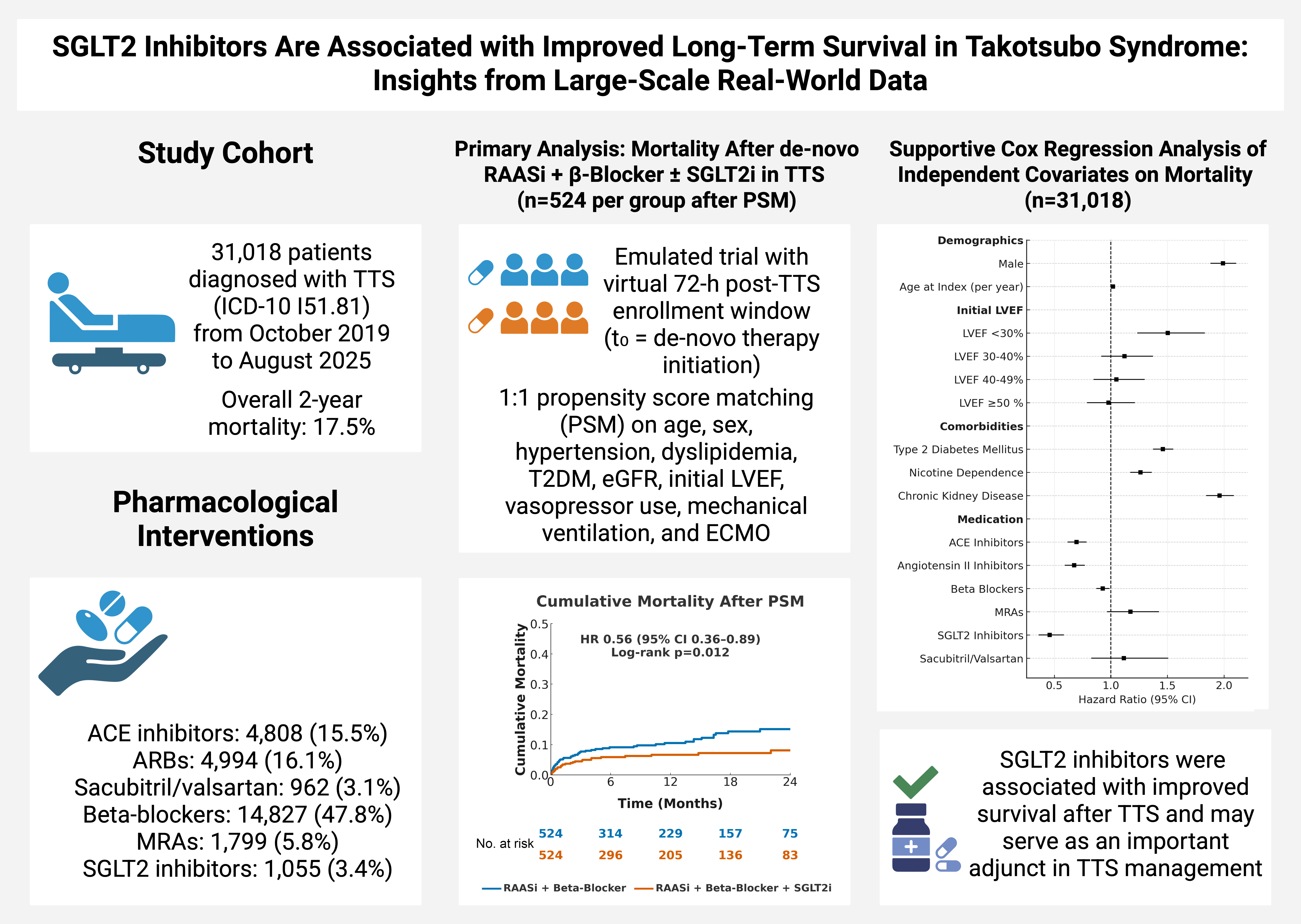
We conducted a trial emulation based real-world data of the TriNetX global network including patients with TTS diagnosed October 2019–August 2025 (n=31,018). The primary analysis emulated a de-novo pharmacotherapy initiator cohort with a ≤72-hour post-diagnosis enrollment window evaluating the addition of SGLT2i to RAAS inhibitors (RAASi) and beta-blockers (BB). Follow-up began at pharmacotherapy initiation; two-year survival was analyzed. Propensity-score matching was performed for age, sex, diabetes, hypertension, dyslipidemia, renal function, initial left ventricular function at diagnosis, and acute severity markers. The median follow-up was 13.3 months. Two-year mortality was 17.5%. After matching (yielding well-balanced 524 patients per group), mortality was significantly reduced in the SGLT2i group compared to RAASi + BB alone (HR 0.56, 95% CI 0.36–0.89). Results were consistent in an extended ≤30-day virtual-enrollment window. A supportive multivariable Cox model considered overall exposure to different therapies (n=31,018). SGLT2i were associated with the largest reduction in mortality, followed by angiotensin receptor blockers, ACE inhibitors, and BB. Sacubitril/valsartan and MRAs showed no significant association with mortality.
Conclusions
In the largest real-world TTS cohort, SGLT2i were associated with lower long-term mortality. These findings support their consideration in TTS management and justify randomized trials to evaluate SGLT2i as adjunctive therapy.