Comparative Safety and Efficacy of New-Generation Single-Layer Polytetrafluorethylene versus Polyurethan Covered Stents in Patients With Coronary Artery Perforation

S. Kufner (München)1, F. Voll (München)2, M. Ferenc (Bad Krozingen)3, J. Wöhrle (Friedrichshafen)4, H. Eggebrecht (Frankfurt am Main)5, C. Schlundt (Ansbach)6, B. Schrage (Hamburg)7, W. Kuliczkowski (Wroclaw)8, C. von zur Mühlen (Freiburg im Breisgau)9, K.-L. Laugwitz (München)10, H. Schunkert (München)2, D. Westermann (Freiburg im Breisgau)11, R. Birkemeyer (Ulm)12
1Helios Klinikum München West Medizinische Klinik I, Kardiologie München, Deutschland; 2Deutsches Herzzentrum München Klinik für Herz- und Kreislauferkrankungen München, Deutschland; 3Universitäts-Herzzentrum Freiburg / Bad Krozingen Klinik für Kardiologie und Angiologie II Bad Krozingen, Deutschland; 4Medizin Campus Bodensee Klinik für Kardiologie, Pneumologie und Intensivmedizin Friedrichshafen, Deutschland; 5CCB am AGAPLESION BETHANIEN KRANKENHAUS Medizinisches Versorgungszentrum Frankfurt am Main, Deutschland; 6Praxis für Kardiologie und Angiologie Ansbach, Deutschland; 7Universitäres Herz- und Gefäßzentrum Hamburg Klinik für Kardiologie Hamburg, Deutschland; 8Wroclaw Medical University Institute for Heart Diseases Wroclaw, Polen; 9Albert- Ludwigs-Universität Freiburg Innere Medizin III, Kardiologie und Angiologie Freiburg im Breisgau, Deutschland; 10Klinikum rechts der Isar der Technischen Universität München Klinik und Poliklinik für Innere Medizin I München, Deutschland; 11Universitäts-Herzzentrum Freiburg - Bad Krozingen Innere Medizin III, Kardiologie und Angiologie Freiburg im Breisgau, Deutschland; 12Cardiologicum Herzklinik Ulm MVZ Ulm, Deutschland

Background

New-generation single-layer polytetrafluorethylene (PTFE-) or polyurethan (PU-) covered stent (CS) for the treatment of coronary artery perforation (CAP) during PCI offer high procedural efficacy.
Aim 

To evaluate the comparative long-term safety and efficacy of both devices.

Methods

This is a multicenter pooled analysis of individual data of patients with CAP undergoing implantation of single-layer PTFE-CS or PU-CS (Figure1). Procedural endpoint was, strategy success defined as successful placement of CS and sealing of perforation without surgical conversion.

Clinical endpoints were mortality, myocardial infarction (MI), target vessel revascularization (TVR) and definite or probable stent thrombosis (def/prob ST) at 12 months.

Results

170 patients with CAP underwent implantation of 208 CS, 92 PTFE-CS and 116 PU-CS. More than one stent was implanted in 13 patients (17.1%) in PTFE-CS group and 19 patients (20.2%) in PU-CS group, p=0.80. Strategy success was high (96.1% versus 92.5%., P=0.62). 

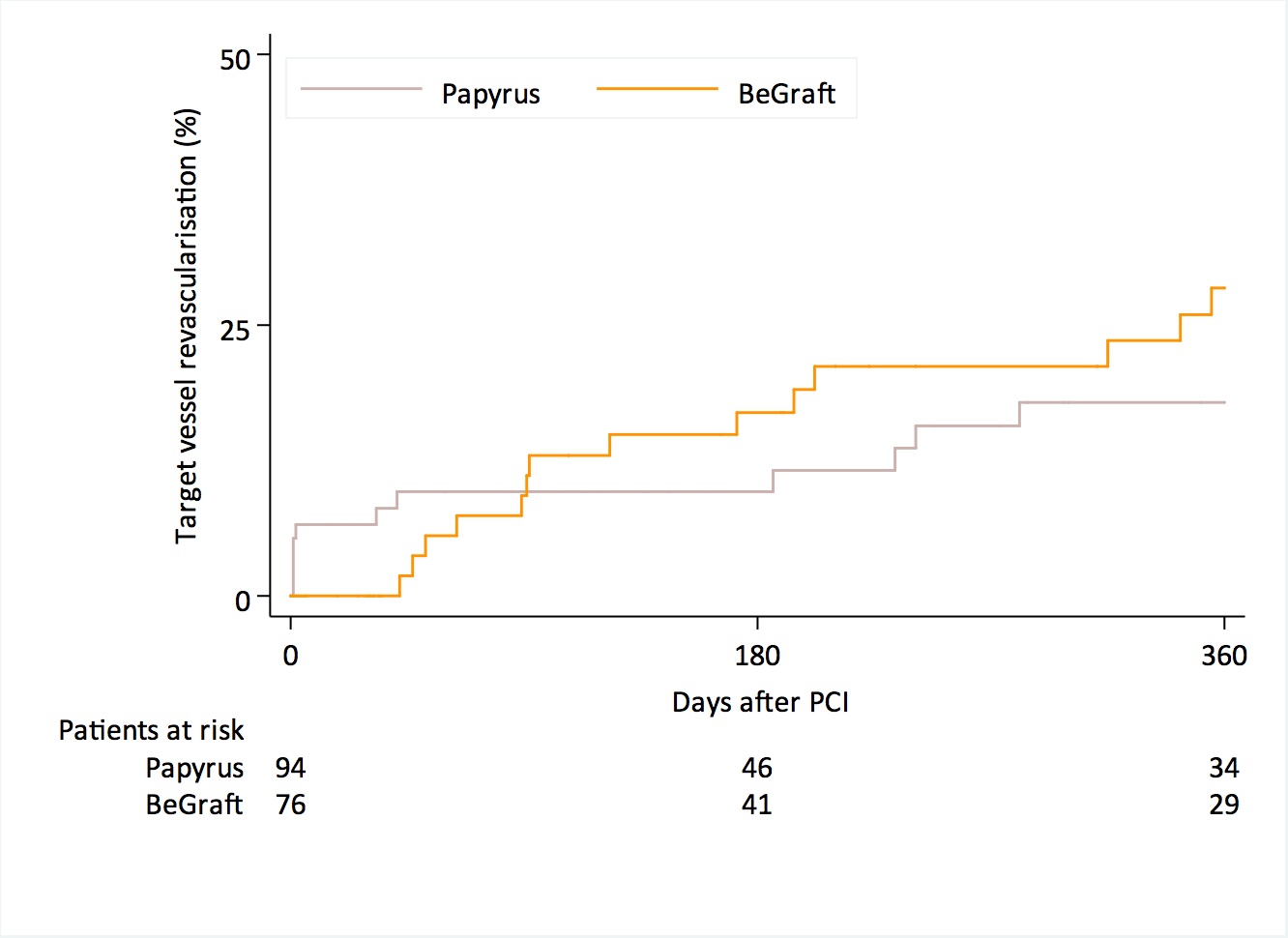
At 12 months 71 patients (93.2%) in PTFE-CS group versus 79 patients (81%) in the PU-CS were alive, P=0.05, TVR occurred in 14 patients (28.4%) in PTFE-CS group and 12 patients (17.9%) in PU-CS group, p=0.54 (Figure 2 ); MI in 1 patient (1.3%) in PTFE-CS group and 1 patients (1.1%) in PU-CS group, p=0.86. Rates of def/prob ST were comparable 1.3% in PTFE-CS versus 3.1% in PU-CS P=0.95.

Conclusions

A strategy of implantation of a new generation single layer PTFE- or PU-CS for the treatment of coronary artery perforation showed high success rates. Both new generation CS showed favourable and similar clinical safety, in particular with regard to thrombotic events.
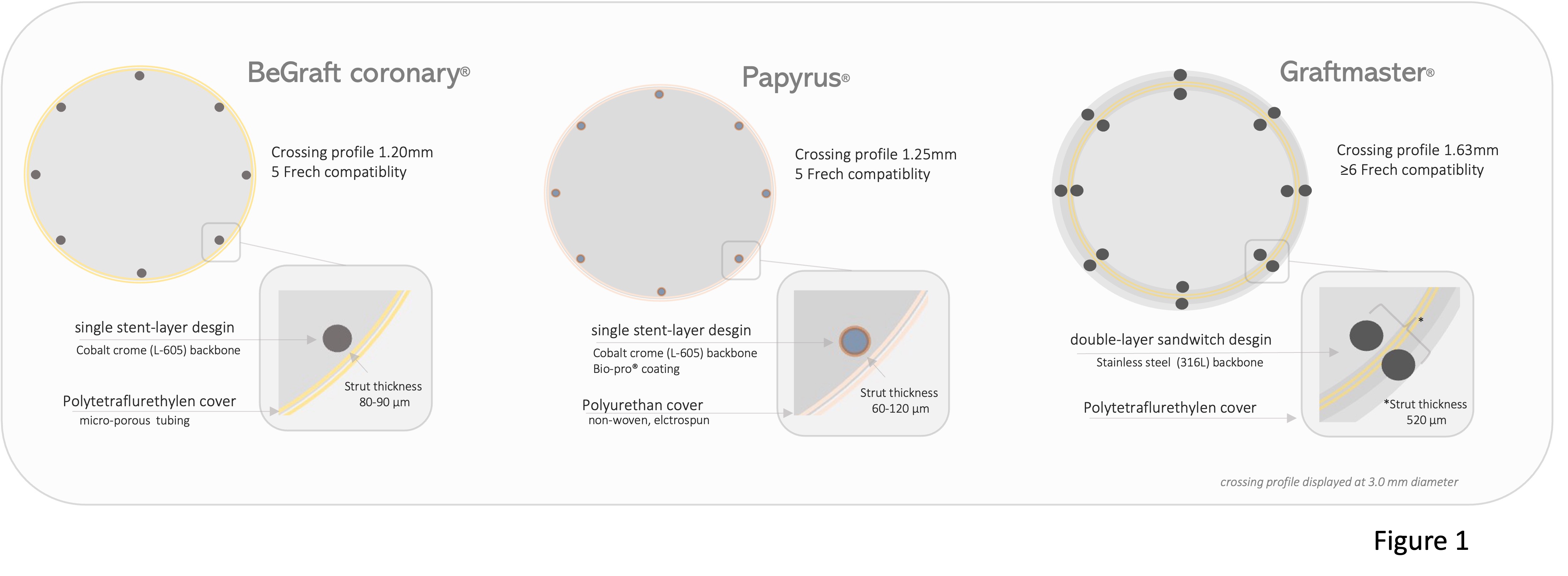


Figure 2