Background:
Leadless pacemakers (LP) are increasingly used as an alternative to conventional transvenous pacing systems, offering lower rates of lead-related complications and device infections. Initial devices were limited to ventricular pacing only; however, newer technologies enable atrioventricular synchrony and atrial pacing, expanding potential indications. Nationwide real-world data on patient selection, indications and in-hospital outcomes remain limited.
Purpose:
To evaluate nationwide trends in implantation rates, patient characteristics, pacing indications, and in-hospital outcomes of LP implantation in Germany.
Methods:
This retrospective observational study included all in-hospital cases of LP implantation in Germany between 2019 and 2022 using the Diagnosis Related Groups (DRG) statistics database from the Research Data Center of the Federal Statistical Office. Annual implantation rates were calculated per 100,000 population and stratified by age group and gender. Temporal changes in indications, comorbidity burden, and in-hospital outcomes were analyzed descriptively.
Results:
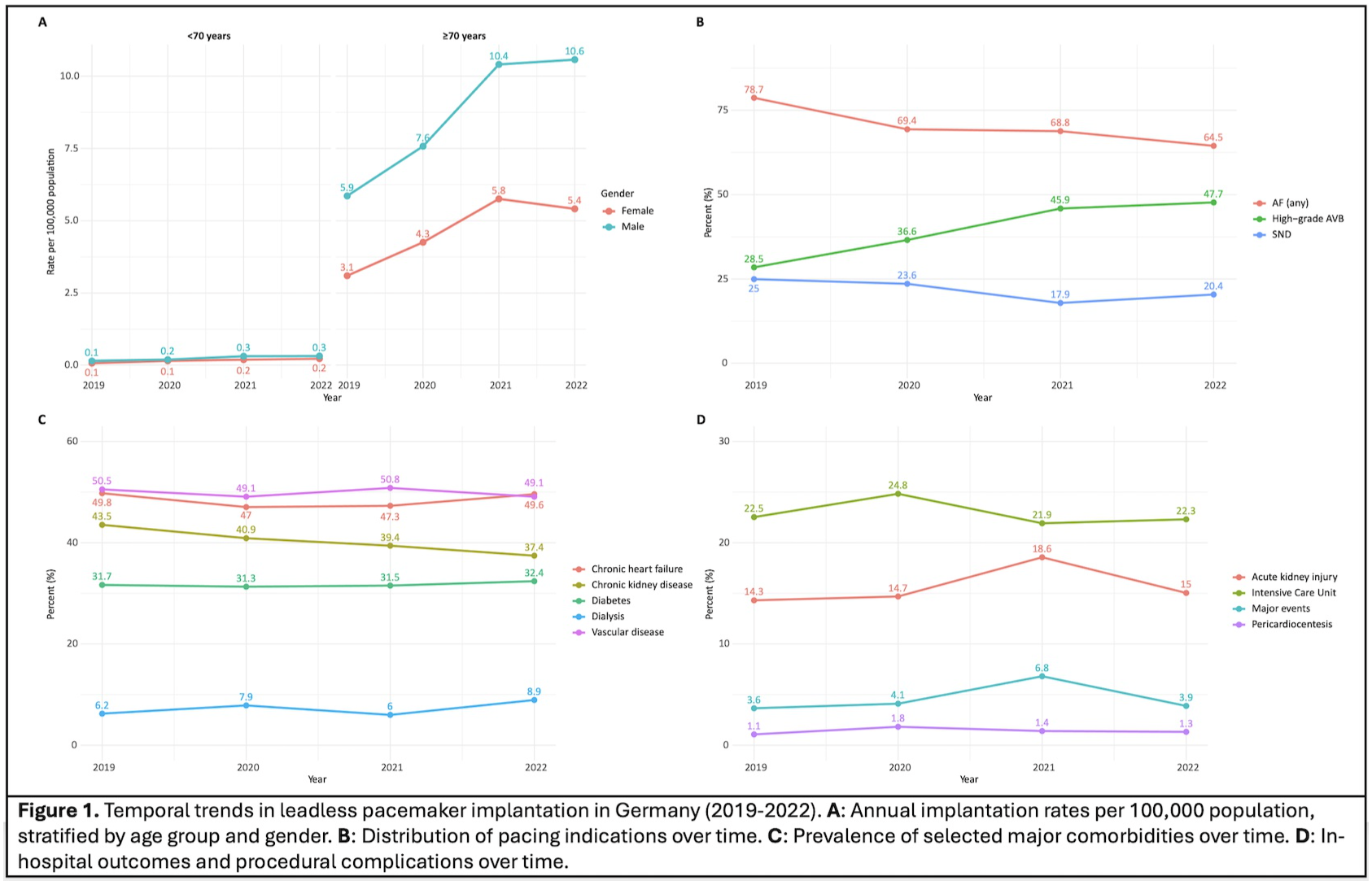
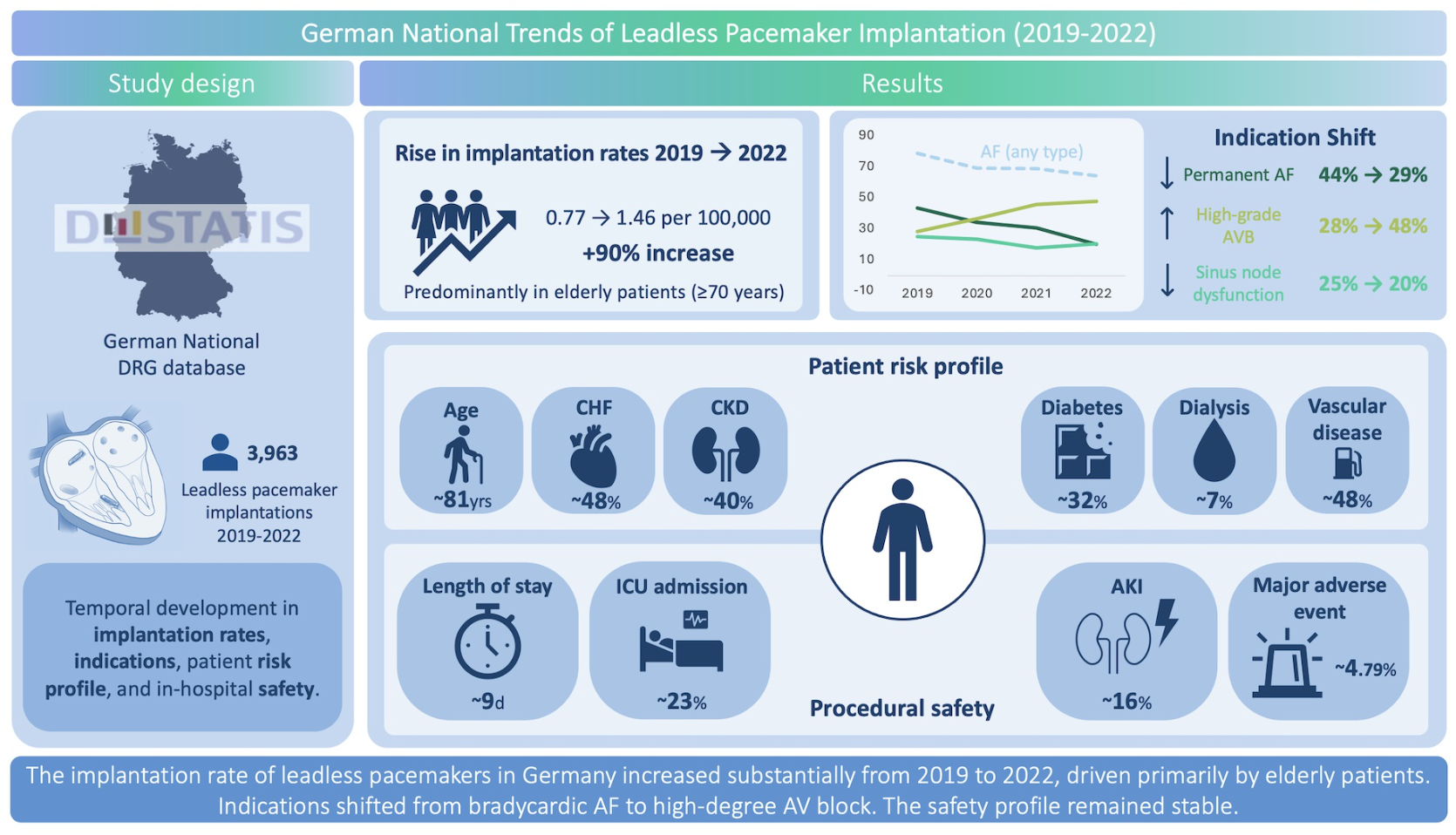
A total of 3963 patients underwent LP implantation between 2019 and 2022. Median age was 81 years, and 58% were male. Annual implantation rates nearly doubled from 0.77 per 100,000 population in 2019 to 1.46 per 100,000 in 2021 and remained unchanged in 2022. The increase was strongly age-dependent and predominantly affected elderly patients (Fig. 1A). Among individuals ≥70 years, rates rose from 5.8 to 10.6 per 100,000 in men and from 3.1 to 5.4 per 100,000 in women between 2019 and 2022. The highest rates were observed in men ≥80 years, reaching 16.8 per 100,000 in 2022, whereas implantation remained rare in patients <70 years (<0.5 per 100,000 across all years). The indication profile changed over time. Implantation for bradycardic atrial fibrillation (AF) decreased from 79% in 2019 to 64% in 2022, whereas high-grade atrioventricular block (AVB)(second- or third-degree) increased from 28% in 2019 to 48% in 2022 (Fig. 1B). Implantations for third-degree AVB rose from 25% to 39% during the study period.
Patients exhibited a persistently high comorbidity burden between 2019 and 2022, with a median of 5 Elixhauser comorbidities. Chronic heart failure (48%), vascular disease (48%), and chronic kidney disease (40%) were the most prevalent conditions and remained stable over time (Fig. 1C).
In-hospital outcomes remained stable: median length of stay was 9 days, major in-hospital adverse events remained below 7% annually, and procedural cardiac complications were infrequent, including pericardial effusion (1.03%), pericardiocentesis (1.41%) and pericardiotomy (0.68%) (Fig 1D).
Conclusion:
The Nationwide German analysis demonstrated a substantial increase in the implantation rate of LP between 2019 and 2022, driven mainly by elderly patients. Indications shifted from bradycardic AF to high-degree AV block. Patient complexity and in-hospital safety remained stable.