Background and Aim: Atrial fibrillation (AF) and functional mitral regurgitation (FMR) frequently coexist and are linked through shared mechanisms of atrial and ventricular remodeling. Both catheter ablation and transcatheter edge-to-edge mitral valve repair (M-TEER) improve clinical status, yet the optimal sequence of these interventions remains unclear. This study evaluates real-world outcomes in patients with AF and FMR, comparing catheter ablation and M-TEER as initial strategies, with focus on MR severity, symptom stability, all-cause mortality, and all-cause cardiac hospitalizations.
Methods: We conducted a single-center retrospective analysis of patients with AF and moderate to moderate-to-severe FMR. Patients were grouped according to the initial treatment strategy: AF ablation or M-TEER. Clinical and echocardiographic data were reviewed at baseline and follow-up. A retrospective two-year follow-up was performed to evaluate changes in MR severity, symptom stability, all-cause mortality, and all-cause cardiac hospitalizations
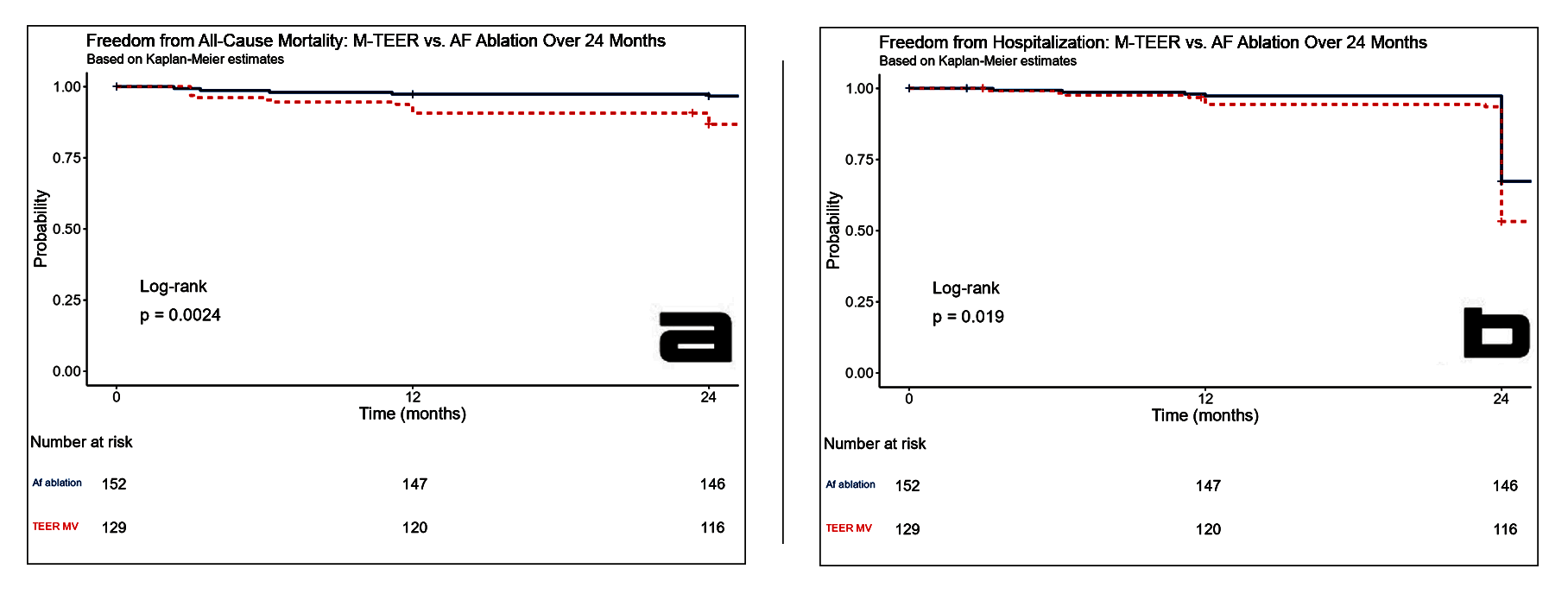
Results: A total of 281 patients were included (129 M-TEER, 152 AF ablation). MR severity improved more frequently following M-TEER (p < 0.001). However, AF ablation was associated with better symptom stability (69% vs. 44%, p < 0.001) (figure1), markedly lower all-cause mortality (3% vs. 14%, p= 0.002), less all-cause cardiac hospitalizations (p = 0.021) (figure2), and significant improvment in left ventricular ejection fraction at follow-up (53 ± 11.1%vs. 47 ± 13.9%, p < 0.001).
Conclusion: M-TEER was associated with greater MR reduction, while AF ablation showed more favorable clinical outcomes; however, baseline MR differences preclude conclusions on superiority, supporting a stage-dependent, complementary treatment approach requiring confirmation in prospective studies.
Figure 1: Improvement of MR severity and Symptoms
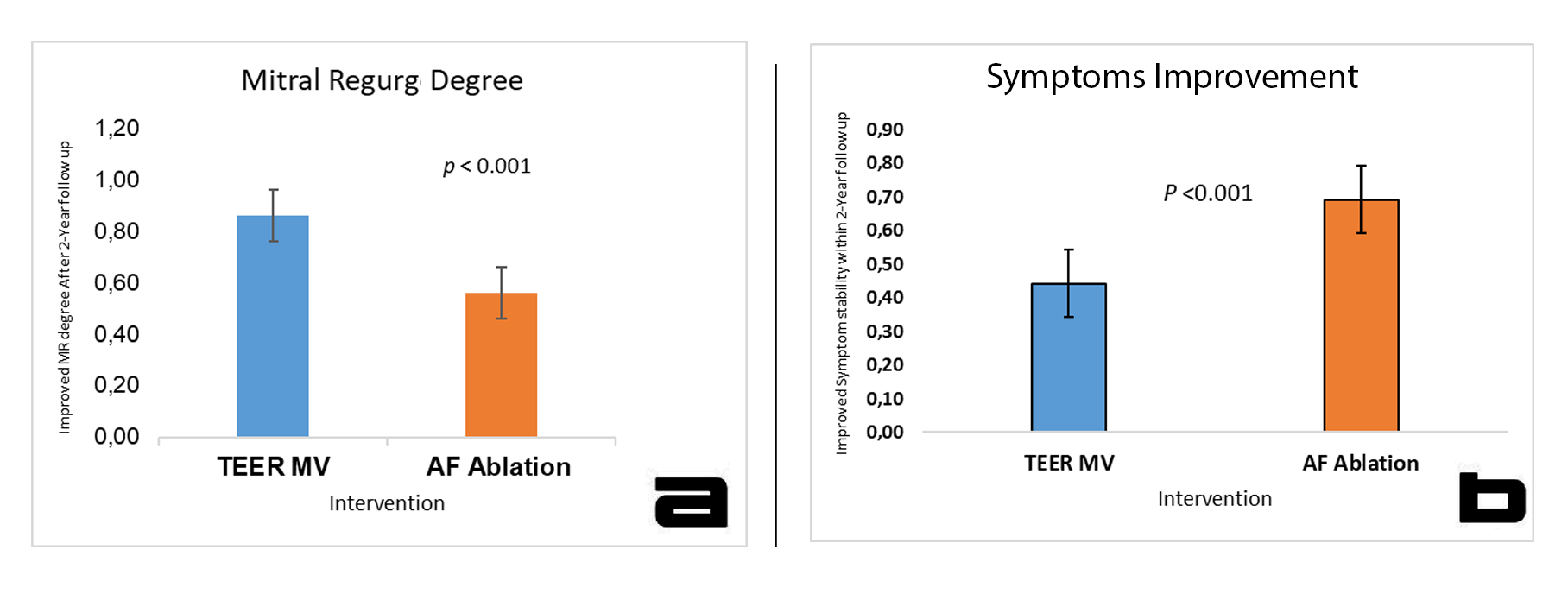
Figure 2: Outcomes of All-cause Mortality and Hospitalization during follow-up