Introduction
Endurance motorsport combines prolonged physical exertion, sustained sympathetic activation, sleep deprivation, and considerable cognitive demands, resulting in substantial cardiovascular stress. Previous studies have reported elevated heart rates during competitive driving; however, cardiovascular adaptation throughout an entire 24-hour endurance race remains poorly understood. In particular, continuous ambulatory electrocardiographic monitoring over the complete duration of such events has not been previously described.
Methods
Six male professional racing drivers competing in the ADAC RAVENOL 24h Nürburgring Race 2026 underwent continuous Holter ECG monitoring 24 hours in advance and throughout the event. Heart rate, heart rate variability, and cardiac arrhythmias were assessed during driving stints and recovery periods. In two drivers, blood samples obtained before and after the race were analyzed for creatinine, CK, CK-MB, hs-cTnT, and NT-proBNP. One driver additionally underwent continuous blood pressure monitoring. All participants were free of known cardiovascular disease and provided informed consent for data collection and publication.
Results
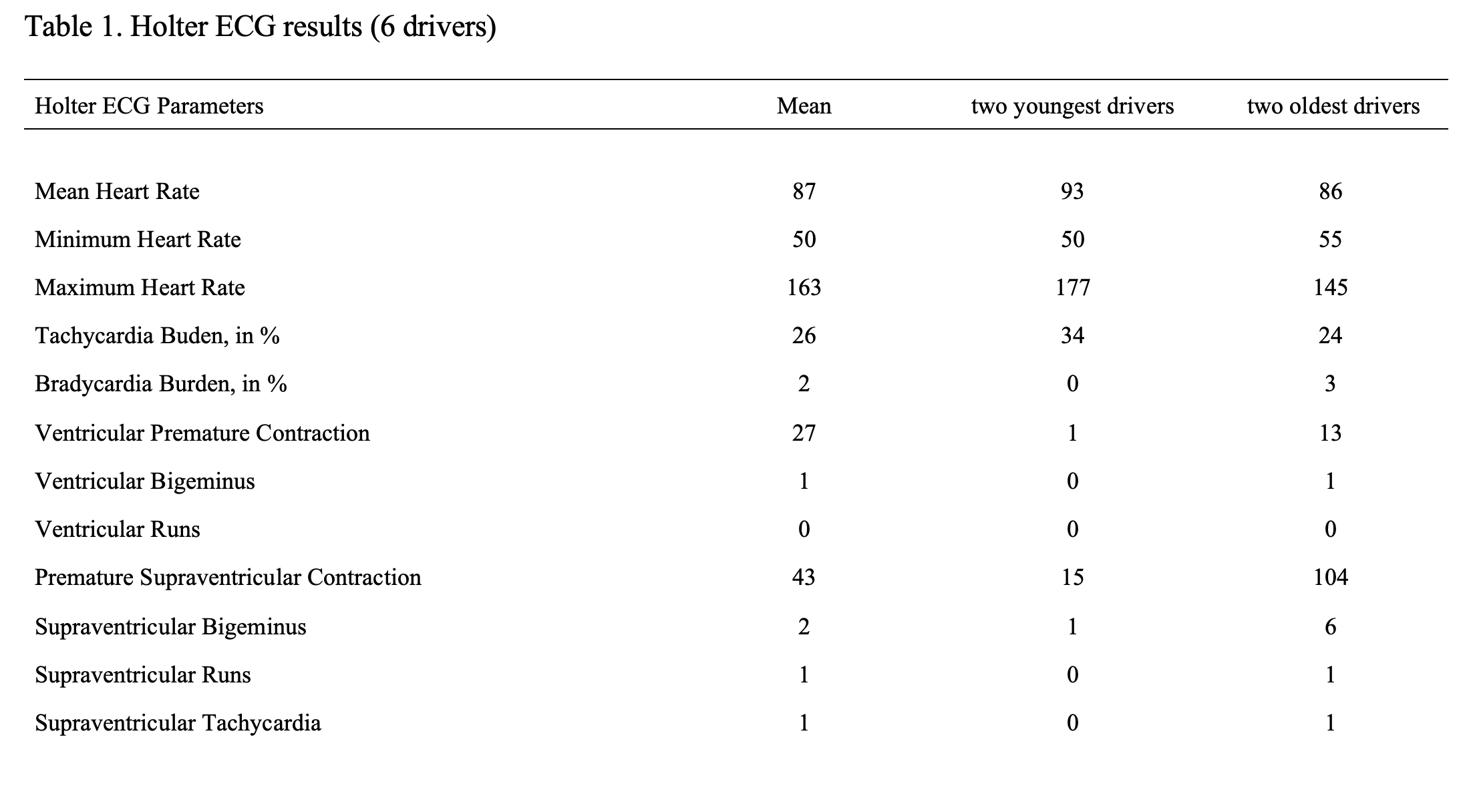
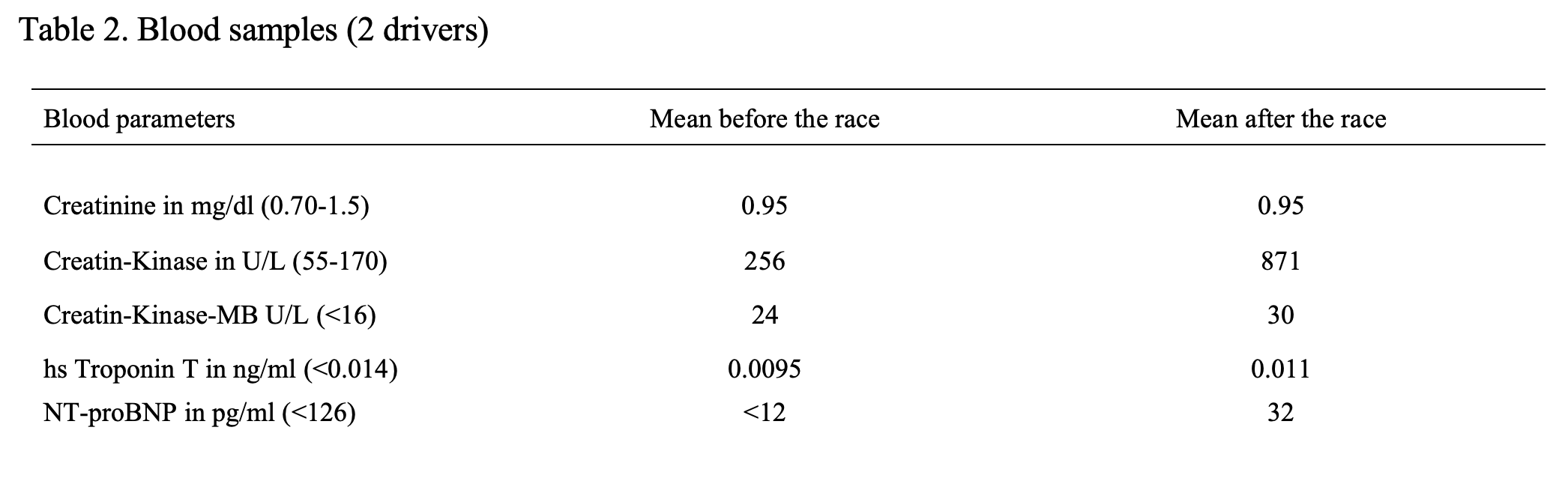
Heart rate increased abruptly at the start of each driving stint and remained elevated throughout active driving, while declining during recovery periods (Figure 1). Drivers spent 26% of the monitored time in a tachycardic heart rate range. No malignant cardiac arrhythmias were observed. Heart rate variability progressively decreased with increasing race duration. On average, drivers exhibited 27 premature ventricular contractions and 43 premature supraventricular contractions; one driver experienced a 34-second episode of supraventricular tachycardia. Older drivers demonstrated a higher burden of ventricular and supraventricular ectopic activity than younger drivers (Table 1). Biomarker analysis revealed a threefold increase in CK and modest increases in CK-MB, hs-cTnT, and NT-proBNP following the race; however, all cardiac biomarkers remained within reference ranges. (Table 2)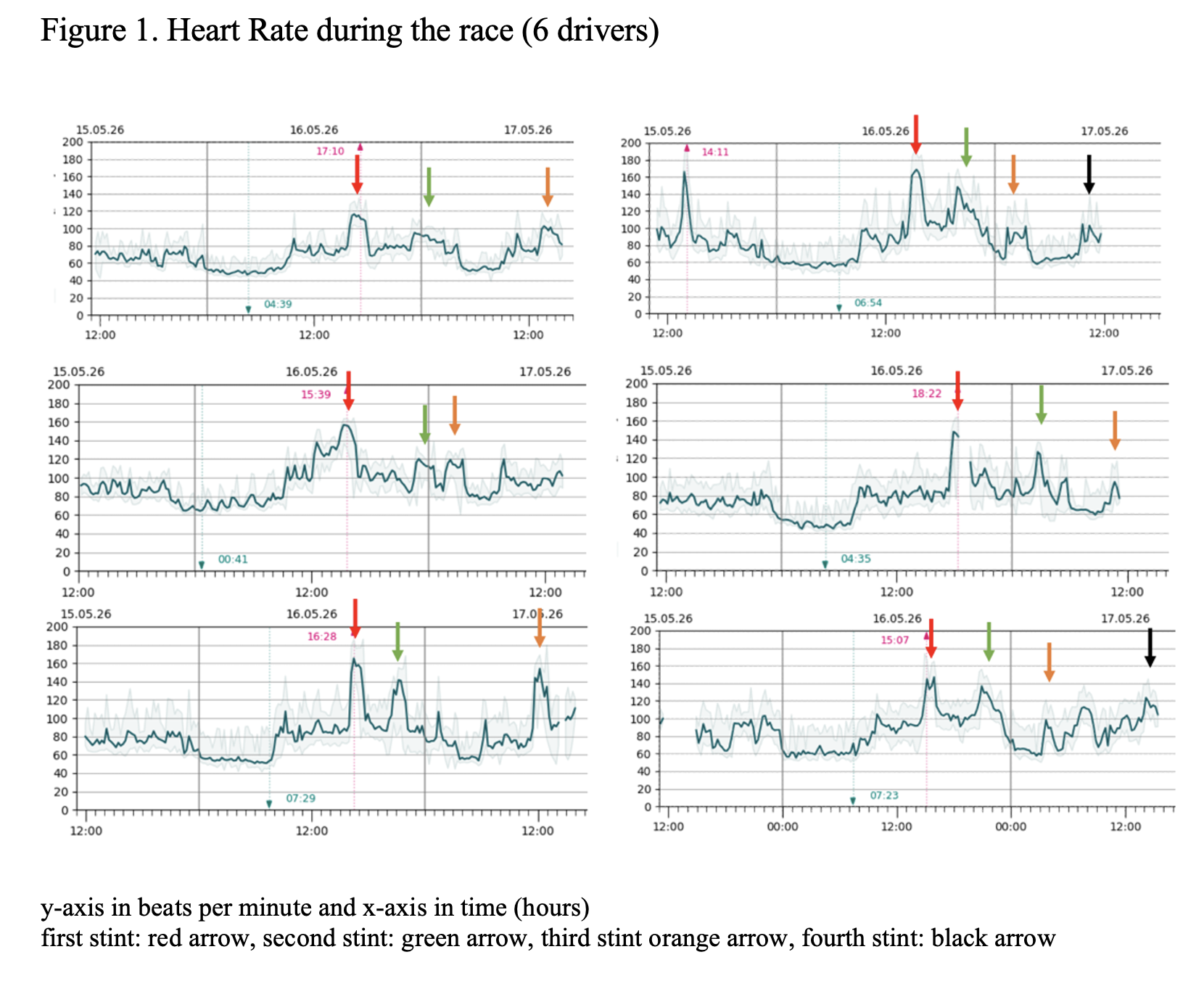
 Conclusion
Continuous Holter ECG monitoring enabled reliable cardiac rhythm assessment 24 hours in advance and throughout a 24-hour endurance race. Drivers exhibited substantial cardiovascular strain, reflected by elevated heart rates, changes in heart rate variability, and mild increases in cardiac biomarkers. No malignant arrhythmias were detected; however, older drivers demonstrated a higher burden of ventricular premature contractions. Larger prospective studies are warranted to confirm these findings.



