BackgroundLong-term outcomes after percutaneous coronary intervention (PCI) compared with coronary-artery bypass grafting (CABG) in patients with left main coronary artery disease remain insufficiently defined, particularly beyond 10 years of follow-up.
MethodsBetween July 2003 and February 2009, a randomized trial comparing PCI (n=100) with CABG (n=101) in patients with unprotected left main coronary artery disease was conducted at four tertiary care centers in Germany. The present analysis reports extended follow-up to a maximum of 20 years. The primary endpoint of the extended follow-up study was all-cause mortality. Prespecified subgroup analyses were performed for age, sex, diabetes status, anatomic characteristics of coronary artery disease, operative risk, and left ventricular ejection fraction.
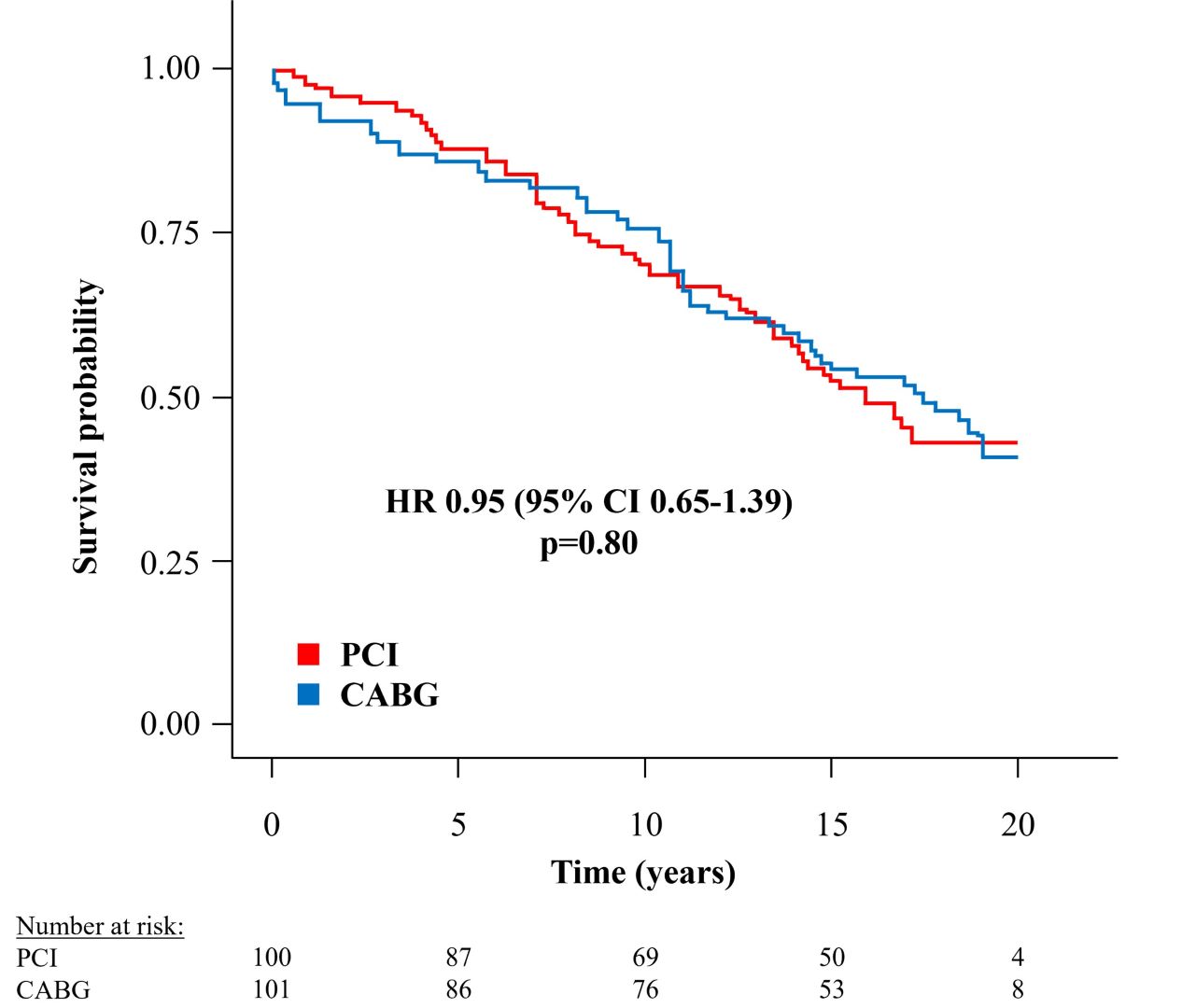
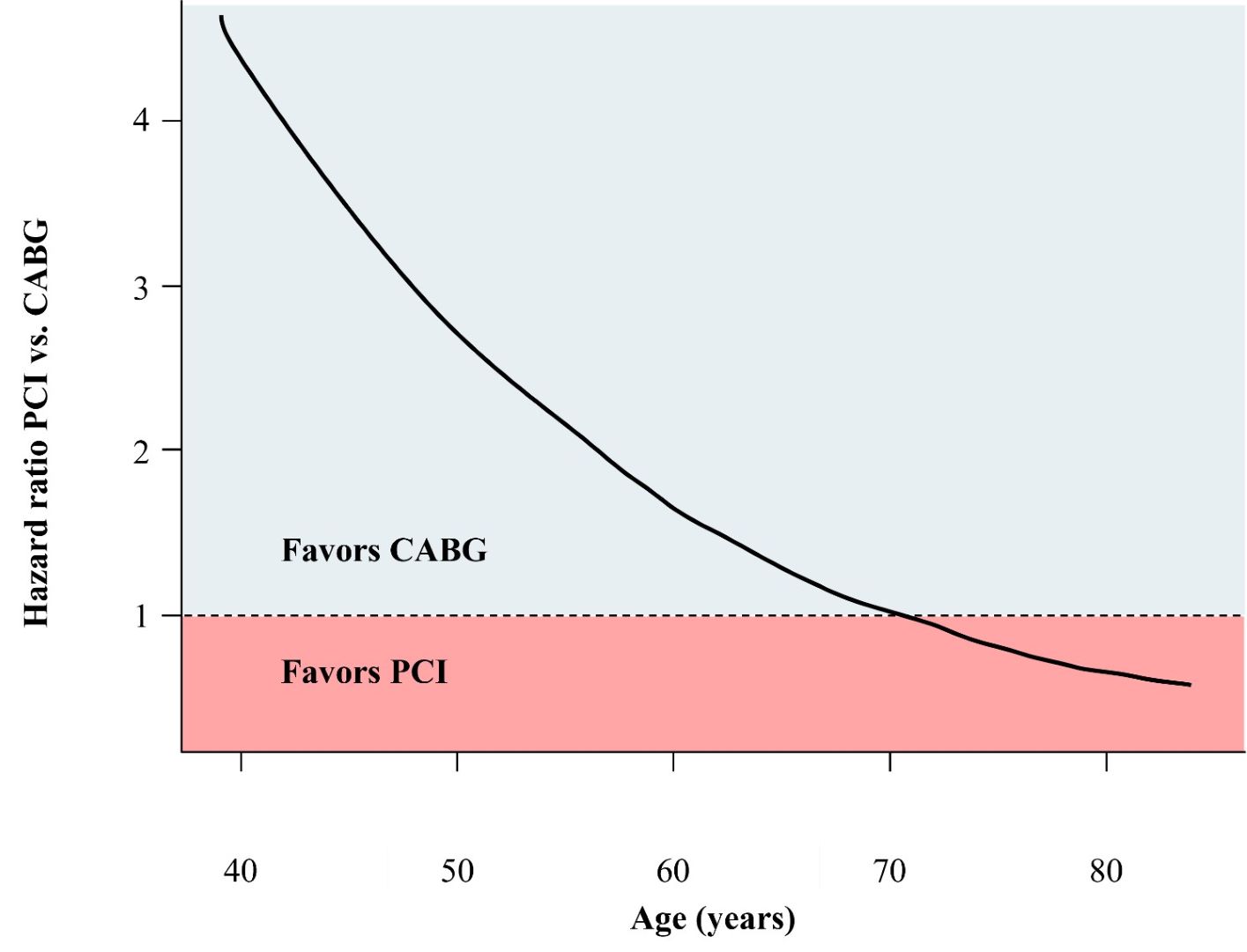
ResultsMedian follow-up duration was 15.2 years (interquartile range 8.6–18.0), with complete follow-up for all patients. In the overall population, there was no significant difference in long-term all-cause mortality between PCI and CABG, with estimated survival at 10, 15, and 20 years of 69.7% versus 76.1%, 52.3% versus 53.9%, and 43.1% versus 41.0%, respectively (log-rank p=0.80). The relative effect of PCI versus CABG varied with age, suggesting a relative benefit of CABG in younger patients.
ConclusionsIn patients with left main coronary artery disease, PCI and CABG were associated with comparable long-term survival in the overall population. CABG may be associated with improved long-term survival among younger patients. These findings support individualized revascularization strategy selection based on clinical profile and anticipated life expectancy.