Background:
The prognostic significance of the timing of ventricular tachycardia (VT) recurrence after catheter ablation remains poorly defined. Whether very early recurrence reflects procedural failure, advanced disease severity, or a distinct clinical phenotype is unknown.
Objective:
To evaluate the clinical characteristics and outcomes associated with different timings of VT recurrence following catheter ablation in patients with structural heart disease (SHD).
Methods:
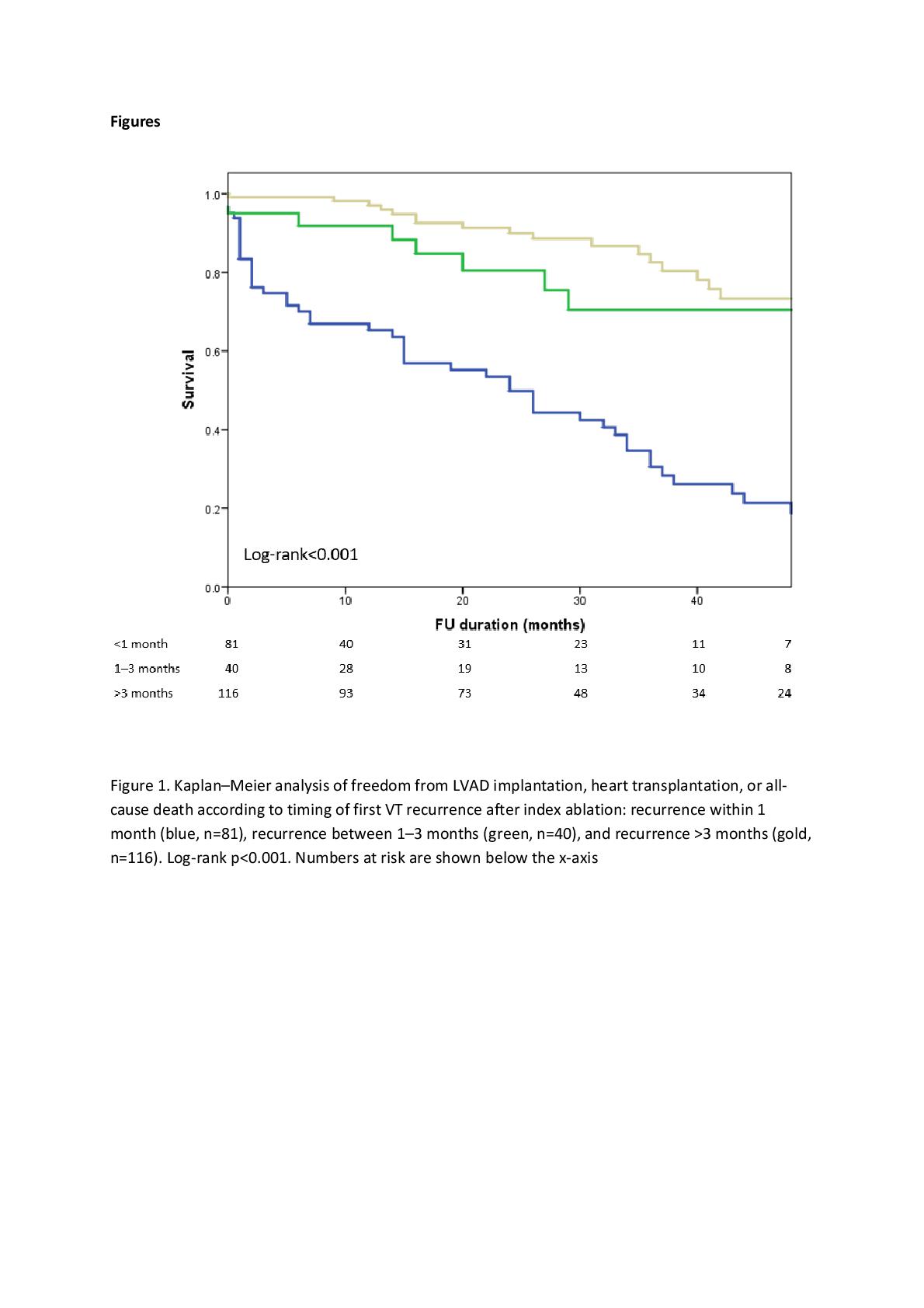
We retrospectively analyzed consecutive patients with SHD undergoing index VT ablation between 2019 and 2025 at a tertiary referral center. Patients with documented VT recurrence were categorized according to the timing of first recurrence: within 1 month, between 1 and 3 months, and beyond 3 months after ablation. Baseline, procedural, and follow-up characteristics were compared between groups. The primary endpoint was a composite of left ventricular assist device (LVAD) implantation, heart transplantation (HTx), or all-cause death.
Results:
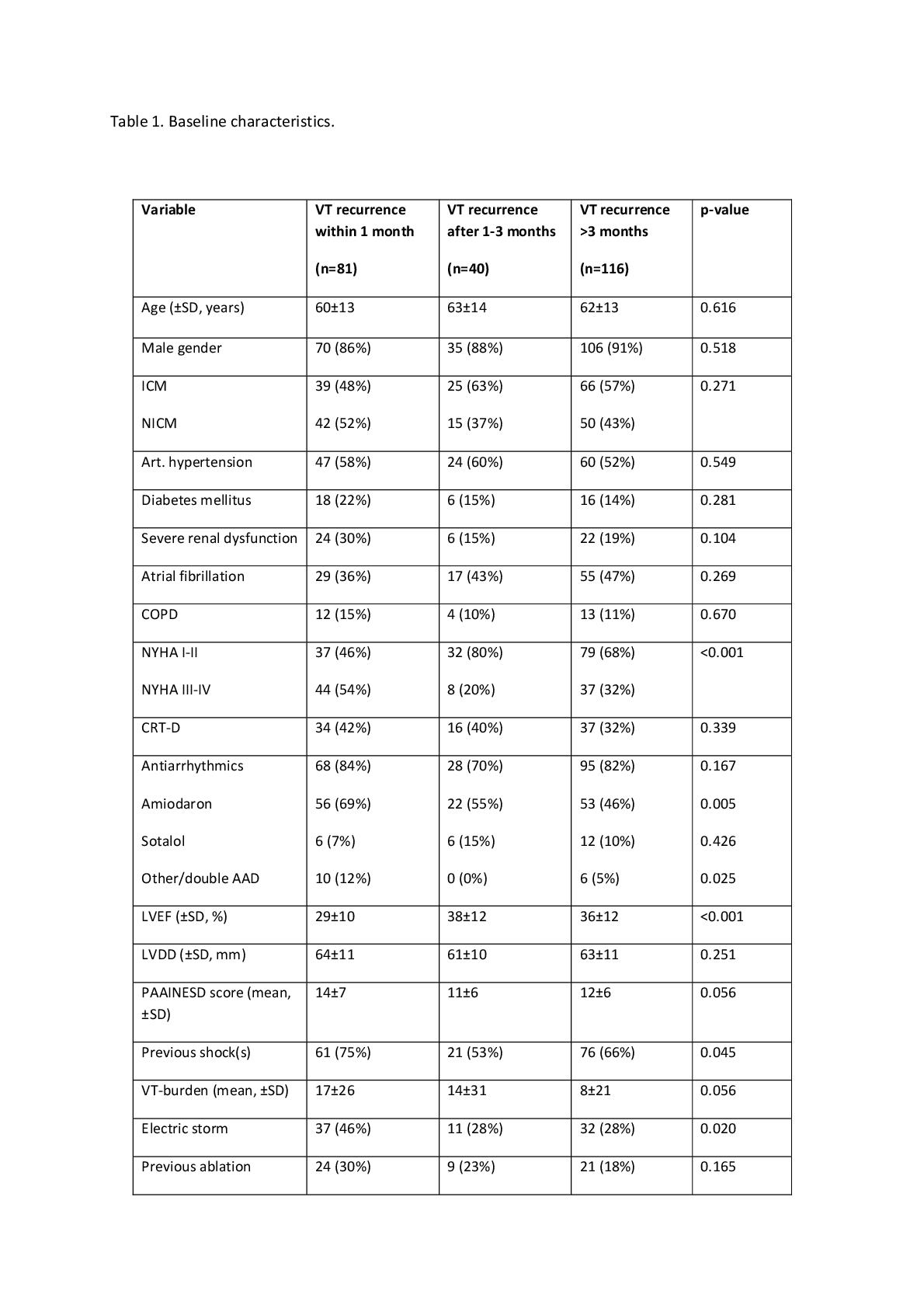
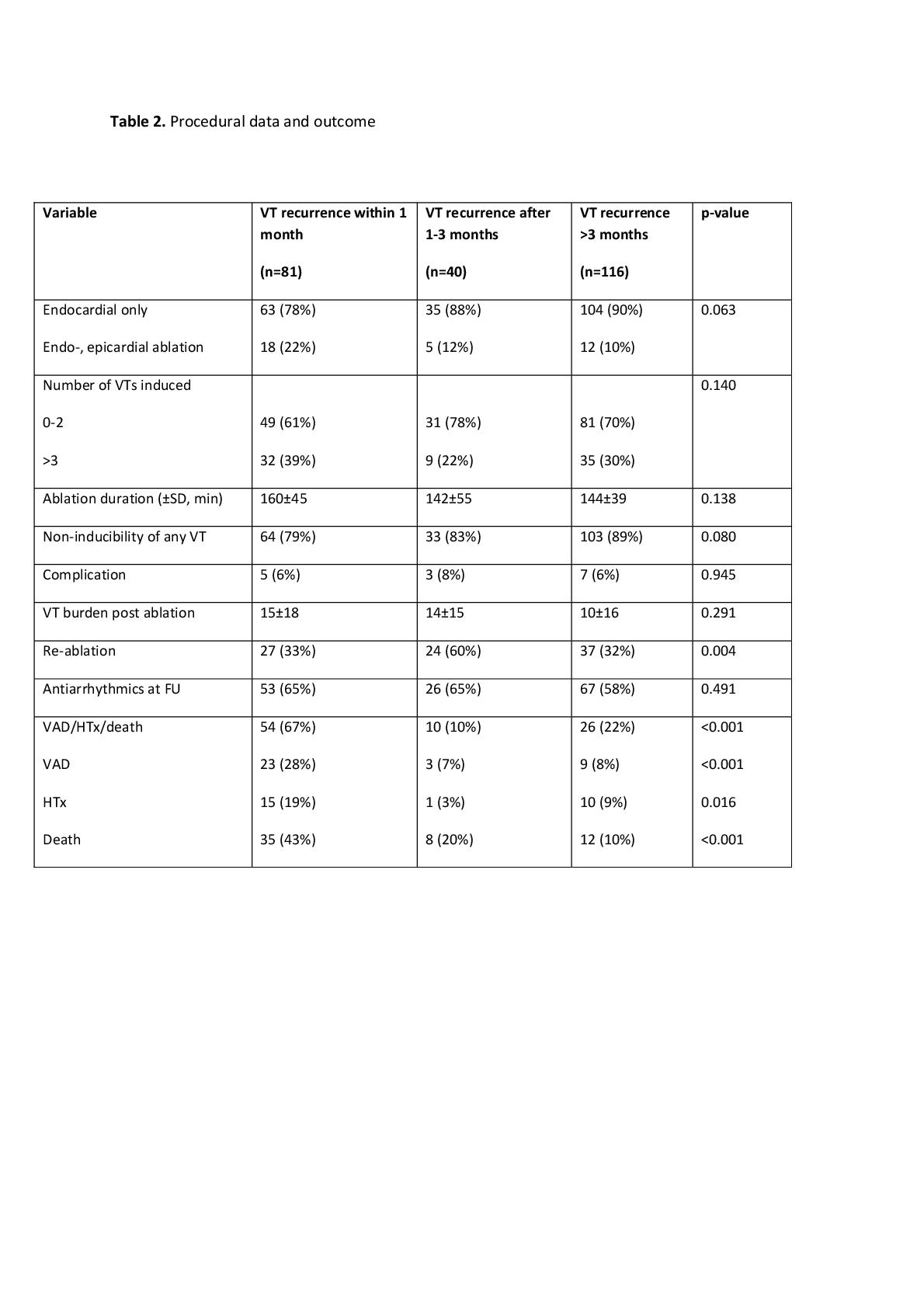
Among 237 patients with documented VT recurrence, 81 (34%) experienced recurrence within 1 month, 40 (17%) between 1 and 3 months, and 116 (49%) beyond 3 months. Patients with recurrence within 1 month demonstrated more advanced heart failure characteristics, including lower left ventricular ejection fraction (29±10% vs. 38±12% vs. 36±12%; p<0.001), a higher prevalence of NYHA class III–IV symptoms (54% vs. 20% vs. 32%; p<0.001), more frequent electrical storm (46% vs. 28% vs. 28%; p=0.020), and a greater burden of prior ICD shocks (75% vs. 53% vs. 66%; p=0.045). During follow-up, the composite endpoint of LVAD implantation, HTx, or death occurred significantly more often in patients with recurrence within 1 month compared with later recurrence patterns (67% vs. 25% vs. 22%; p<0.001). In multivariable logistic regression analysis, lower left ventricular ejection fraction remained the only independent predictor of very early recurrence (OR 0.75 per 5% increase, 95% CI 0.63–0.88; p=0.001).
Conclusions:
The timing of VT recurrence after catheter ablation carries important prognostic information. Very early recurrence within 1 month identifies a subgroup of patients with advanced heart failure characteristics and markedly worse long-term clinical outcomes. These findings suggest that not all VT recurrences have the same clinical significance and that recurrence timing may improve post-ablation risk stratification.