Background: The multicenter prospective randomized ULYSSES trial demonstrated that ultrasound-guided venous puncture reduces vascular injuries compared to conventional puncture in patients undergoing catheter ablation for atrial fibrillation.(1) The primary composite outcome consisted of arteriovenous fistula, false aneurysm, or access site bleeding requiring intervention.
This analysis examines predictors of unintended arterial puncture as a prespecified secondary outcome.
Methods: Patients were randomized 1:1 to ultrasound-guided or conventional palpation-based puncture. The composite primary outcome was assessed at discharge and after a 30-day follow-up period. Additionally, patient baseline characteristics, operator experience and procedural data including the occurrence and amount of unintended arterial punctures as well as the exact start and end of the puncture were assessed.
Results: 986 patients were enrolled across six German centres. The primary composite outcome occurred in 3 (0.6%) versus 16 (3.3%) patients in the ultrasound-guided versus conventional group (RR 0.19; P = 0.002), which has already been published.(1)
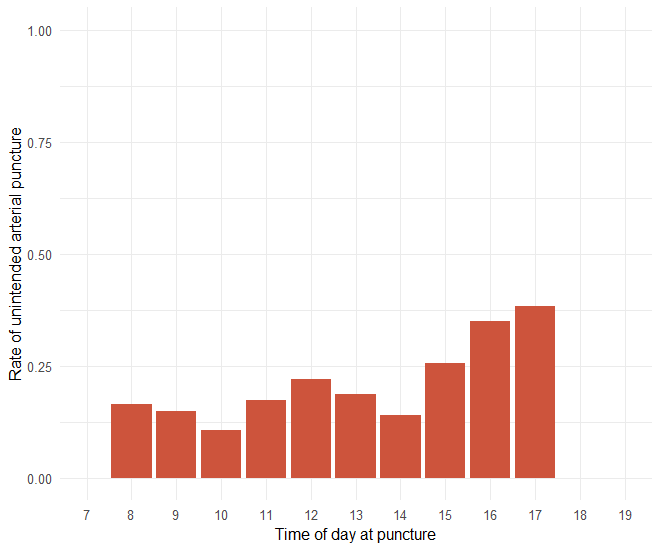
Unintended arterial puncture occurred in 10 (2%) vs. 79 (16.1%) patients respectively (RR 0.13; P < 0.0001). Multiple logistic regression (Figure 1) identified three independent predictors for an unintended arterial puncture: conventional puncture (P <0.001), operator experience <2 years (P <0.001), and later procedure start time (P = 0.016), with arterial puncture rates rising notably for afternoon procedures (Figure 2). Procedure start times ranged from 07:58 o’clock at the earliest to 19:44 o’clock at the latest.
Conclusion: While the impact of ultrasound use and operator experience on unintended arterial puncture aligned with primary outcome findings, the association with advancing time of day was unexpected. Potential explanations include operator fatigue and reduced venous filling due to pre-procedural fasting. These findings may support prophylactic intravenous fluid administration before afternoon procedures.
1. Schaack D, Chun KRJ, Neven K, et al. Ultrasound-guided vs conventional venous puncture for atrial fibrillation ablation: the ULYSSES trial. Eur Heart J. Published online April 14, 2026:ehag291. doi:10.1093/eurheartj/ehag291
Figure 1:
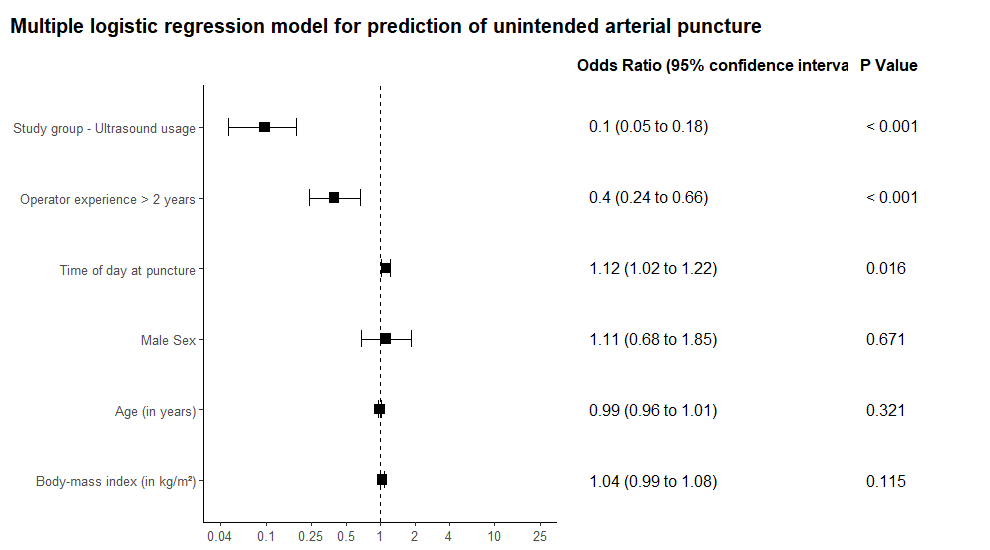 Figure 2: