Background:
Temporary transvenous pacing is a critical yet technically demanding intervention in cardiology, intensive care, and perioperative medicine. Training is often opportunistic and dependent on bedside exposure, while scalable, high-fidelity simulation tools remain limited.
Purpouse:
To introduce a novel web-based temporary pacemaker simulator enabling structured, scenario-based, 24/7 on-demand training with realistic device interaction and hemodynamic feedback.
Methods:
The platform is a responsive online educational environment featuring secure user access, structured stepwise lessons, performance tracking, and automated certification. The simulator replicates a dual-chamber temporary external pacemaker interface with fully interactive controls (rate, mode, output, sensitivity, AV delay) and real-time integration with a critical care monitor.
Results:
Training is based on eleven progressive clinical scenarios developed in collaboration with clinical partners . Scenarios cover backup pacing in complete heart block, sinus rhythm with AV block, undersensing, oversensing with failure to pace, pacing dependency, high capture thresholds, failure to capture, output failure, and atrial–ventricular lead reversal. Each scenario emphasizes structured troubleshooting, capture and sensing assessment, and hemodynamic consequences under clinically realistic conditions.
The simulator enables repeated practice of device setup, parameter optimization, and emergency troubleshooting in a risk-free environment. High-fidelity ECG and blood pressure feedback facilitate translation of theoretical pacing principles into practical clinical decision-making. The web-based architecture ensures global scalability for institutions, national societies, and structured educational programs.
Conclusion:This temporary pacemaker simulator represents a modern, scalable training solution for continuous competency development in temporary pacing. By combining realistic device interaction with clinically relevant scenarios, it supports standardized education and may improve preparedness in critical care environments. Further evaluation of educational outcomes is warranted.
Fig.1 Low output VVI pacing
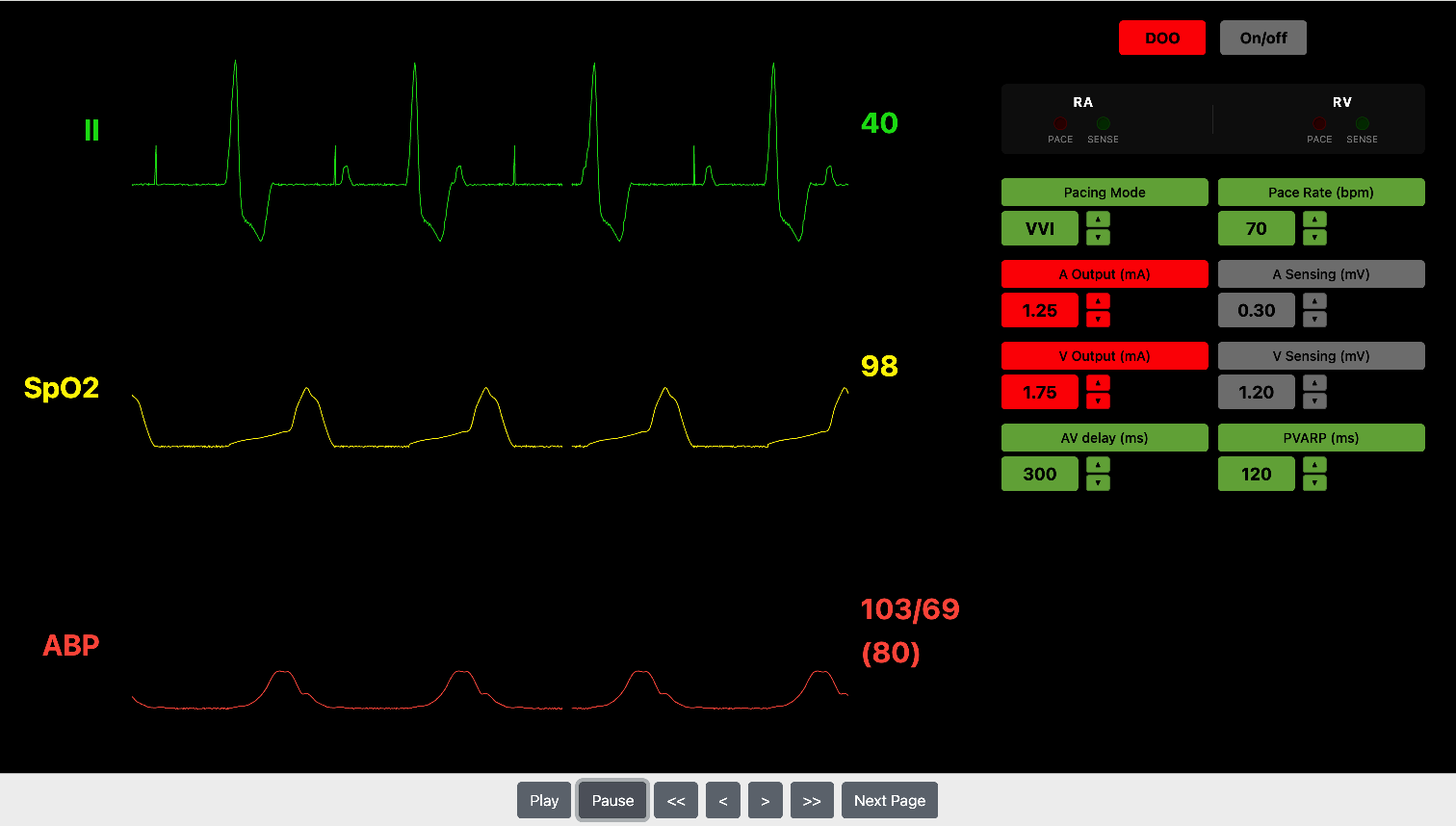
Fi
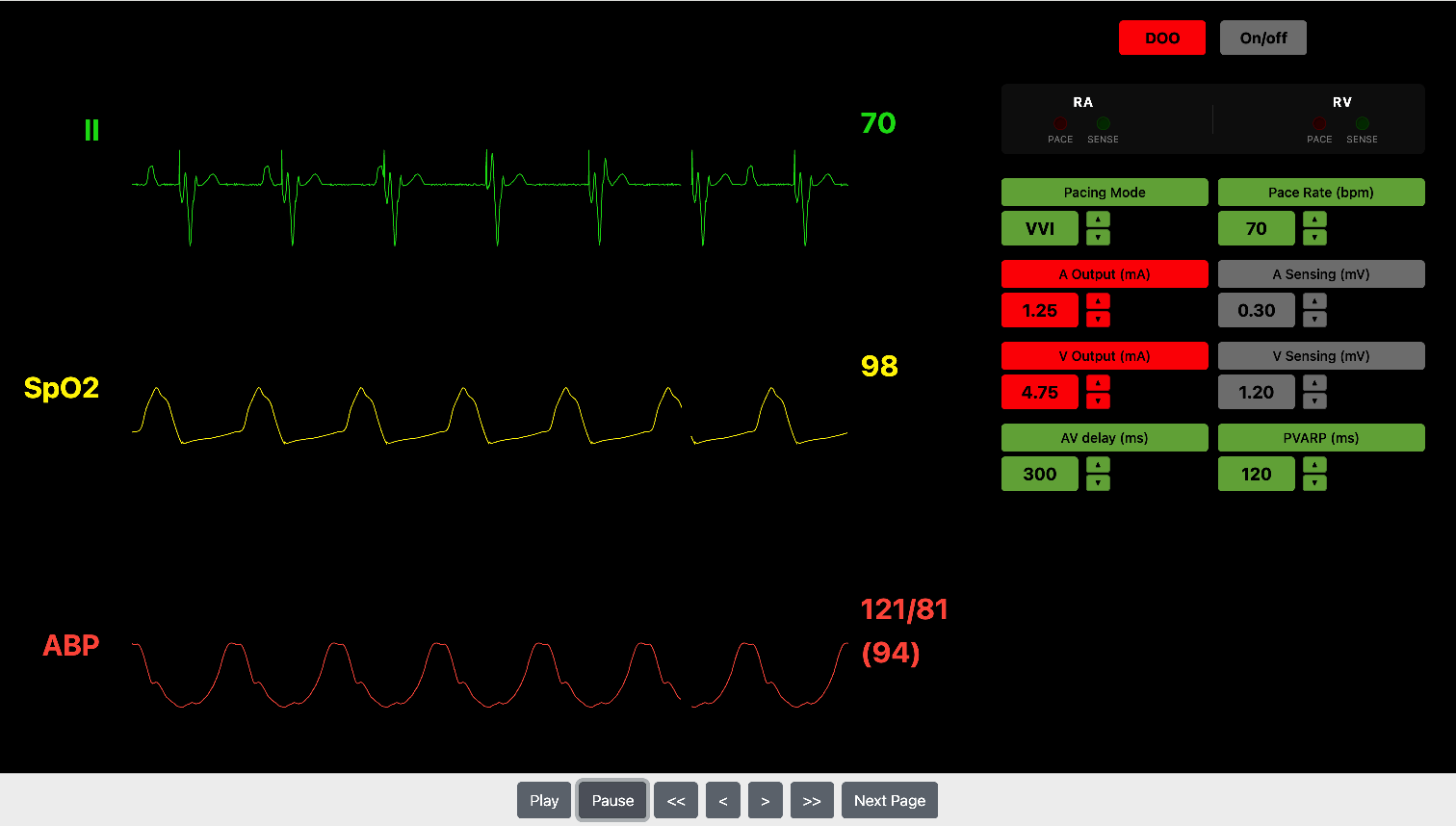
Fig 2. High output VVI pacing.



