Background:
Dual-energy catheters combining pulsed-field and radiofrequency energy (PFA/RF) represent a novel approach to catheter ablation, potentially integrating the tissue selectivity of PFA with the versatility of RF energy. However, real-world data comparing this technology with contemporary RF ablation strategies remain limited. We report our initial clinical experience with the Dual-Energy THERMOCOOL SMARTTOUCH SF catheter and compare its acute and 30-day safety and effectiveness outcomes with those achieved using the qDOT MICRO catheter (both Biosense Webster, Johnson & Johnson).
Methods:
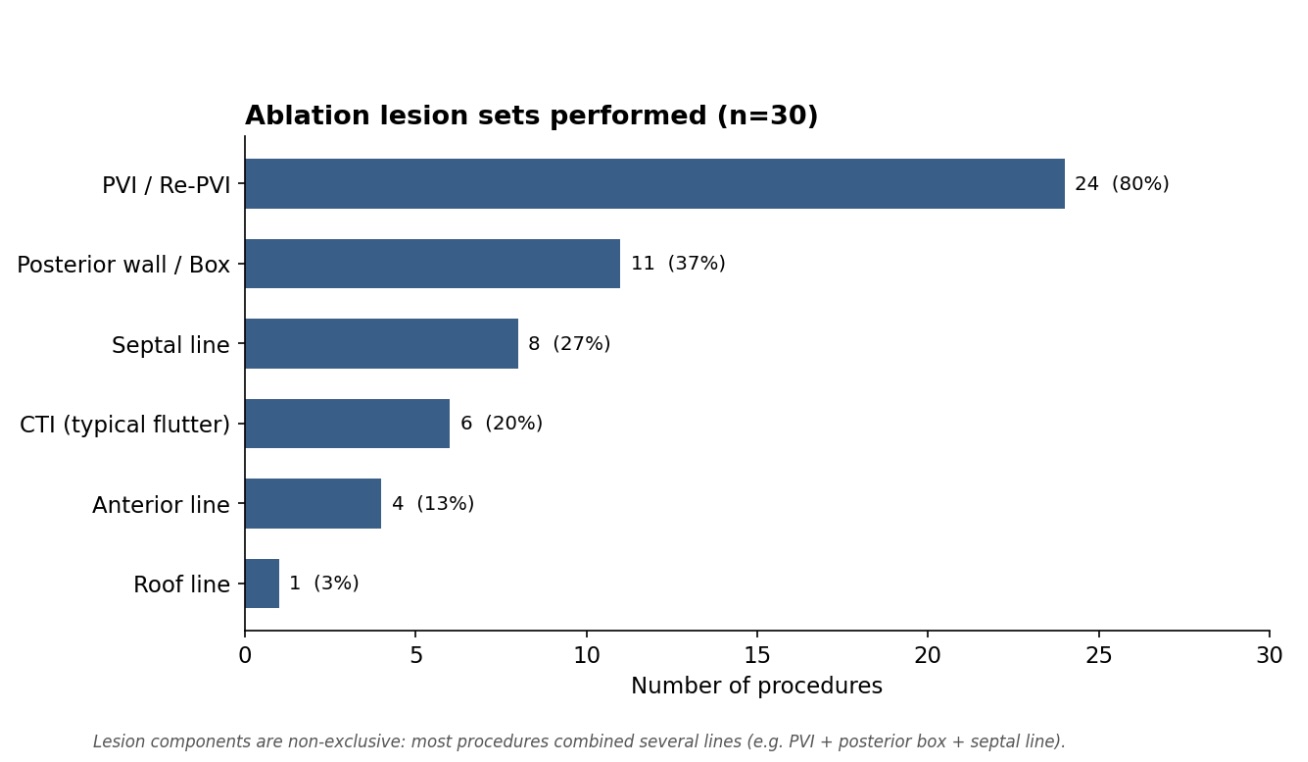
Single-centre retrospective analysis of 60 consecutive patients undergoing catheter ablation with either the Dual-Energy (PFA/RF) catheter (DE, n=30) or the qDOT MICRO catheter (qDOT, n=30). The cohorts were matched according to the underlying arrhythmia and the ablation strategy, including additional left atrial linear lesions and box lesion sets when performed (Figure 1). Study endpoints included procedural characteristics, acute effectiveness (freedom from early in-hospital arrhythmia recurrence and the need for cardioversion), 30-day emergency department visits and hospital readmissions, and peri-procedural complications. Continuous variables were compared using the Mann–Whitney U test, while categorical variables were analysed using Fisher’s exact test or the χ² test, as appropriate.
Results:
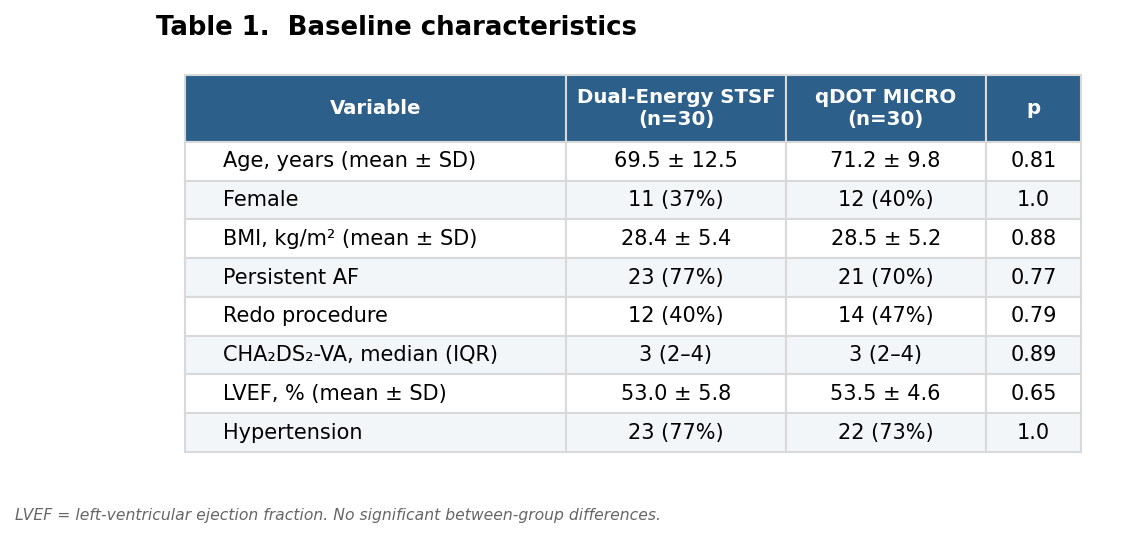
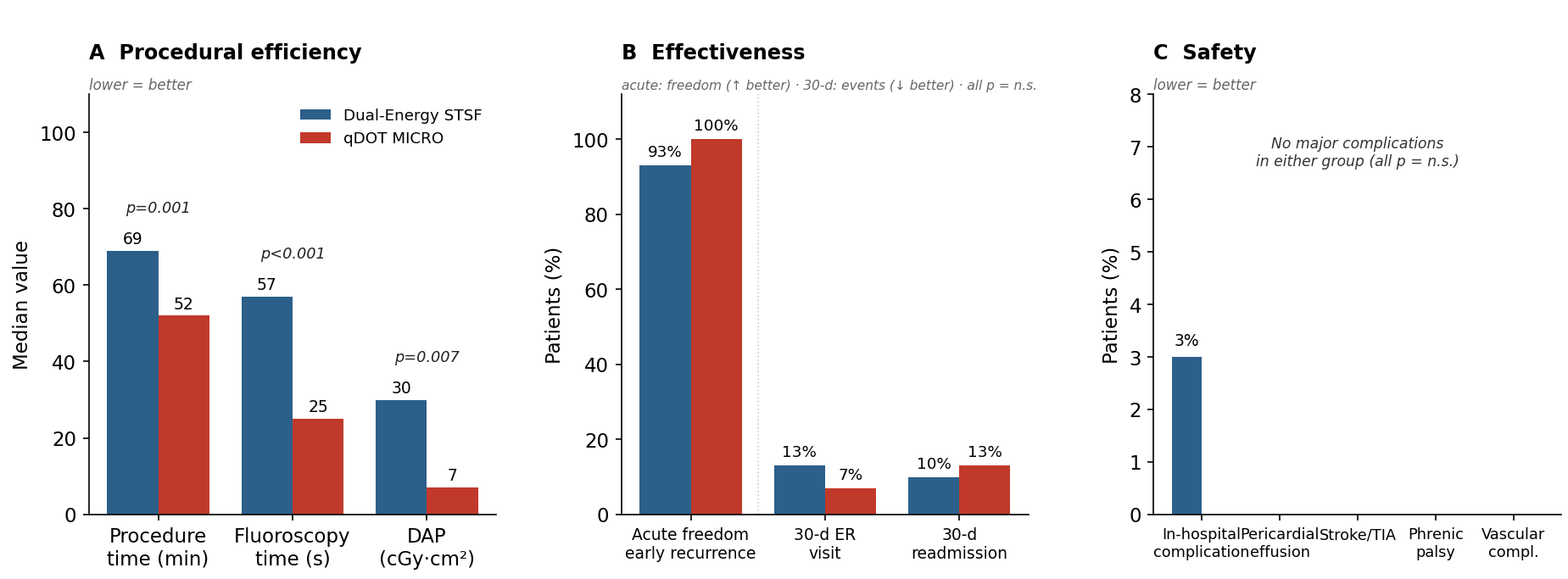
Baseline characteristics were comparable (Table 1). Acute effectiveness: freedom from early in-hospital recurrence/cardioversion 93% (DE) vs 100% (qDOT; p=0.49). 30-day effectiveness: ER visits/re-admissions identical (13% vs 13%; p=1.0). Safety: no major peri-procedural complication in either group (in-hospital AE 3% vs 0%; p=1.0); no pericardial effusion, stroke/TIA, phrenic palsy or major vascular complication. Procedural Efficiency: qDOT showed significantly shorter procedure time (52 vs 69 min), fluoroscopy time (25 vs 57 s) and dose-area product (7 vs 30 cGy·cm²; all p≤0.007), consistent with an early learning curve (Figure 2).
Conclusion:
In this initial clinical experience, dual-energy PFA/RF ablation demonstrated a safety profile and acute as well as 30-day effectiveness comparable to those achieved with qDOT MICRO ablation. The longer procedure and fluoroscopy times observed with the dual-energy approach may reflect the learning curve associated with the introduction of a novel technology and should be further evaluated in larger studies with extended follow-up.



