Background and Aims
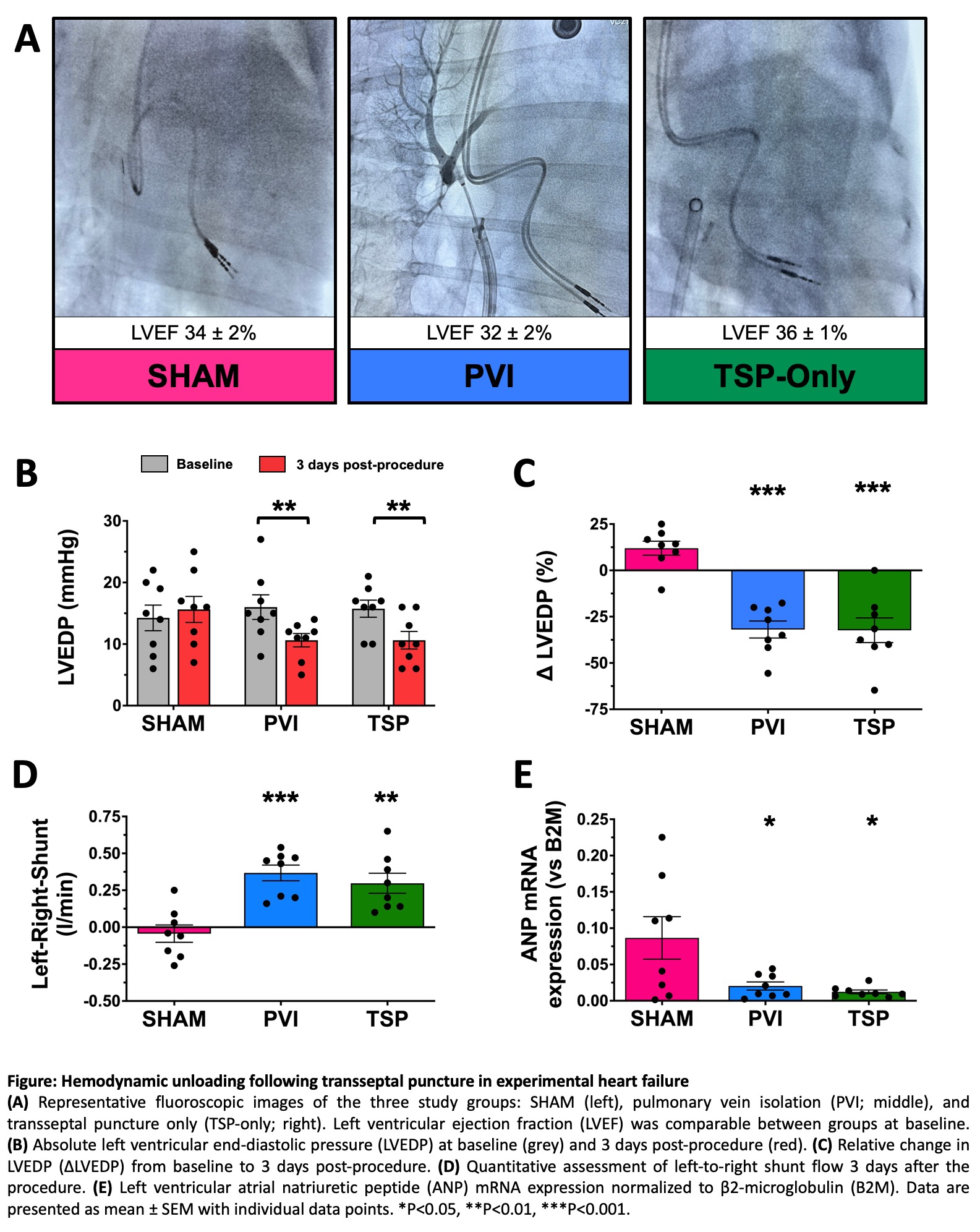
Atrial fibrillation (AF) and heart failure with reduced ejection fraction (HFrEF) frequently coexist, worsening prognosis. While catheter ablation (CA) of AF has demonstrated improved outcomes compared with medical therapy, the mechanisms beyond rhythm control that might contribute to these benefits remain incompletely understood. We hypothesized that the iatrogenic interatrial shunting that frequently follows transseptal puncture (TSP) for CA might play a role. This study aimed to characterize the early hemodynamic, electrophysiological, and molecular effects of pulmonary vein isolation (PVI) and TSP in a large-animal model of HFrEF.
Methods
Ventricular tachypacing (VTP) was used to induce HFrEF in 24 dogs randomly assigned to undergo 1) PVI, 2) TSP-only, or 3) SHAM control procedures (n=8/group) at the end of 12-day VTP. Hemodynamic, echocardiographic, and electrophysiological assessments were performed pre- and 3 days post-intervention. Cardiomyocyte contractility, calcium handling, transcriptomics, and protein expression were evaluated ex vivo.
Results
Both PVI and TSP-only groups showed significant reductions in left ventricular end-diastolic pressure (−32% and −32% vs. +12% for SHAM, P<0.001), linked to iatrogenic left-to-right atrial shunting. Acute hemodynamic unloading was associated with downregulation of ANP, while markers of fibrosis, inflammation, and structural remodeling remained unchanged. Both interventions significantly enhanced atrial cardiomyocyte-contractility and triggered a robust upregulation of ventricular SERCA2a-expression, without changes in atrial electrophysiology.
Conclusion
The iatrogenic shunt caused by PVI provides rapid mechanical decompression and molecular recovery of the failing ventricle. These data support and highlight the notion that the beneficial effects of CA in HFrEF extend beyond rhythm control alone.