IntroductionThe integrated interaction between the right atrium, right ventricle, and pulmonary circulation is pivotal in driving the adaptation of the right heart to severe tricuspid regurgitation (TR). However, this concept has not been investigated in this setting. Thus, the present study proposes a novel integrative concept of right atrioventricular–pulmonary arterial (RARVPA) coupling and evaluates its prognostic impact in patients with severe secondary TR.
MethodsThe present study was conducted as a single-center, retrospective and prospective, longitudinal observational study. Consecutive patients with at least severe (grade 3+) secondary TR undergoing transcatheter tricuspid valve intervention (TTVI) between April 2020 and September 2025 were included. RARVPA coupling was determined as follows: (right atrial reservoir strain + |right ventricular free wall strain|)/invasively measured systolic pulmonary artery pressure. The composite primary endpoint was all-cause mortality or HFH. Secondary endpoints were the individual components of the primary endpoint.
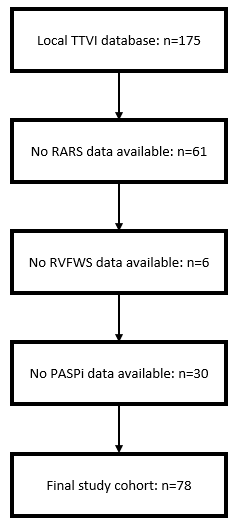
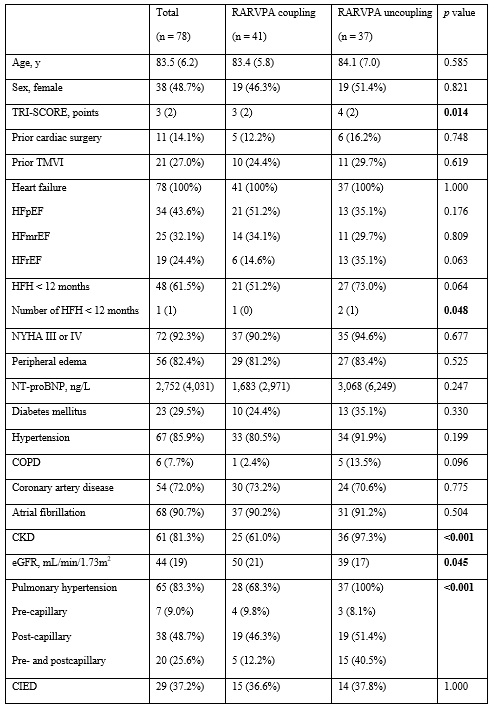
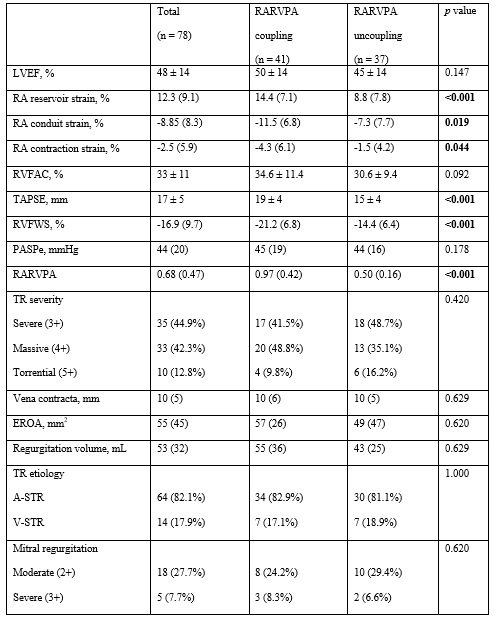
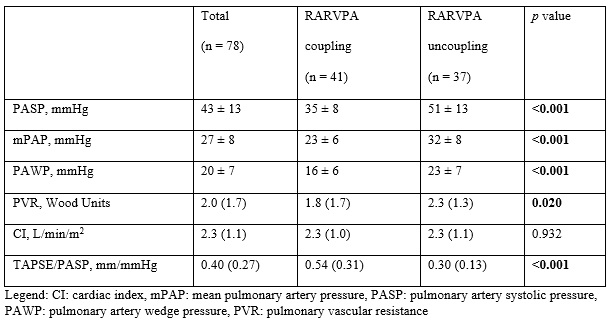
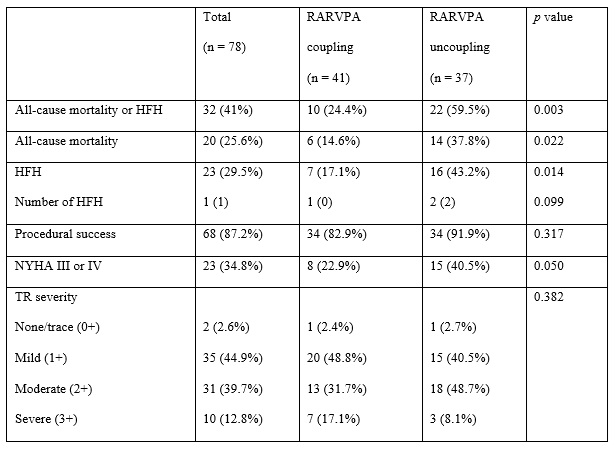
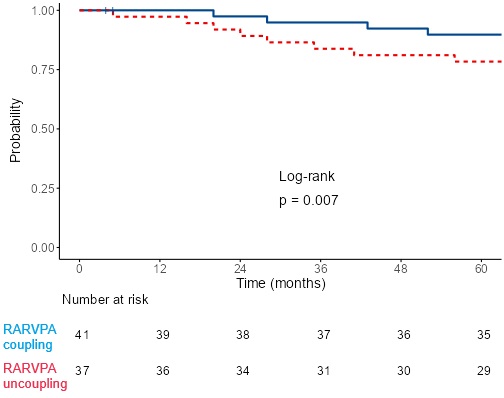
ResultsAmong 78 patients (median age 83.5 years, 48.7% female) with a median follow-up of 15.7 months (Figure 1), an exploratory threshold of 0.63 was identified to predict the composite primary endpoint (AUC 0.678). The cohort was divided in subgroups accordingly with RARVPA < 0.63 meaning RARVPA uncoupling (Figures 2-5). RARVPA uncoupling was associated with a higher incidence of the composite primary endpoint (59.5% vs. 24.4%, p = 0.003) and the secondary endpoints (all-cause mortality: 37.8% vs. 14.6%, p = 0.022 and HFH: 43.2% vs. 17.1%, p = 0.014). Kaplan–Meier analysis confirmed a significantly higher event rate (log-rank p = 0.007, Figure 6). In univariable Cox regression, RARVPA uncoupling was significantly associated with the primary endpoint (HR: 2.69, 95% CI: 1.27–5.68, p = 0.010) and remained significant after multivariable adjustment in four clinically defined multivariable models including potential confounders like sex, age, COPD, eGFR, pulmonary hypertension, procedural success, other valvular heart disease, LVEF and TRI-SCORE. In exploratory analyses of the secondary endpoints, no significant association was observed in Kaplan–Meier analysis and univariable Cox regression analysis. When calculating RARVPA coupling solely with echocardiographic parameters [(RARS + |RVFWS|) / PASPe], RARVPA uncoupling (cut-off: < 0.71, AUC: 0.605) was also associated with a higher incidence of the composite primary endpoint (51.2% vs. 28.6%, p = 0.044) but Kaplan–Meier analysis did not confirm a significantly higher event rate (log-rank p = 0.160). Sole echocardiographic RARVPA uncoupling was not significantly associated with the primary endpoint.
ConclusionRARVPA coupling represents a novel integrative measure of right heart function. RARVPA uncoupling was independently associated with adverse outcomes in patients with severe secondary TR undergoing TTVI. These findings support the value of comprehensive right heart assessment beyond isolated echocardiographic or hemodynamic parameters.