Aims:
Up to one-third of atrial fibrillation (AF)-related strokes occur in patients already on an oral anticoagulant (OAC). We aimed to quantify the independent residual risk of breakthrough stroke conferred by left atrial enlargement (LAE) in patients receiving OAC, direct oral anticoagulants (DOACs) in particular, and to compare population-level incidence rates between patients with and without substantial LAE.
Methods:
Following the PICOS framework, studies were included if they met all of the following criteria. (i) Population: patients with non-valvular AF at baseline; studies focusing on valvular AF or restrictive cardiomyopathy were excluded. (ii) Study eligibility for pooling: the study had to report a multivariable-adjusted HR specifically isolating the prognostic impact of LAE or, alternatively, the cohort had to comprise >39% DOAC use. (iii) Exposure: categorical assessment of LAE based on left atrial volume index (LAVI) or anteroposterior LA diameter. (iv) Outcome: the primary endpoint was incident ischaemic stroke; composite endpoints including TIA and SE were also eligible. (v) Study design: observational cohort studies with >1 year follow-up and >9 stroke/SE events.
We performed a dual-method meta-analysis. First, we pooled multivariable-adjusted hazard ratios (HRs) from eight cohort studies (28 096 AF patients) that isolated the prognostic value of LAE after adjustment for the components of the CHA2DS2-VASc score. Second, we pooled cohort-level annualised stroke or systemic embolism (SE) incidence rates per person-years from 15 studies (17 distinct cohorts; 21 334 patients; 52 415 patient-years) using simple person-time pooling and computed the incidence rate ratio (IRR).
Results: Substantial LAE (i.e., moderate or severe) remained an independent predictor of stroke (pooled HR 1.64, 95% confidence interval [CI] 1.45–1.84, p<0.001). Cohorts with substantial LAE exhibited an annualised stroke/SE incidence of 2.45%, compared with 0.93% in cohorts with insubstantial LAE. The corresponding IRR was 2.62 (95% CI 2.27–3.03, p<0.001). As expected, cohorts with substantial LAE were older (72.3 vs. 67.8 years), had higher CHA2DS2-VASc scores (3.4 vs. 2.8) and LAVI (62.6 vs. 37.3 mL/m²), but with lower levels of DOAC usage (68% vs. 78%).
Conclusion:
Our dual-method approach captures two complementary facets of breakthrough stroke risk. The IRR provides a population-level perspective: real-world cohorts with substantial LAE experience strokes 2.6-fold the rate of cohorts without substantial LAE. By controlling for the clinical components of the CHA2DS2-VASc score at the individual level, the pooled multivariable-adjusted HR of 1.64 isolates the contribution of atrial structural remodelling itself. The convergence of these two estimates indicates that LAE is not merely a passive surrogate of advanced age, but an independent driver of thromboembolism.
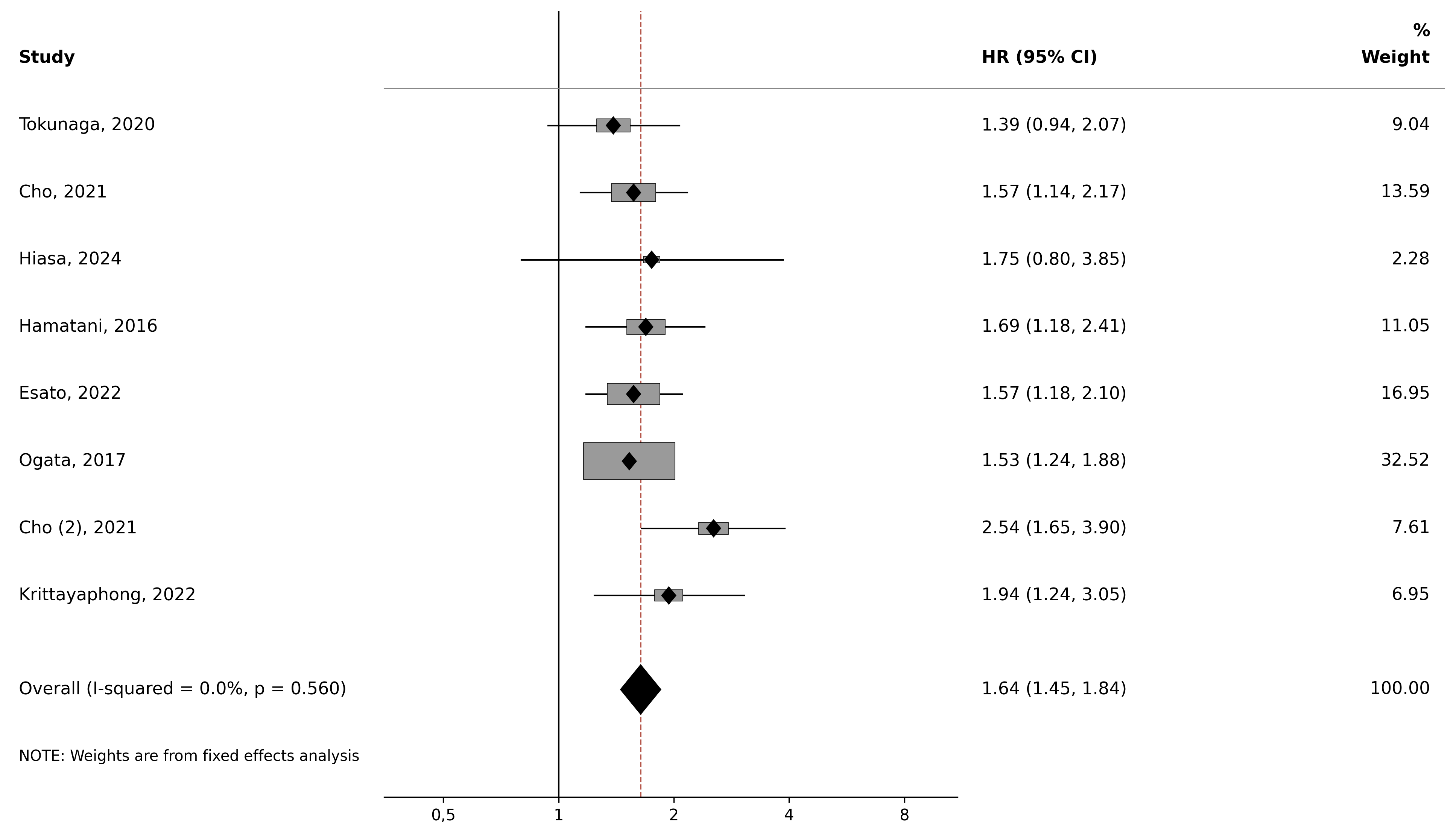
Figure 1. Forest plot of the multivariable-adjusted hazard ratios for breakthrough stroke or systemic embolism associated with substantial left atrial enlargement.
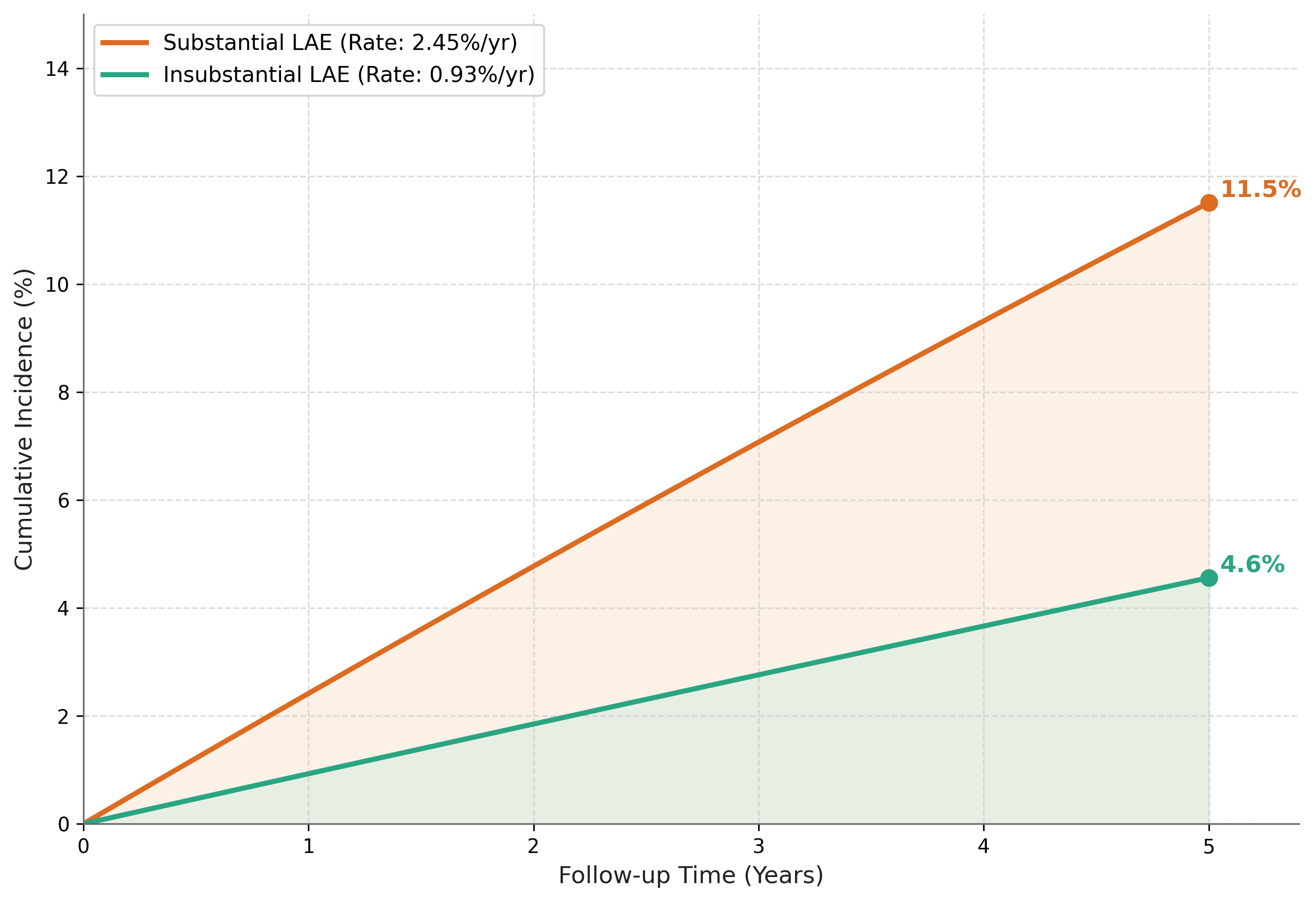
Figure 2. Projected cumulative incidence of breakthrough stroke or systemic embolism over a five-year horizon, derived from the person-time pooled annualised rates. Patients with substantial LAE accumulate an estimated 11.5 % five-year stroke risk, in contrast to 4.6 % in patients with no or insubstantial LAE.



