Background:
Six years ago, the EAS/ESC lipid management guidelines for ASCVD patients emphasized Lp(a) testing for very high‑risk individuals. In 2025, the guideline update strengthened the focus on Lp(a) as a risk modifier in ASCVD, recommending one lifetime test for every adult, introducing a defined cut-off of 50 mg/dL, and integrating Lp(a) into the SCORE2/-OP risk algorithm. To assess how Lp(a) testing is implemented in routine care, the LipidSnapshot project was initiated as a collaborative effort between industry and medical societies, examining the current situation among general practitioners (GPs) and office‑based cardiologists (OBCs) in secondary prevention.
Methods:
Data from ASCVD patients participating in a prospective, non‑interventional multicenter study with OBCs were compared with anonymized electronic medical record data from GPs within the IQVIA Disease Analyzer (retrospective, aggregated). Lp(a)-tested patients were analyzed for their Lp(a) values. Differences in sex, age, and lipid‑lowering therapies (LLT) among Lp(a)-tested patients were assessed over three consecutive years beginning in 2023.
Results:
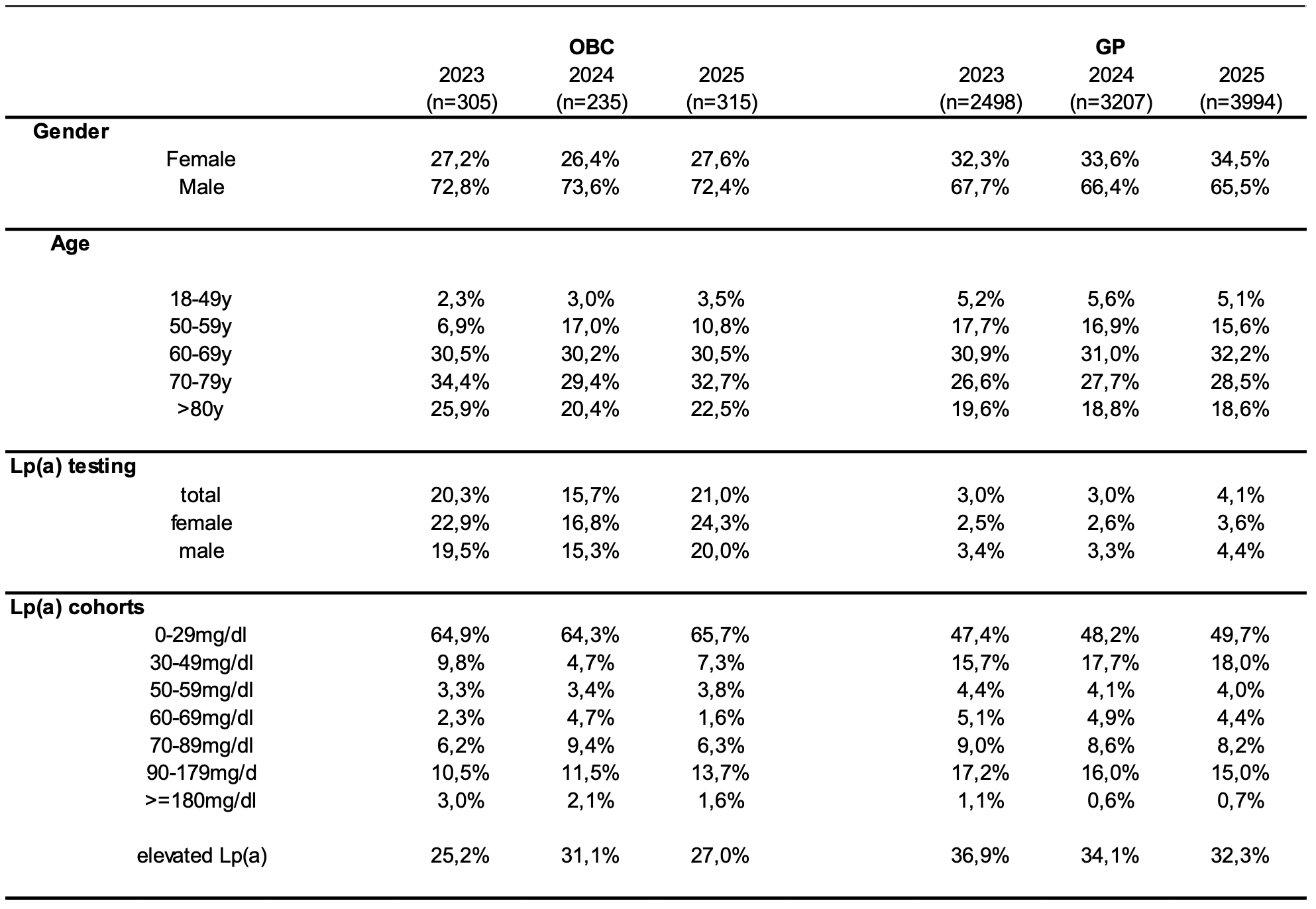
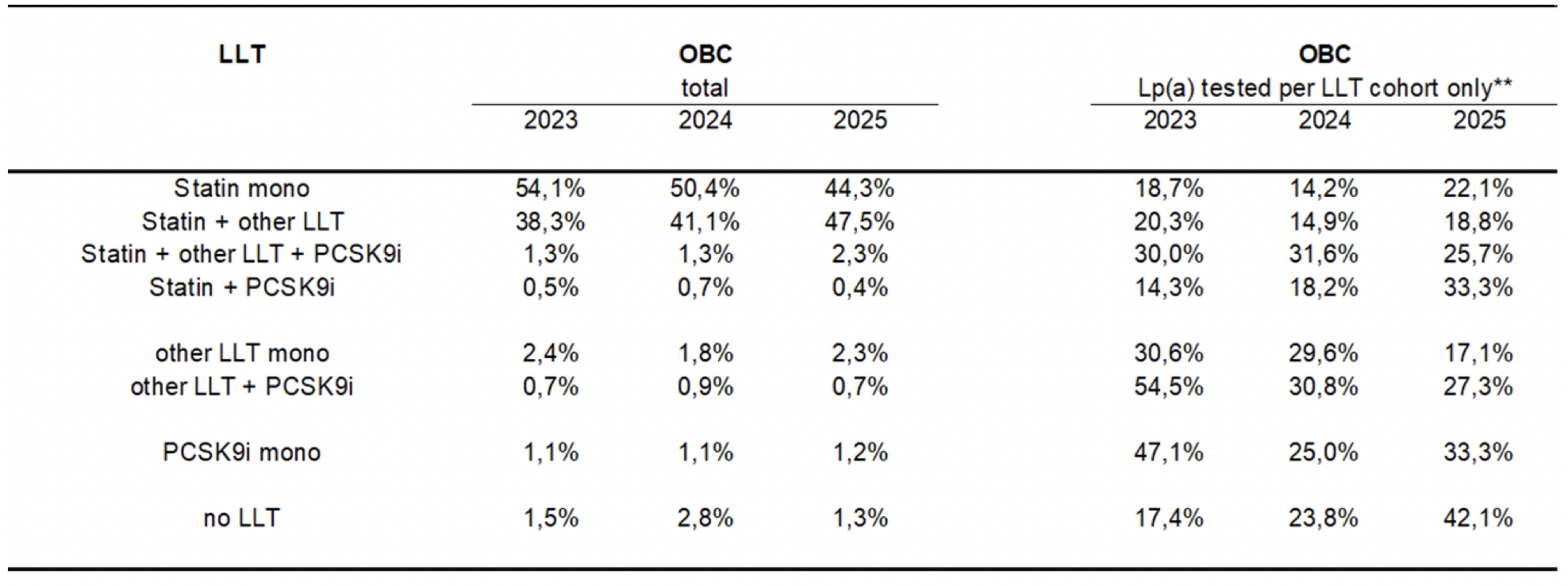
Data from Lp(a)-tested patients in both OBC and GP settings were included. Mean age in the GP cohort (27% female) ranged from 72.4 to 71.6 years; in the OBC cohort (35% female) mean age remained 73 years across all three years (Table 1). Lp(a) test rates increased slightly, reaching 21% in OBCs and 4.1% in GPs. Approximately 30% of tested patients in both cohorts had elevated Lp(a) levels (>50 mg/dL; Table 1). In the current OBC dataset, 44.3% of patients received statin monotherapy and 47.5% statin combination therapy (without PCSK9i), with around 20% of these patients undergoing Lp(a) testing. All other LLT categories accounted for less than 5% of patients, yet these groups showed notably high Lp(a) test rates of up to 55% (Table 2). Testing among patients without any LLT increased over time, reaching 42.1% in 2025.
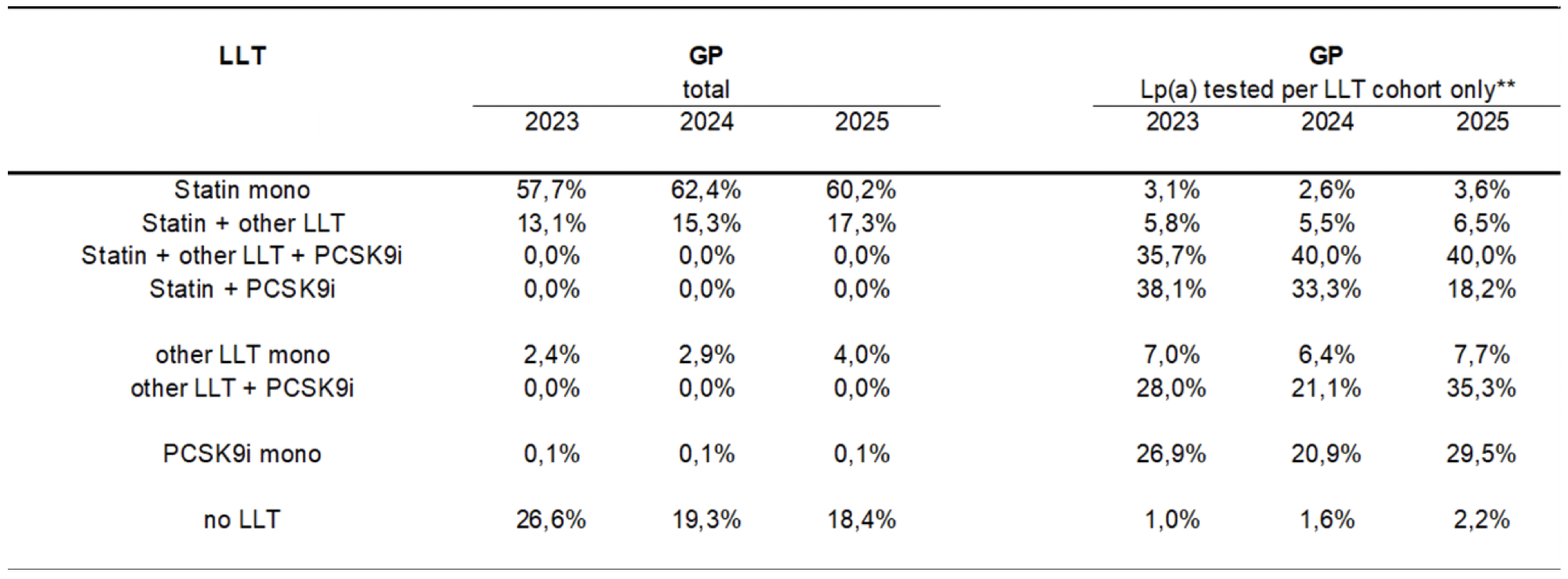
In the GP cohort, over 60% received statin monotherapy, 17.3% statin combination therapy (without PCSK9i), and 18.4% received no LLT. Lp(a) testing in these three groups remained below 4%. Although all other LLT categories combined represented less than 5% of GP patients, their Lp(a) test rates were disproportionately high, reaching up to 40% (Table 3).
Conclusion:
Most ASCVD patients in Germany still do not receive Lp(a) testing at the recommended levels. While OBCs test more frequently than GPs, both specialties show similarly high test rates among patients receiving PCSK9i, despite PCSK9i remaining a niche therapy. A notable difference appears in patients without any LLT: OBCs test nearly 40% of this cohort, whereas GPs test fewer than 3%, despite this being the second‑largest LLT category at GPs.