Background
Lipid-lowering therapy (LLT) is a cornerstone of primary and secondary prevention in patients with atherosclerotic cardiovascular disease (ASCVD). Despite clear recommendations for a stepwise intensification of LLTs (high-intensity statins, ezetimibe, bempedoic acid and PCSK9 inhibitors), real-world implementation may vary across indications, regions, and socio-economic strata. In Germany, outpatient care is organized within 17 statutory health insurance physician regions (KV-regions), potentially contributing to regional differences in LLT provision.
Aim of the Study
This study aimed to analyze the current provision of LLT among patients at high or very high ASCVD risk in Germany, with a focus on: (1) regional disparities across KV regions, (2) associations with regional cardiovascular (CV) and metabolic disease burden, (3) the influence of pharmaceutical prescribing agreements, and (4) socio-economic disparities measured by the German Index of Socio-economic Deprivation (GISD).
Methods
This non-interventional, retrospective cross-sectional study used data from the German Analysis Database for Evaluation and Health Services Research (DADB).
Adult patients (≥18 years) with high or very high CV risk in calendar year (CY) 2023, defined by ICD-10-GM and OPS codes according to ESC/EAS criteria, were included if they had ≥1 LLT prescription and active treatment on 31/12/2023. CY 2018 served as a historical reference point to allow for a comparative assessment of changes over time. Age- and sex-adjusted extrapolations to the statutory health insurance (SHI) population were performed.
LLT was categorized according to recommended escalation steps into four classes: (1) statins (any intensity), (2) ezetimibe, (3) bempedoic acid, and (4) PCSK9 inhibitors (including monoclonal antibodies and siRNA), each as mono- or combination therapy with LLTs of the respective preceding steps. Regional assignment was based on prescriber location / region. Socio-economic status was defined by GISD quintiles (GISD_5), based on residence.
Regional differences and associations with pharmaceutical cluster types were assessed using Poisson generalized linear models (GLM) with log link and offset. Correlations between LLT provision and disease burden (CHD, MI, HF, stroke, T2DM) at federal state level were analyzed using prevalence data from the ”health atlas”. Interaction terms and post-hoc comparisons were adjusted for multiple testing.
Results
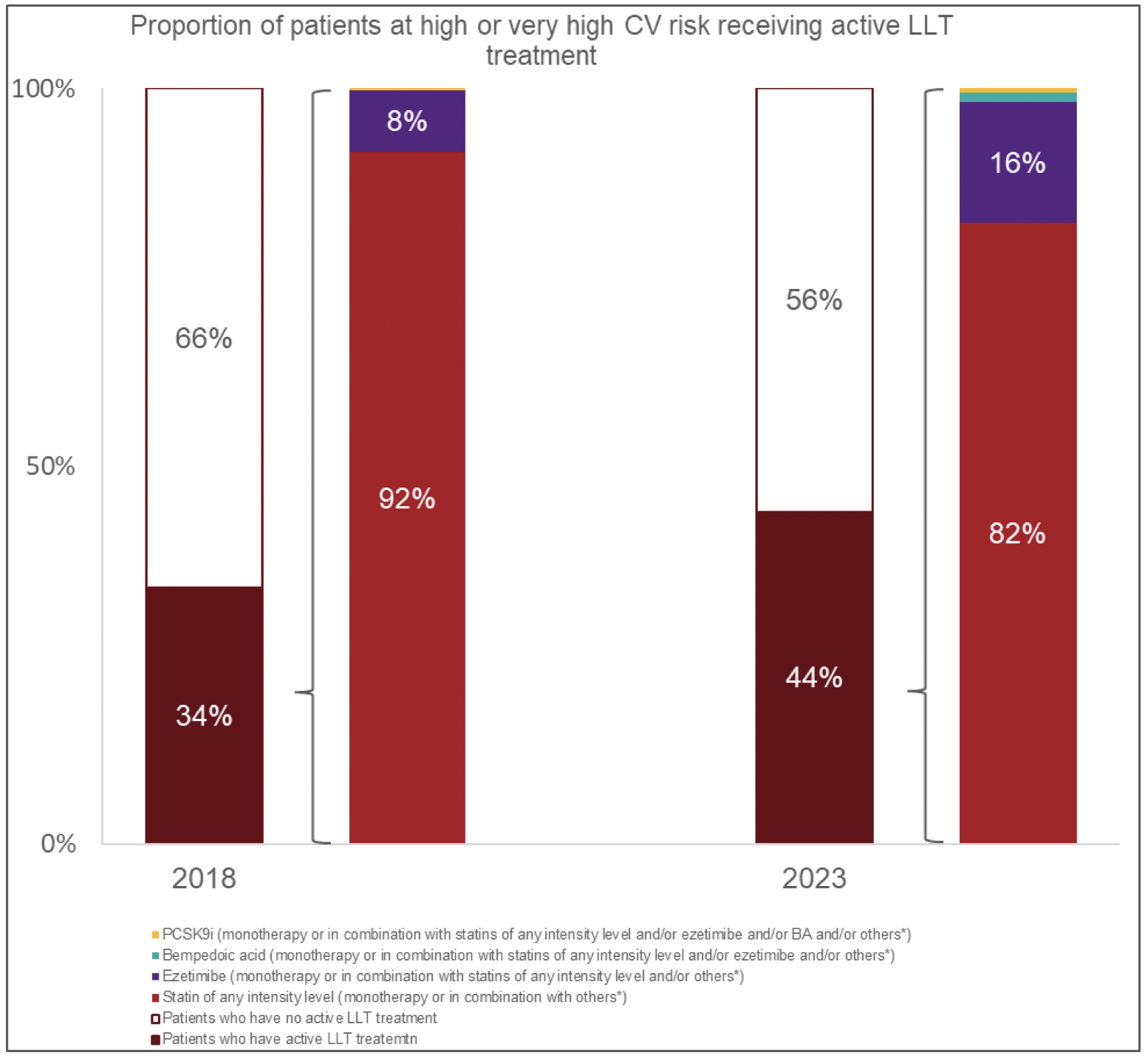
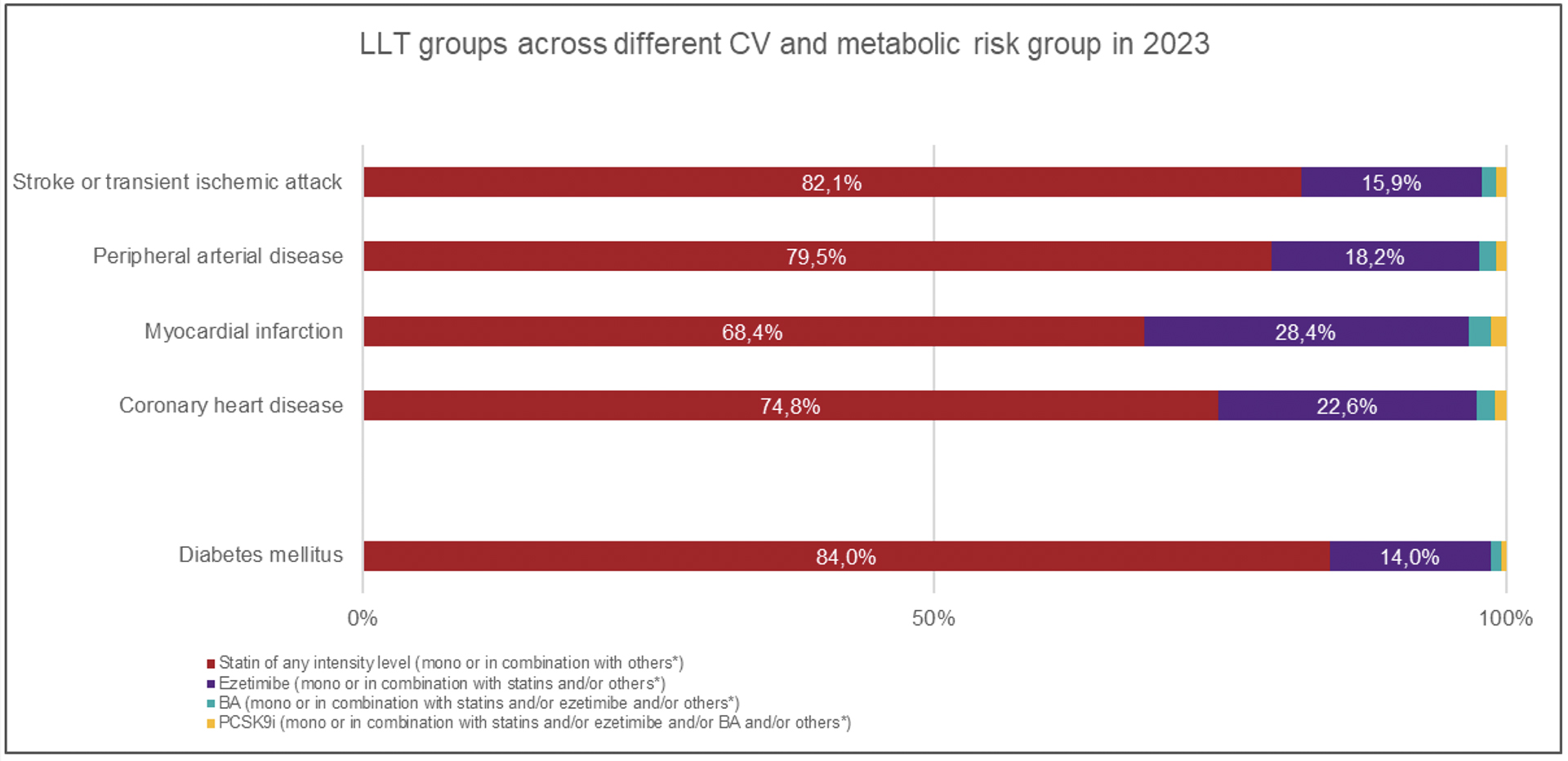
On a nationwide scale, a large proporion of CV-patients is still not treated with LLT and only a slight increase (effect size according to Cohen h=0.19) over a 5 year period could be measured (Figure 1). The analysis identified substantial variation in LLT provision between specific CV / metabolic risk groups (Figure 2) and across regions in Germany. The relative distribution of LLT categories differed significantly by region, indicating heterogeneous prescribing patterns. Statins constituted the predominant therapy across all regions, whereas use of ezetimibe, bempedoic acid, and PCSK9 inhibitors varied markedly.
Conclusion
In Germany, LLT provision among patients at high or very high ASCVD risk demonstrates significant regional disparities. Prescribing patterns appear to be influenced by regional healthcare structures and may not consistently align with disease burden. These findings highlight the need for optimizing guideline-concordant lipid management nationwide.