Background:
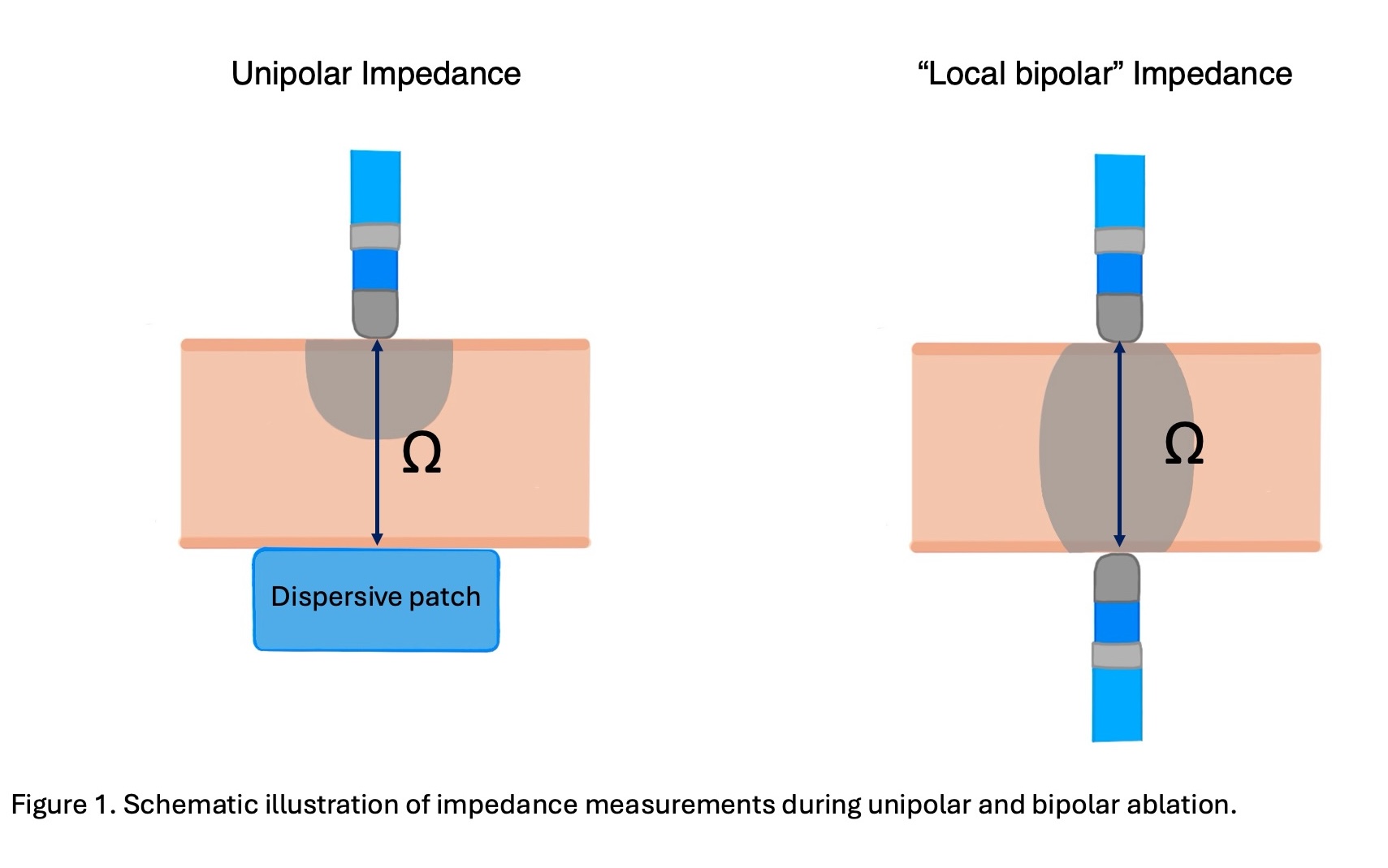
Bipolar catheter ablation (Bi-RFA) has emerged as a treatment strategy for ventricular arrhythmias (VA) arising from deep intramural substrate. During conventional unipolar radiofrequency ablation (Uni-RFA), impedance dynamics are commonly used to guide lesion delivery. Impedance measurements differ fundamentally between Uni-RFA and Bi-RFA, reflecting a distant catheter-to-patch versus a local catheter-to-catheter circuit, respectively (Figure 1).To date, no established biophysical markers are available to guide Bi-RFA. This study represents the first in vivo comparison of periprocedural biophysical characteristics of Bi- and Uni- RFA ablation lesions. The study aimed to compare the biophysical characteristics of ventricular uni- and bipolar ablation lesions in clinically comparable patient cohorts.
Methods:
In this single-centre retrospective study, all consecutive patients (Group 1, n=36) undergoing Bi-RFA for VAs between January 2022 and February 2026 were included. These patients were compared with a clinically comparable unipolar ablation cohort (Group 2, n=36) selected from the prospective registry of 428 Uni-RFA VAs ablation procedures. Periprocedural data for all ablation points were exported from the mapping system and analysed with Python. Comparisons accounting for clustering of lesions within patients were performed using mixed-effects models. In Bi-RFA procedures only bipolar lesions were assessed.
Results:
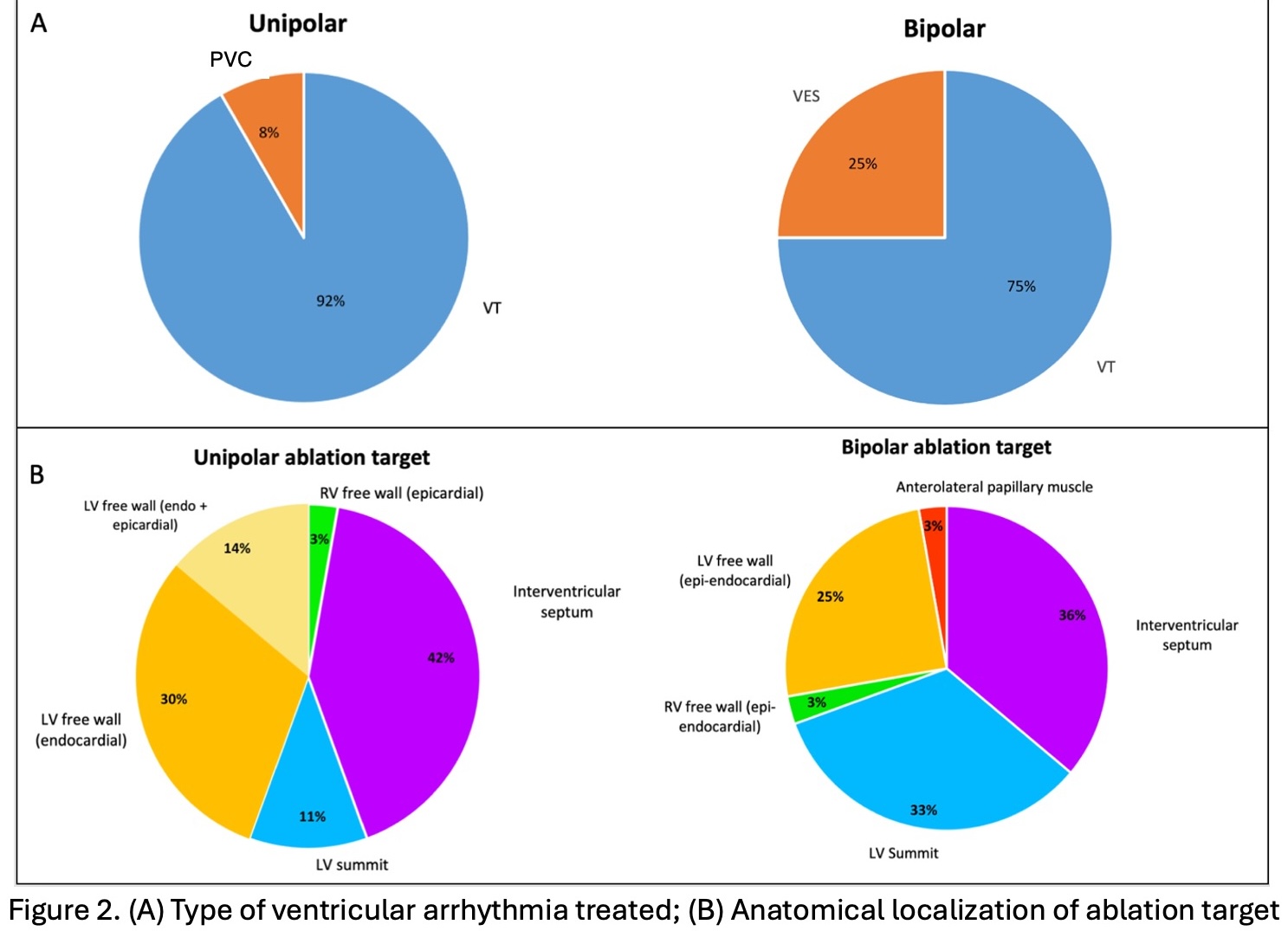
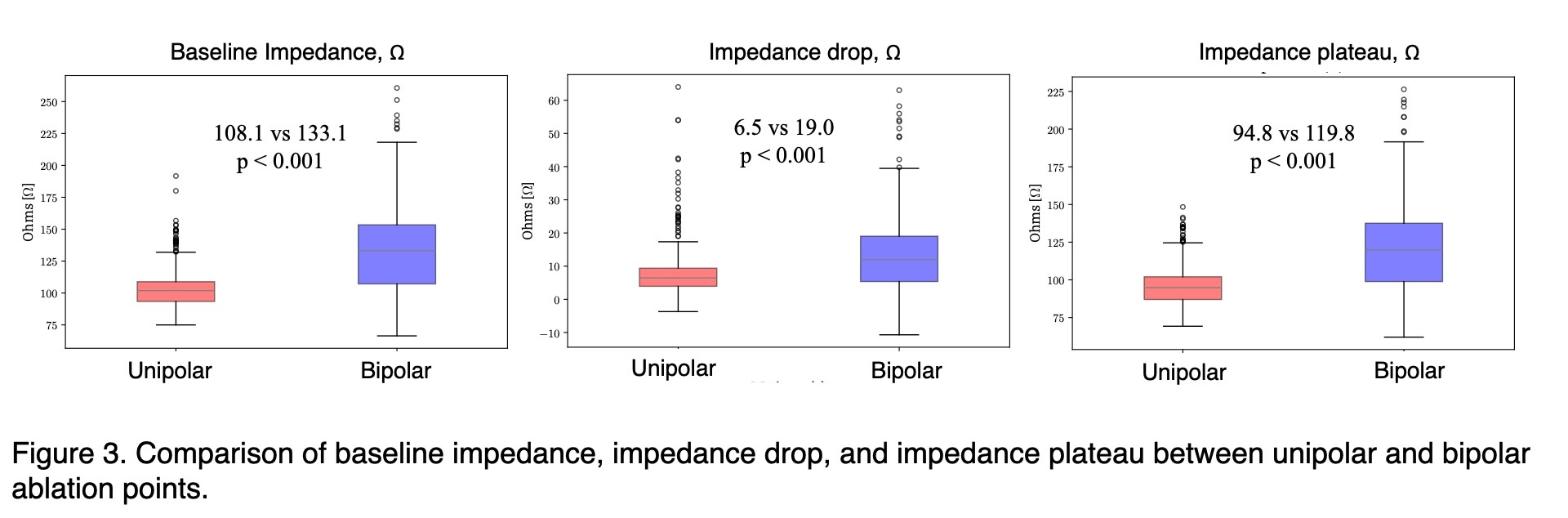
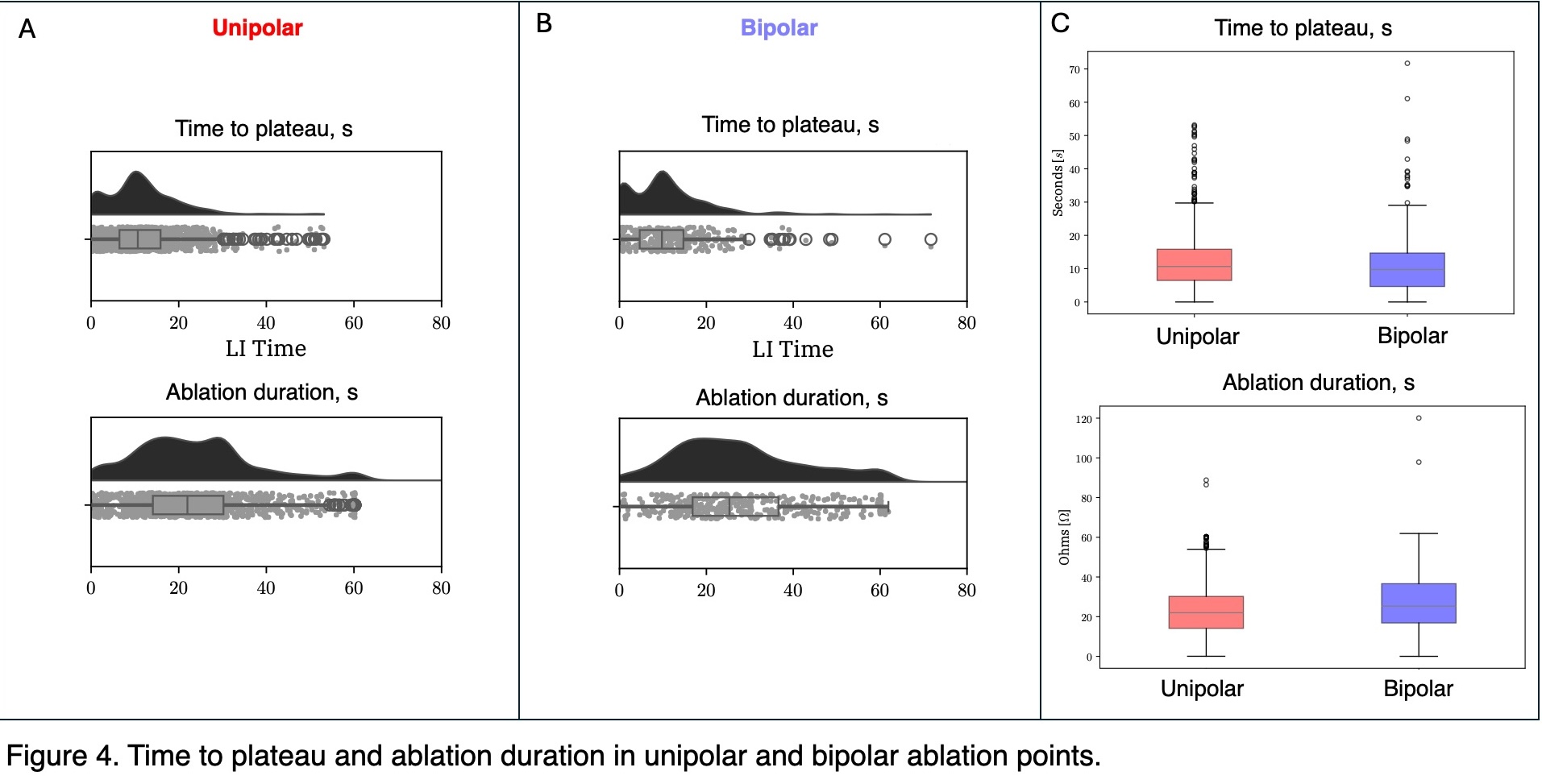
A total of 72 patients (36 per group) were included. Median age was 65 years, 81% were male, 51% had ischemic cardiomyopathy, and median left ventricular (LV) ejection fraction was 40% (IQR 25-50). Most patients (83%) underwent ablation for VT and the remaining for PVCs (Fig.1A). Baseline characteristics were comparable between groups, except for a higher proportion of previous VT ablation in the bipolar cohort (66.7% vs 22.2%, p<0.001). The most common ablation targets were interventricular septum (36% vs 42%, p=0.8), LV summit (33% vs 11%, p=0.045), and LV free wall (25% vs 44%, p=0.14) (Figure 2). Biophysical characteristics were analyzed in 392 bipolar and 1229 unipolar ablation points. Ablation power was lower in bipolar than unipolar lesions (30vs45W, p<0.001), and average temperature was comparable (34.0°C vs 34.0°C, p = 1.0). Compared with unipolar ablation lesions, bipolar lesions exhibited significantly higher baseline impedance (133.1 vs 108.8 Ω, p < 0.001), impedance plateau (119.8 vs 94.8 Ω, p < 0.001), and absolute impedance drop (19.0 vs 6.5 Ω, p < 0.001) (Figure 3). Time to plateau was similar between the bipolar and unipolar lesions (14.7 vs 10.7 s, p=1.0). Ablation duration per point was longer in bipolar than in unipolar points (25.3 vs 22.0 p=0.04) (Figure 4). Two steam pops occurred during Bi-RFA without tamponade.
Conclusion:
In this first in vivo comparative analysis Bi-RFA was characterized by significantly higher baseline impedance and greater impedance drop. Impedance plateau was reached after approximately the same time during Bi-RFA as during Uni-RFA, despite lower RF power and comparable temperature. These findings provide the first characterization of impedance dynamics during Bi-RFA and suggest that bipolar local impedance behaviour may serve as a useful marker to guide bipolar lesion delivery.