Background:
Atrial fibrillation (AF) catheter ablation has become a widely performed procedure in electrophysiology centers, and its use is expected to further expand in the coming years. As catheter ablation volumes continue to increase, performing pulmonary vein isolation (PVI) in an outpatient setting may improve healthcare efficiency, reduce costs, and enhance the patient experience. Assessing the feasibility and safety of such an approach is therefore increasingly important.
Purpose:
This study aimed to assess the feasibility and safety of AF ablation performed in an outpatient setting and to evaluate a standardized ambulatory workflow aligned with contemporary electrophysiology practice.
Methods:
We prospectively collected data from consecutive patients referred to our center for first-do AF ablation between January and March 2026. No specific inclusion criteria were defined, except for the patient's willingness to undergo AF ablation in an outpatient setting. Femoral venous access was obtained under ultrasound guidance and transseptal puncture was performed under fluoroscopic guidance. All procedures consisted of single-shot PVI, performed at the operator’s discretion using cryoballoon or pulsed-field ablation with either a pentaspline or balloon-in-basket catheter. Hemostasis was achieved using a figure-of-8 suture, removed prior to discharge. The sedation protocol consisted of midazolam, fentanyl and propofol. Baseline characteristics, procedural and in-hospital data were systematically recorded. Post-discharge outcomes were assessed throughout structured telephone interviews 30 days after the procedure.
Results:
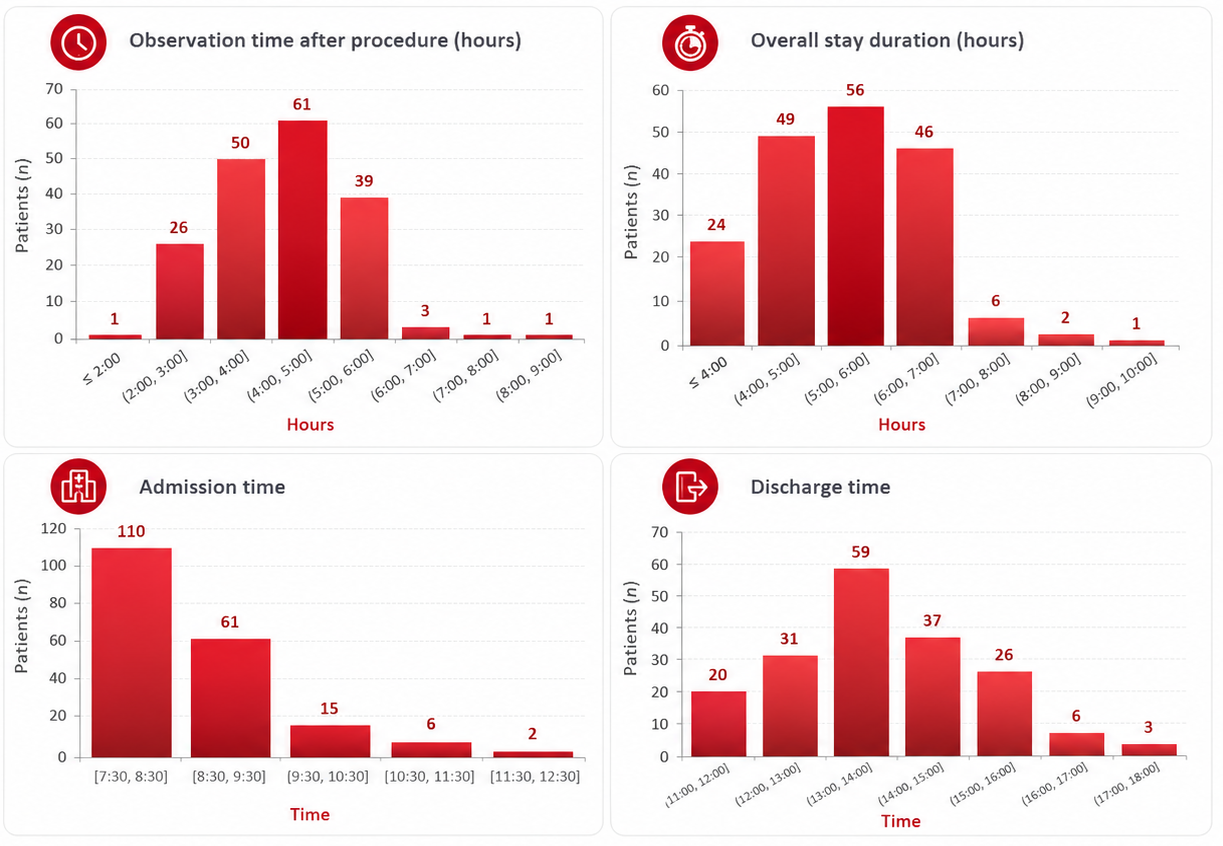
We analyzed 200 consecutive patients undergoing outpatient AF ablation. The median age was 65 (59-73) years, and the median BMI was 28 (25-33) kg/m². Most patients were male (59%), with paroxysmal AF (61%) and a preserved left ventricular ejection fraction. The mean post-procedural observation time was 4:16±1:08 hours and the overall stay duration was 5:24 (4:30-6:13) hours (Figure 1). Groin access-site bleeding occurred in 14% of patients and was managed with local compression. Eight patients required unplanned overnight hospitalization due to frailty (n=4), vascular injury (n=3) and heart failure (n=1).
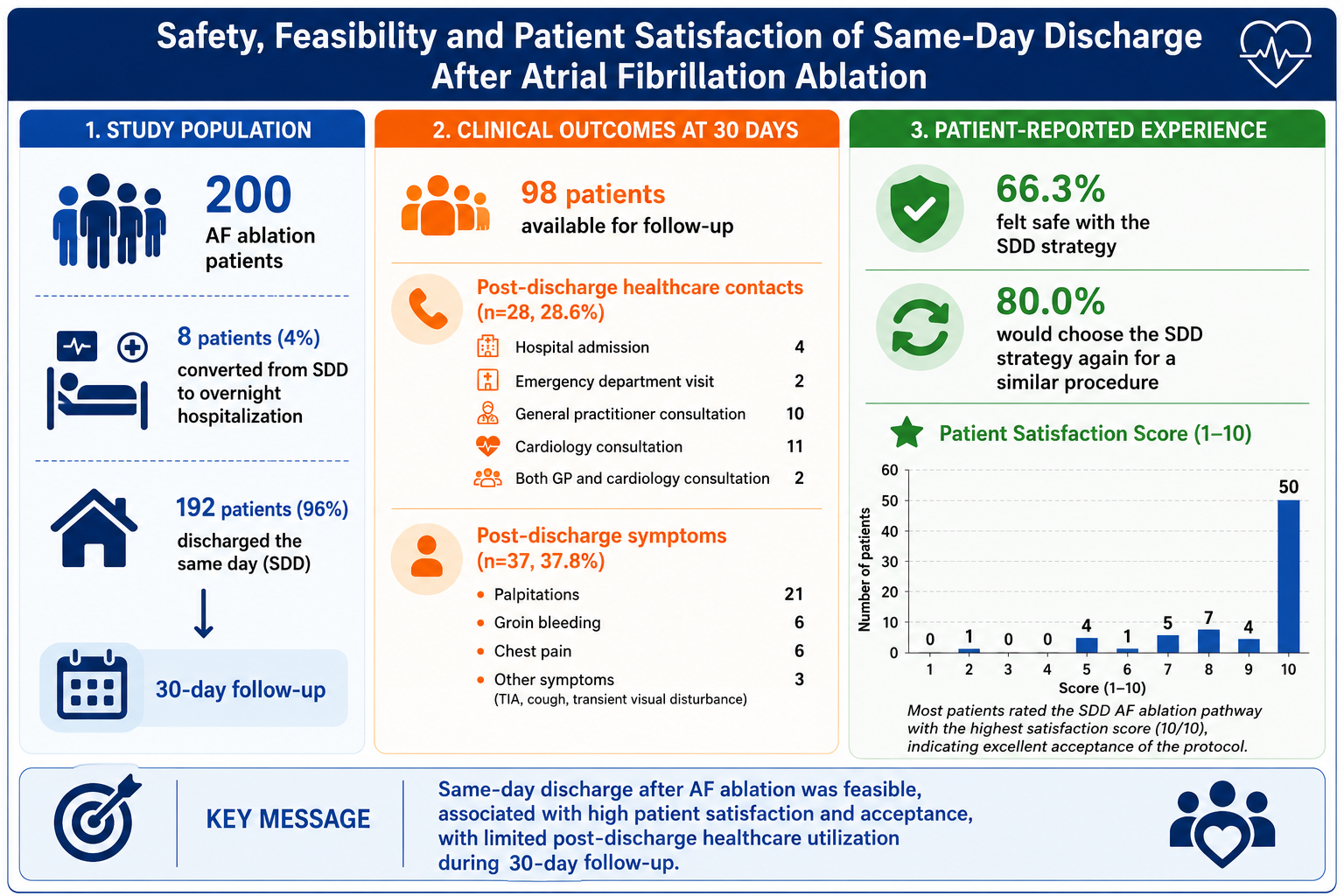
Thirty-day follow-up data were available for 98 patients. Among these, 28 patients required post-discharge healthcare contact, including hospital admission (n=4), emergency department visit (n=2), general practitioner (n=10) or cardiology consultation (n=11), or both (n=2). Post-discharge symptoms were reported by 37 patients, most commonly palpitations (n=21) and groin bleeding (n=6), followed by chest pain (n=6) and other symptoms (n=3). Regarding patient perception, 66.3% reported feeling safe undergoing the procedure in an outpatient setting, 80.0% stated they would choose an outpatient strategy again for a similar procedure in the future. Follow-up data are shown in Figure 2.
Conclusion:
In this prospective all-comer cohort, AF ablation performed in an outpatient setting was feasible and associated with favorable short-term safety outcomes. Standardized workflows including ultrasound-guided vascular access, structured post-procedural observation, and systematic follow-up may facilitate the safe implementation of outpatient AF ablation pathways in contemporary clinical practice.