Introduction: Implantable cardioverter-defibrillators (ICDs) and cardiac resynchronization therapy defibrillators (CRT-Ds) are established therapies for the prevention of sudden cardiac death. While procedural safety and short-term outcomes have been well documented, data on long-term outcomes in routine clinical practice remain limited. We therefore evaluated procedural safety, treatment patterns and long-term outcomes in patients enrolled in the German DEVICE Registry.
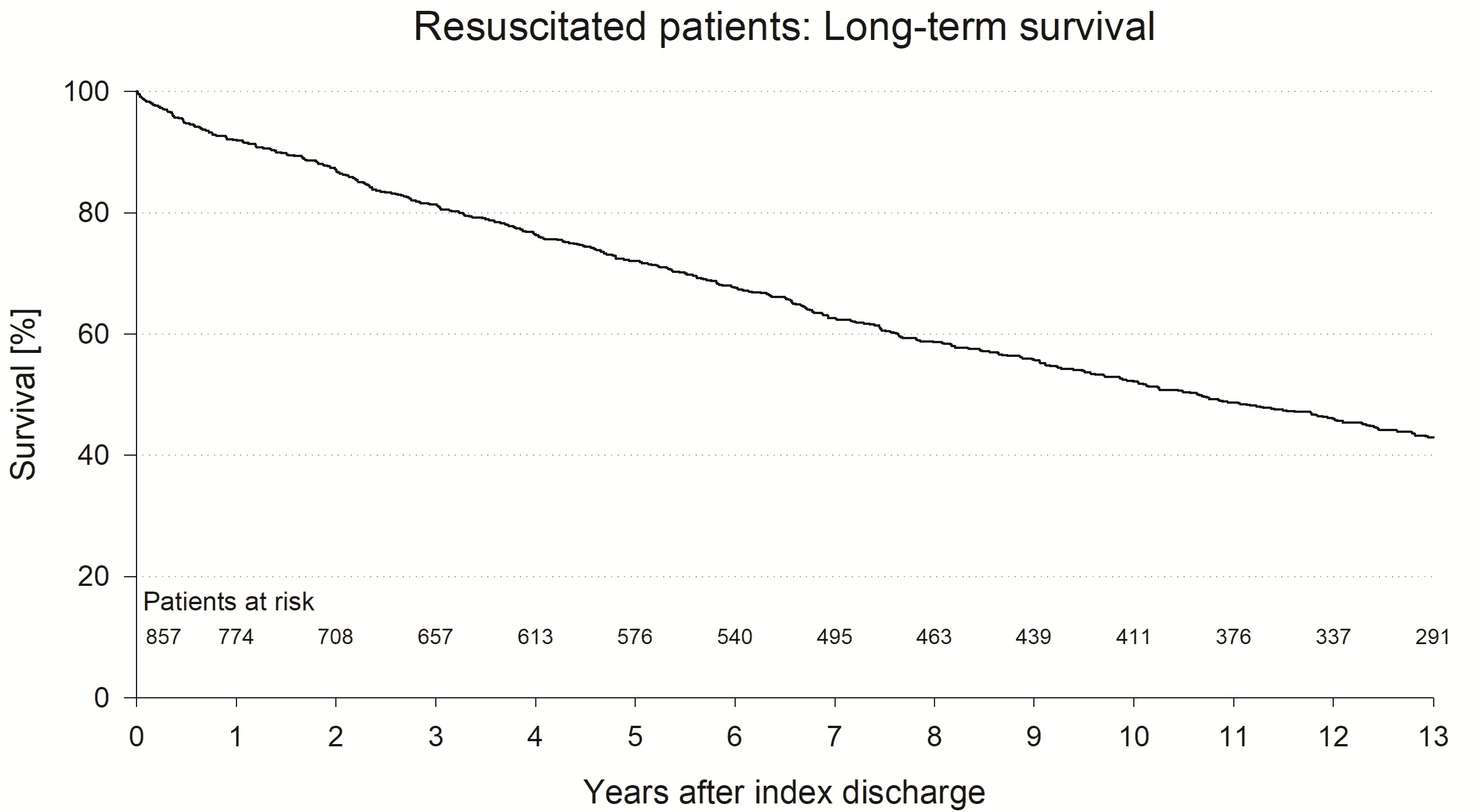
Methods: The German DEVICE Registry is a prospective, multicenter, national registry including patients undergoing pacemaker, ICD or CRT-D/P implantation or device revision. In this analysis were included only patients undergoing ICD or CRT-D following cardiac arrest. Patients enrolled in DEVICE I (2007–2009) and DEVICE II (2011–2014) were contacted for long term follow-up from 2024 onwards, allowing assessment of long-term outcomes, including 10-year survival. Baseline characteristics, procedural data, complications, pharmacological therapy, and survival outcomes were analyzed descriptively. Time-to-event analyses were performed using Kaplan–Meier methods.
Results: A total of 859 patients were included. During follow-up, 498 patients (58.0%) died and 361 (42.0%) remained alive. Kaplan–Meier estimated mortality was 7.9% at 1 year and 47.7% at 10 years, with a median survival of 67.4 months. Survivors were significantly younger at baseline (53 vs. 69 years, p<0.001), had a higher left ventricular ejection fraction (46.5% vs. 37.2%, p<0.001), and less frequently had underlying organic heart disease. Diabetes mellitus, hypertension, chronic kidney disease, and coronary artery disease were more prevalent among patients who died during follow-up. Procedural safety was high, with complications requiring intervention occurring in only 1.7% of patients and in-hospital mortality being rare (0.47%). Guideline-directed medical therapy was widely used, although mineralocorticoid receptor antagonists and, at long-term follow-up, SGLT2 inhibitors appeared underutilized.
Conclusions: In this national real-world registry, ICD and CRT-D therapy demonstrated excellent procedural safety and substantial long-term survival despite a high-risk patient population. Long-term mortality was primarily associated with older age, comorbidities, and the severity of underlying cardiac disease rather than device-related factors. These findings provide important long-term evidence supporting ICD therapy in routine clinical practice and highlight opportunities for further optimization of guideline-directed medical therapy.