Introduction
Impella CP micro axial pump (Abiomed, Danvers, MA; USA) is a well-established percutaneous mechanical circulatory support (MCS) device used in patients with cardiogenic shock and during high-risk percutaneous coronary interventions (PCI). However, due to the large-bore vascular access required for this MCS therapy, device explantation, especially after longer support times, carries a considerable risk of major bleeding complications. Conventional removal techniques, such as manual compression or surgical removal, are associated with significant procedural effort and potential morbidity. The use of percutaneous vascular closure devices, such as the Perclose ProStyle system (AbbottCardiovascular, North Plymouth, MN; USA), offers a potentially less invasive and resource-efficient alternative. This study aimed to evaluate the safety and efficacy of this approach in clinical practice.
Methods
This observational case series includes Impella CP treated patients treated in the MCS Unit of the University Hospital Frankfurt between April 2025 and May 2026 and Impella explantation using the ProStyle system in a post close application was performed.
Results
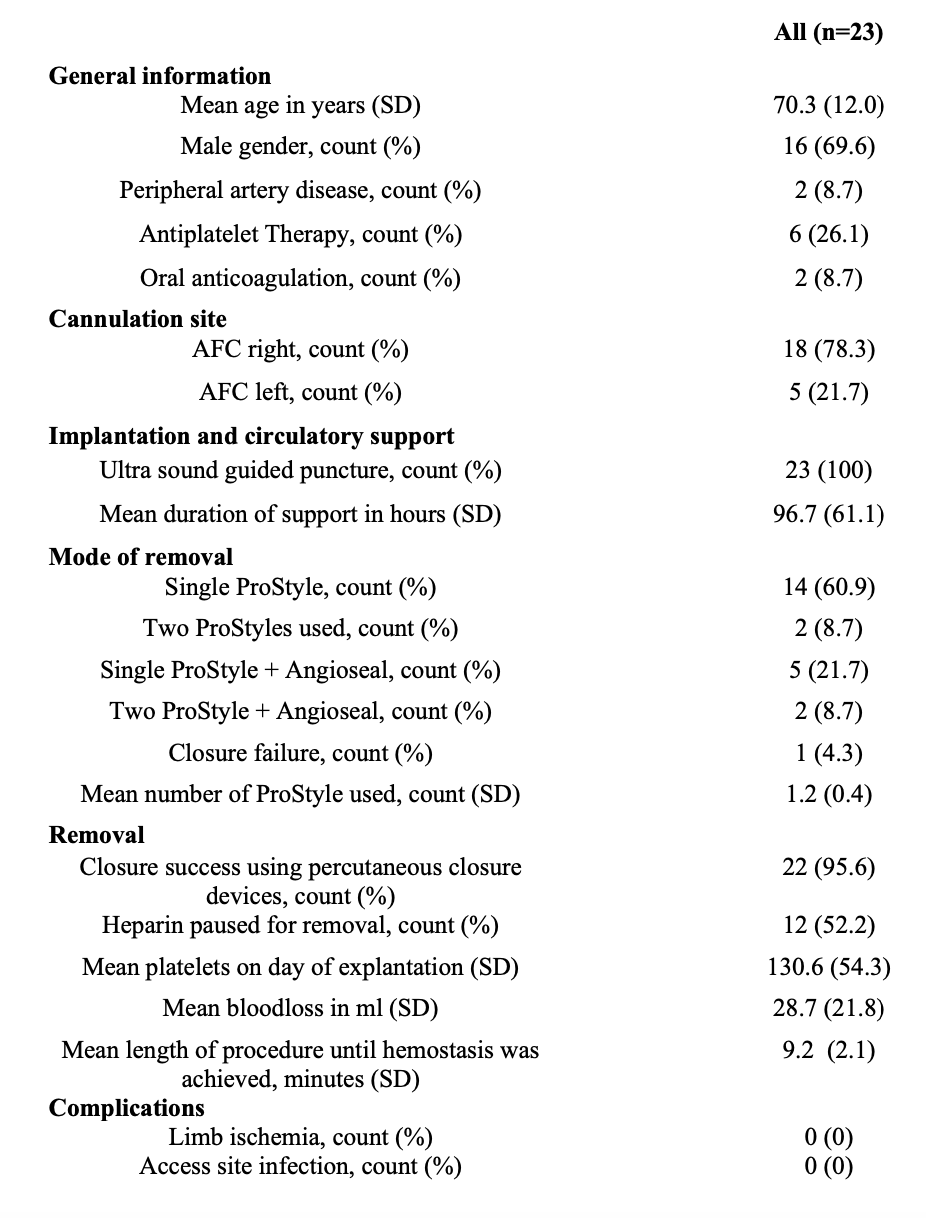
A total of 23 patients were included, with a mean age of 70.3 years. Indications for Impella therapy included cardiogenic shock (n = 18), out-of-hospital cardiac arrest with ST-elevation myocardial infarction (n = 4), and postoperative low cardiac output syndrome (n = 1). The mean duration of mechanical support was 96.7 hours. Successful explantation with hemostasis using percutaneous closure devices was achieved in 22 patients (95.6%). In 14 patients, a single Perclose ProStyle device was sufficient, while two devices were required in two cases. An additional closure device (Angio-Seal; Terumo, Somerset, NJ; USA) was used in 7 patients to achieve adequate hemostasis. Manual compression was required in 1 patient following unsuccessful percutaneous closure. Anticoagulation was continued until explantation in 47.8% of the patients. The mean estimated blood loss was 28.7 mL, and the mean time to achieve hemostasis was 9.2 minutes. One minor bleeding complication occurred post-procedure, with no cases of limb ischemia or access-site infection.
Conclusion
Percutaneous closure of large-bore femoral access sites using the Perclose ProStyle device appears to be a safe and effective technique for achieving hemostasis following Impella CP explantation in patients requiring longer support. These findings suggest that this method may reduce procedural complexity and bleeding risk compared with conventional techniques. Larger prospective studies are warranted to confirm its safety and efficacy and to define its role in standard clinical practice.